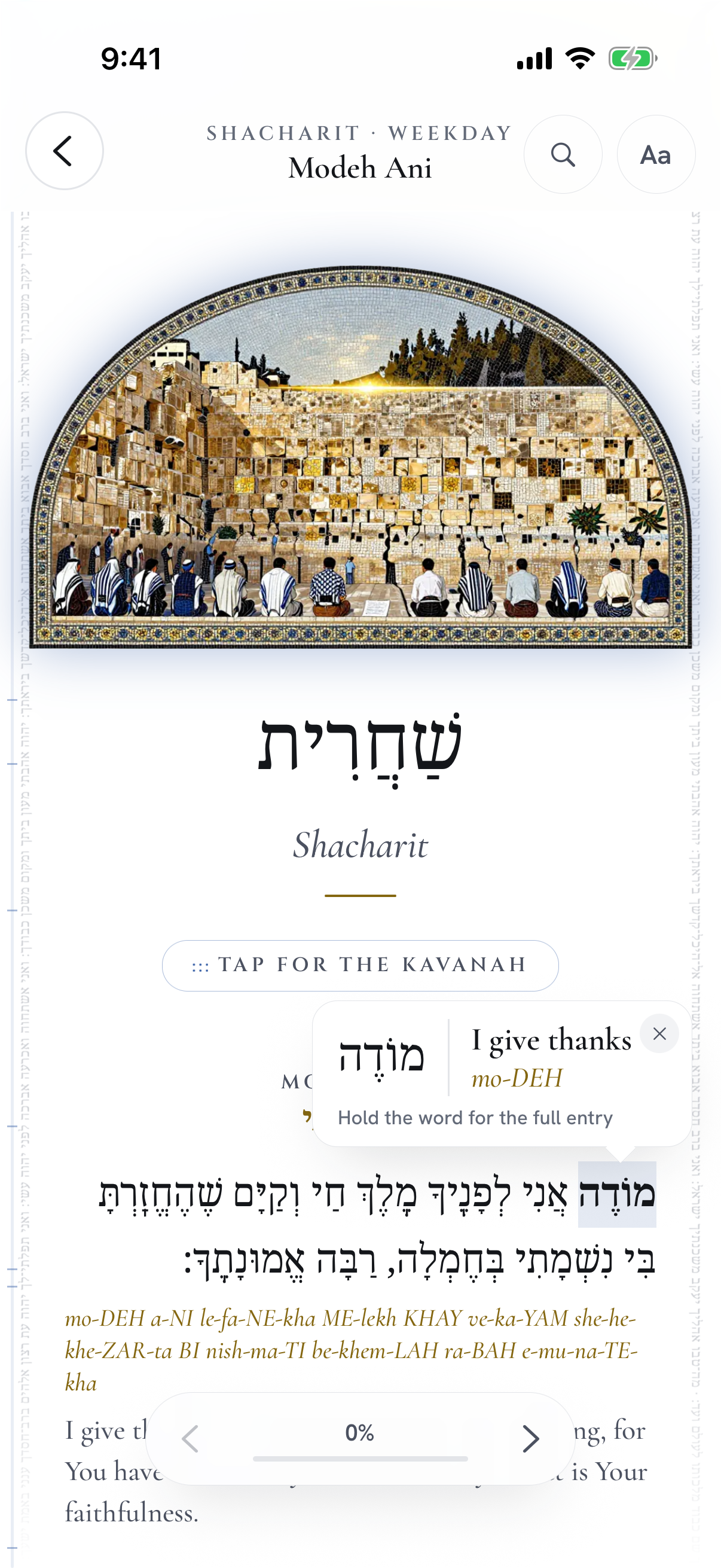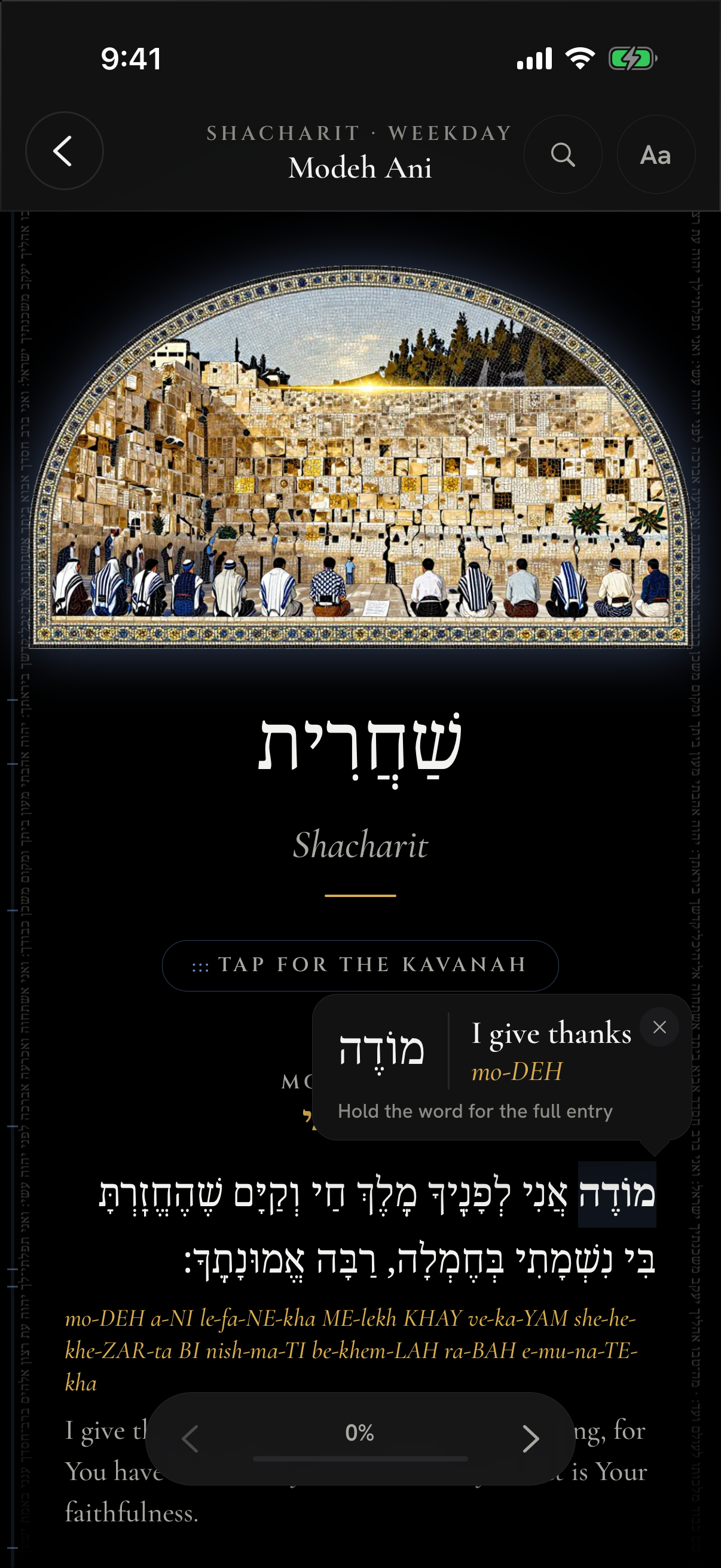
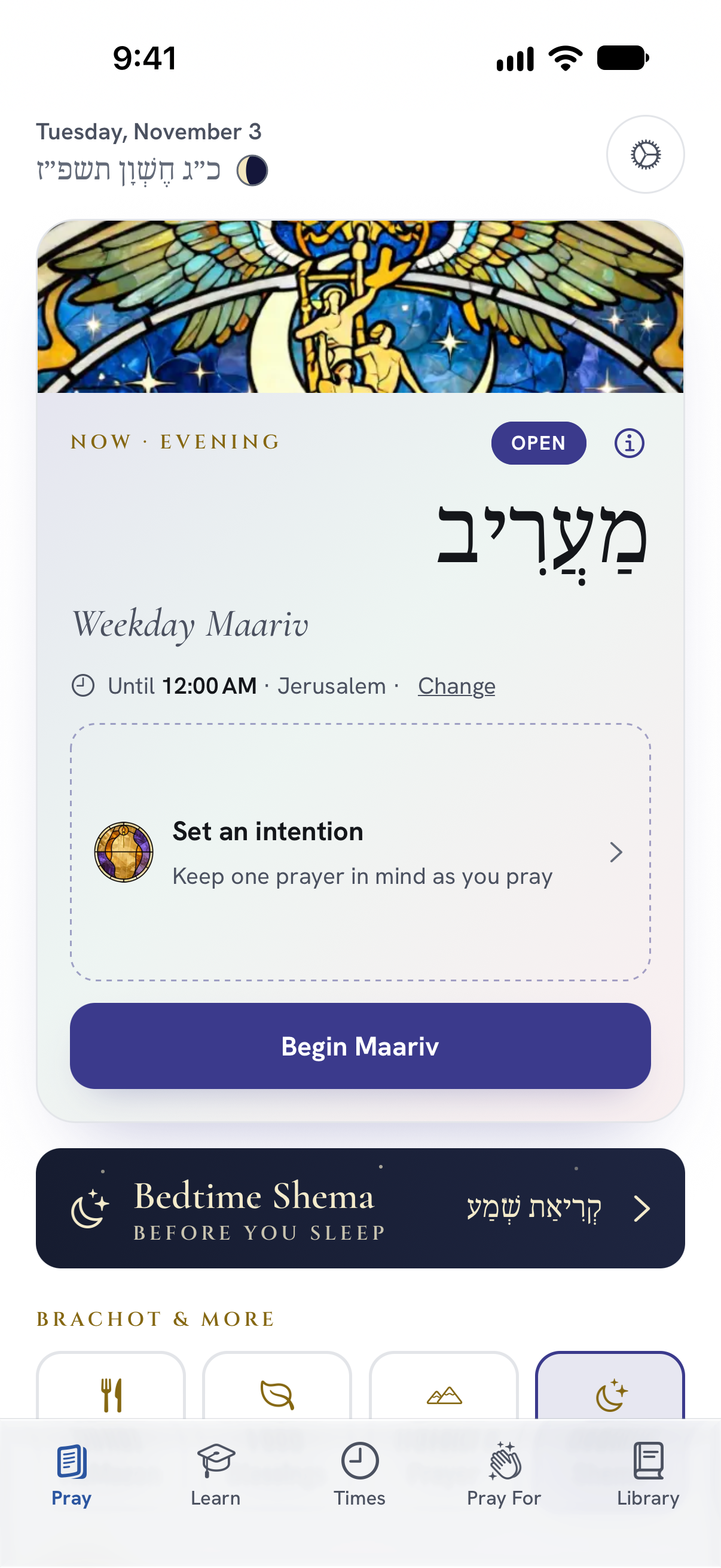
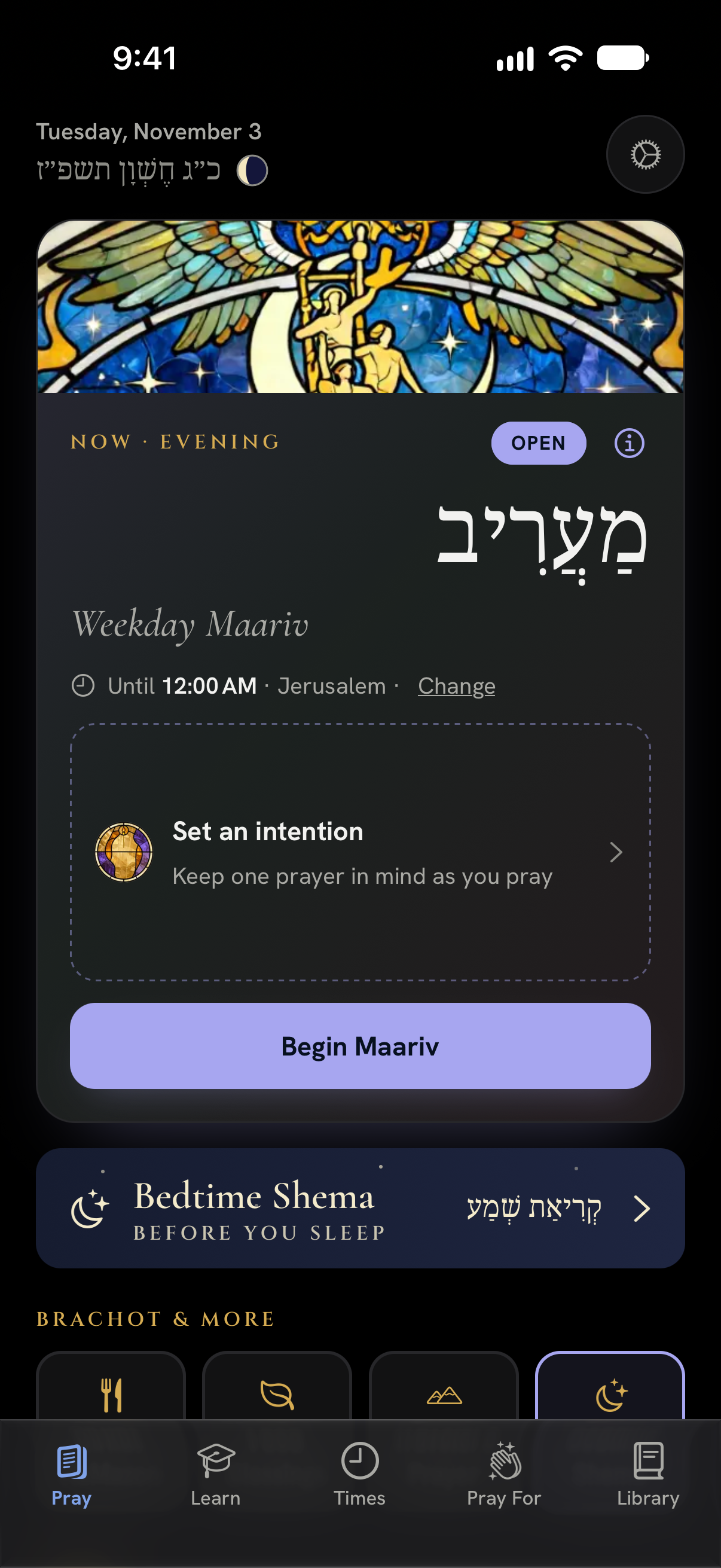
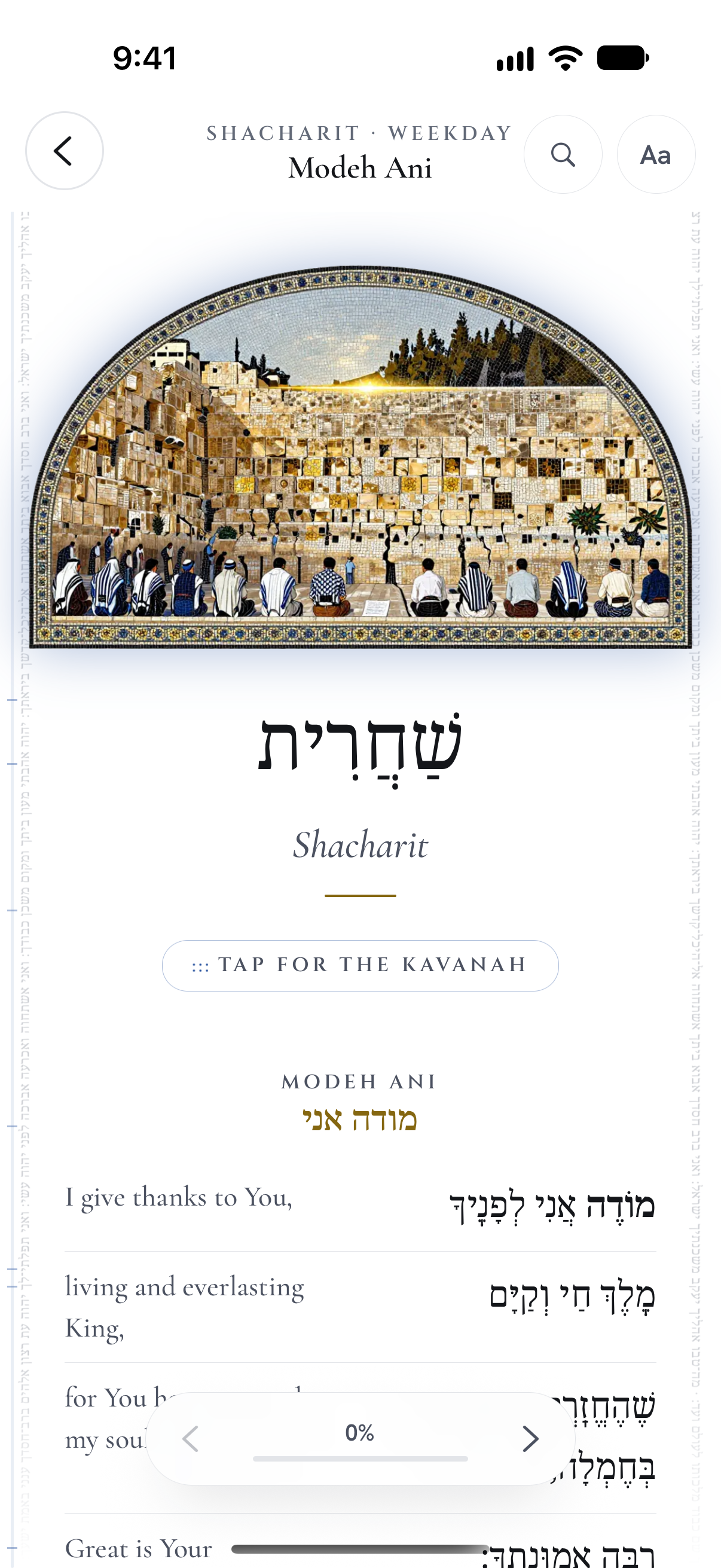
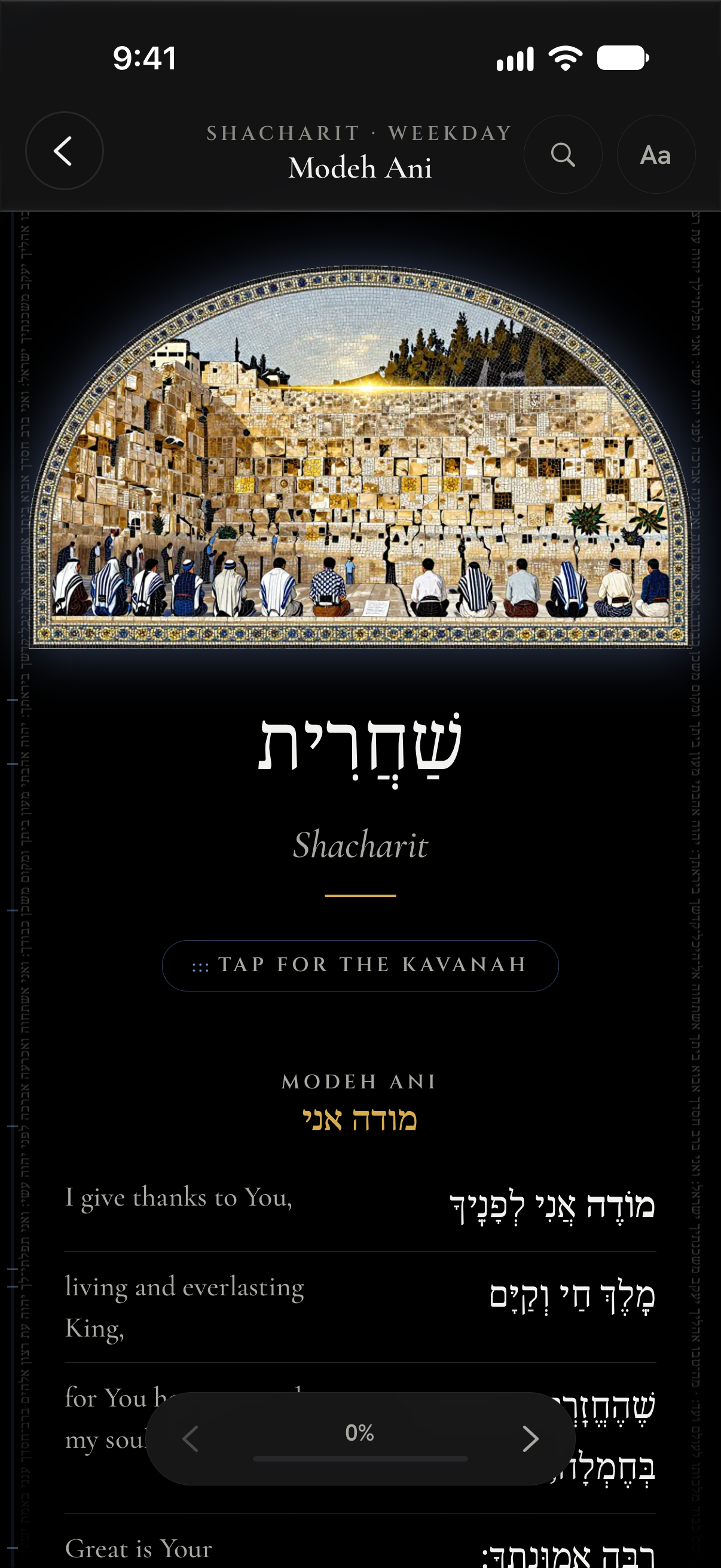
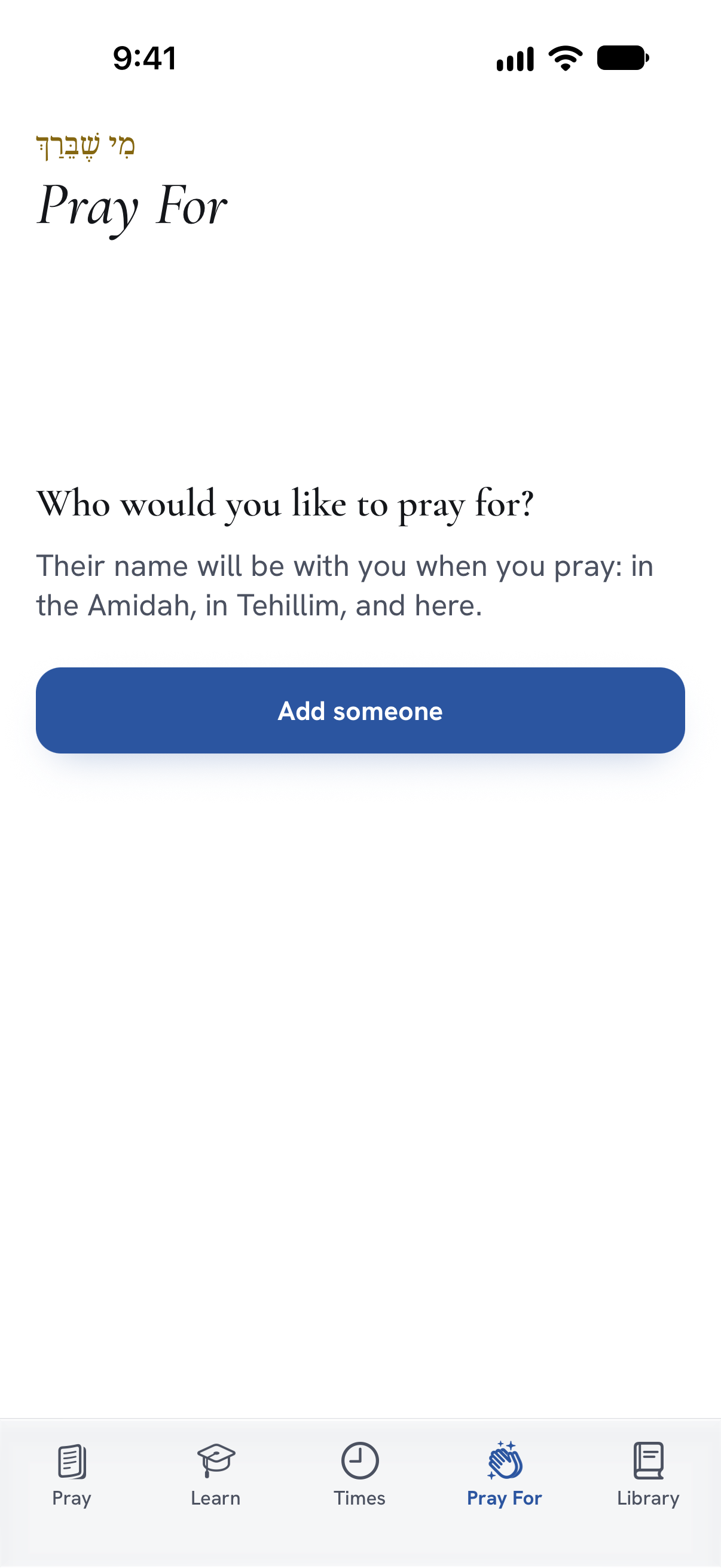
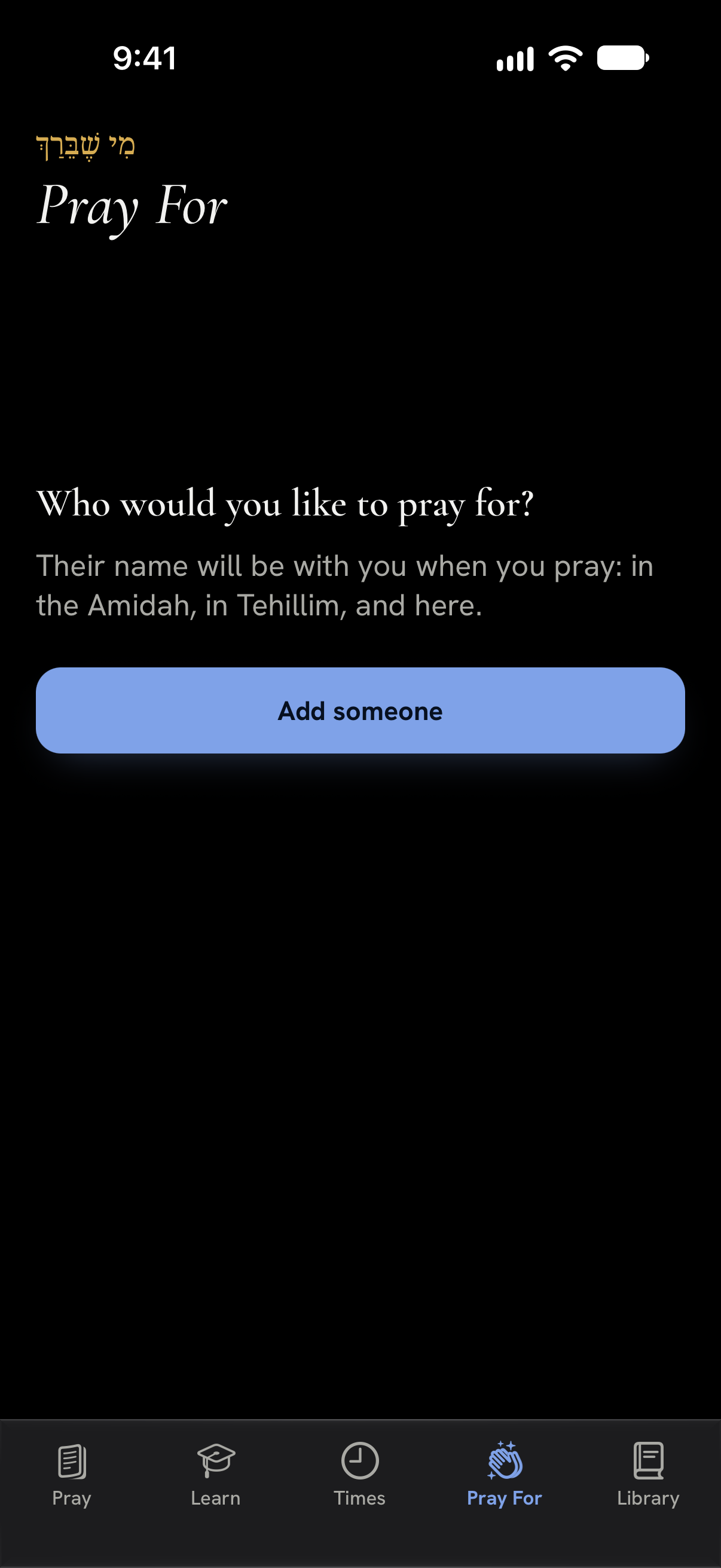
A capture from the current Kav build is pending for this screen.
iPhone 18 Pro
iPhone simulator preview.
A Jewish prayer app with Hebrew, pronunciation, and English together. Tap a word to see what it means.
Explore KavA preview of a newer version of Kav.
The prayers
you know.
A closer look
at every word.
Device preview
See how the Siddur fits on a phone, tablet, or foldable.
Model
iPhone simulator preview.
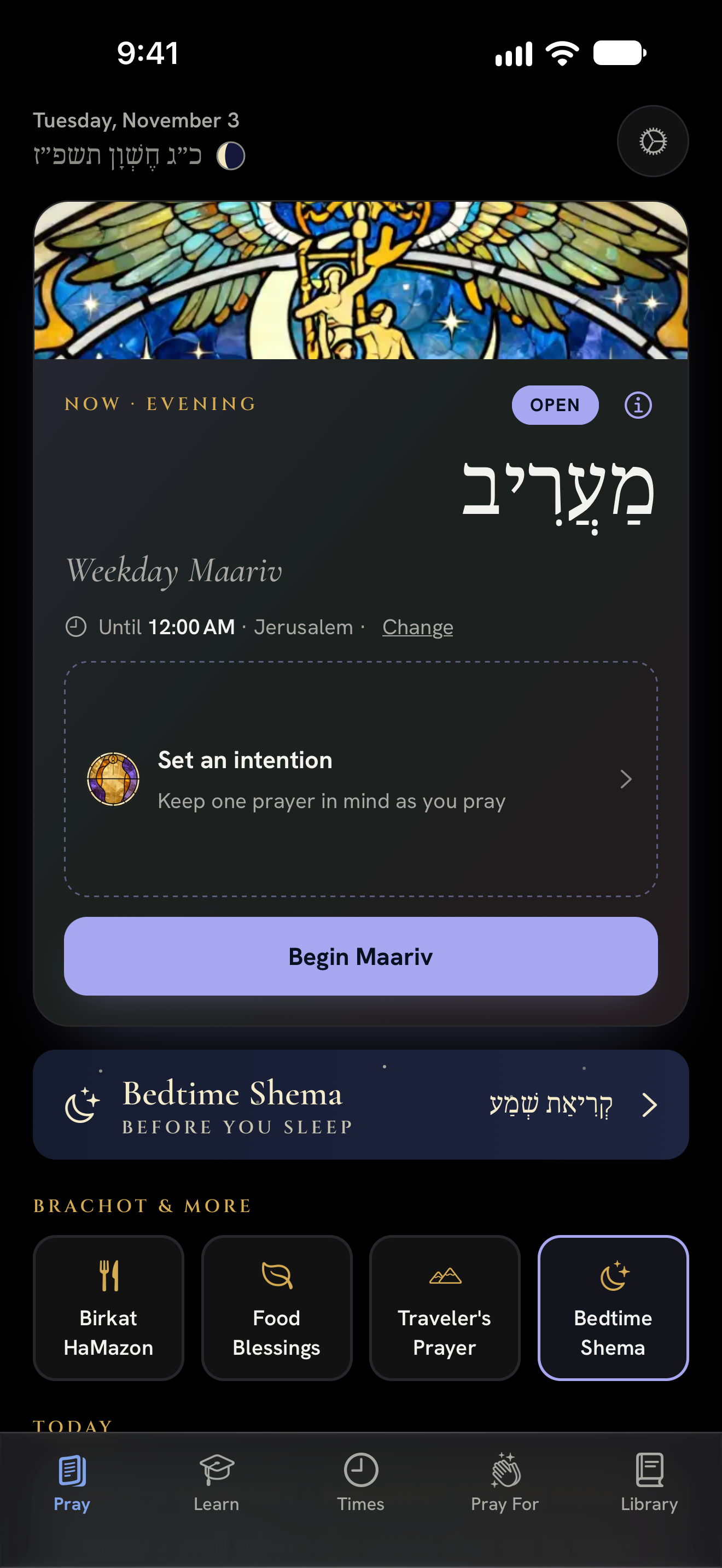
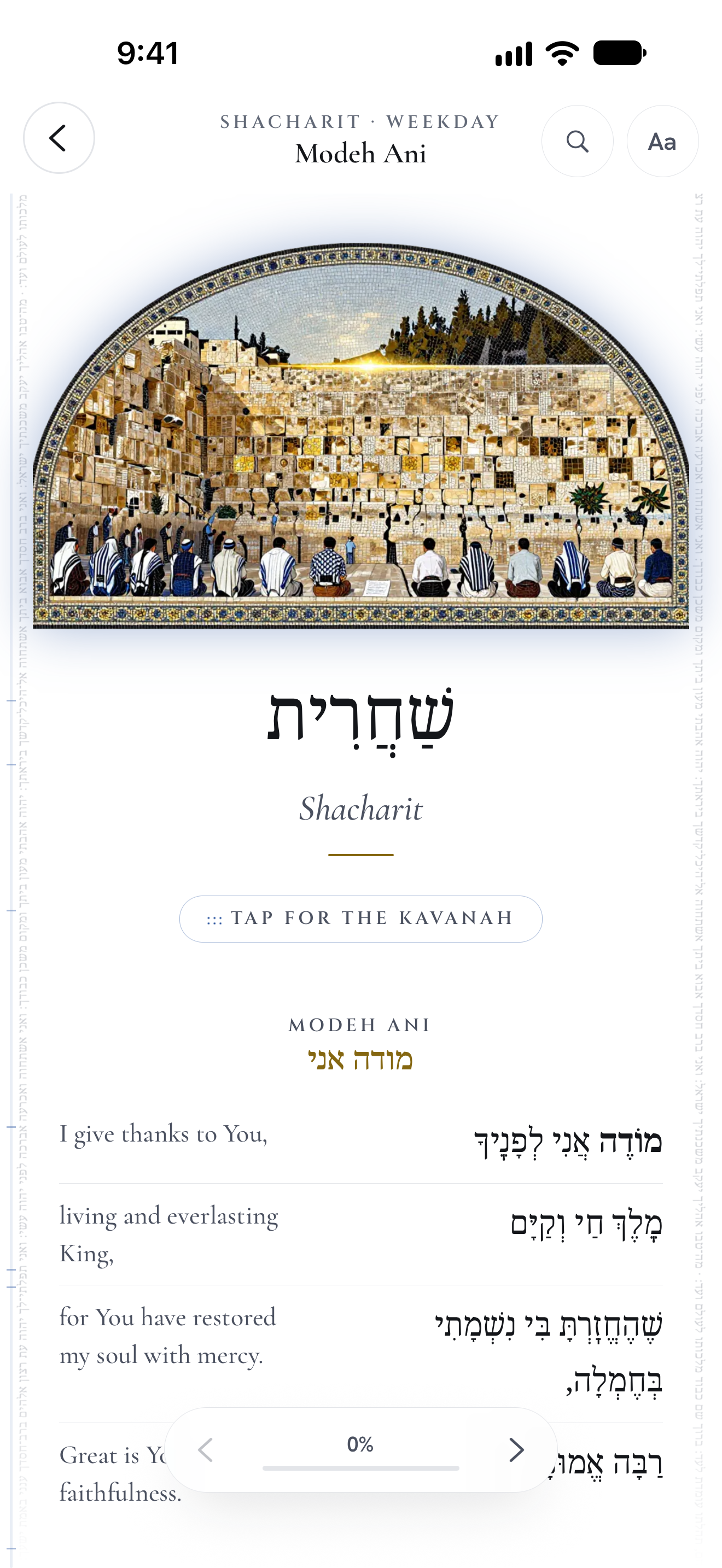
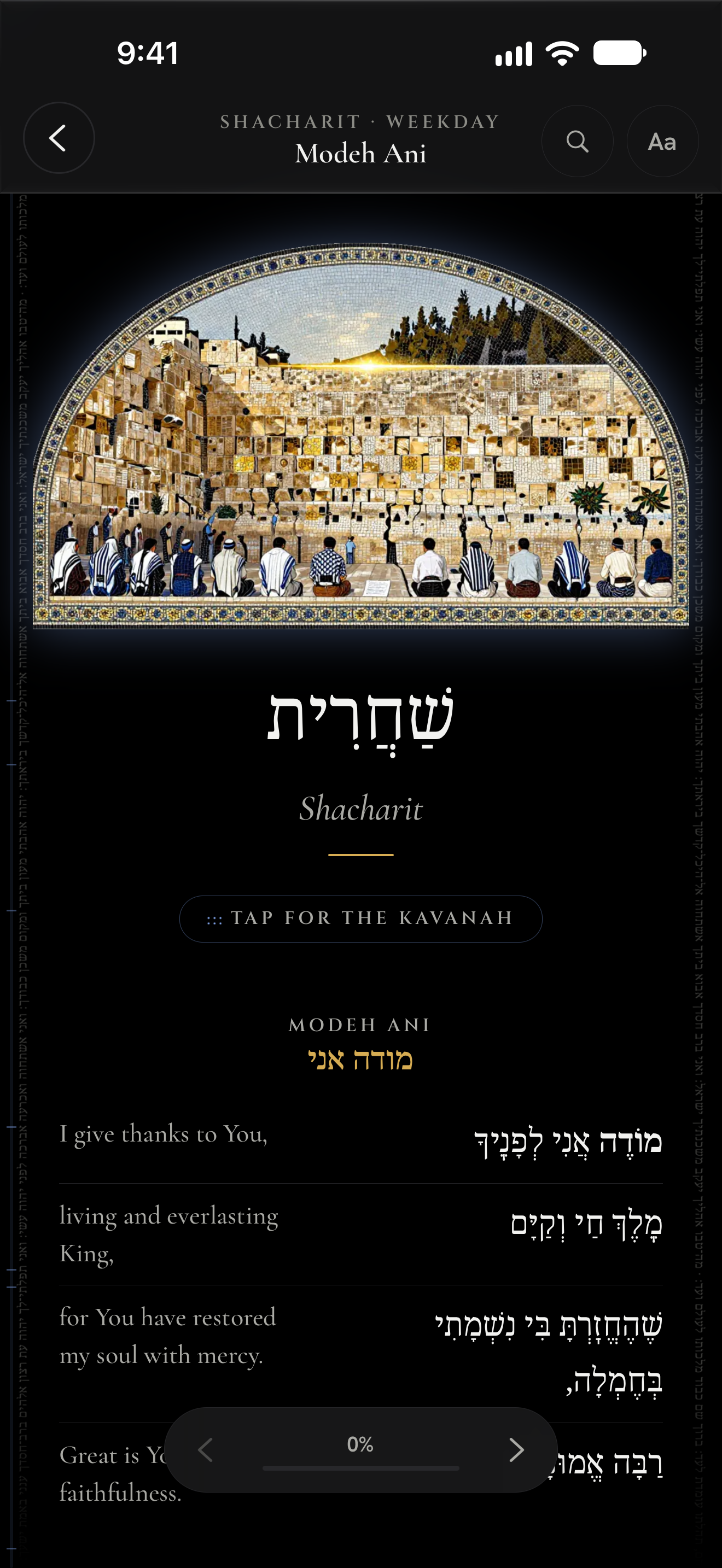
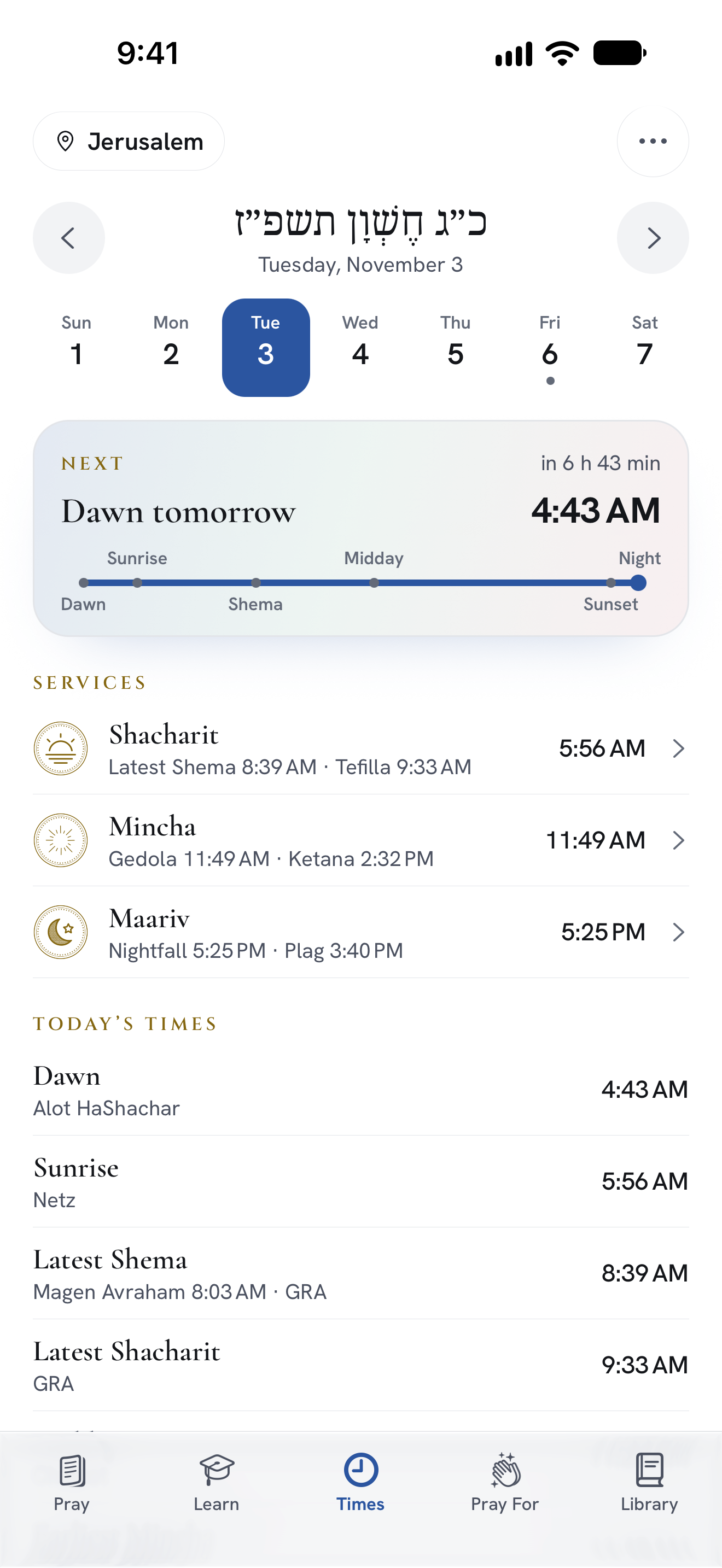
iPhone simulator preview.
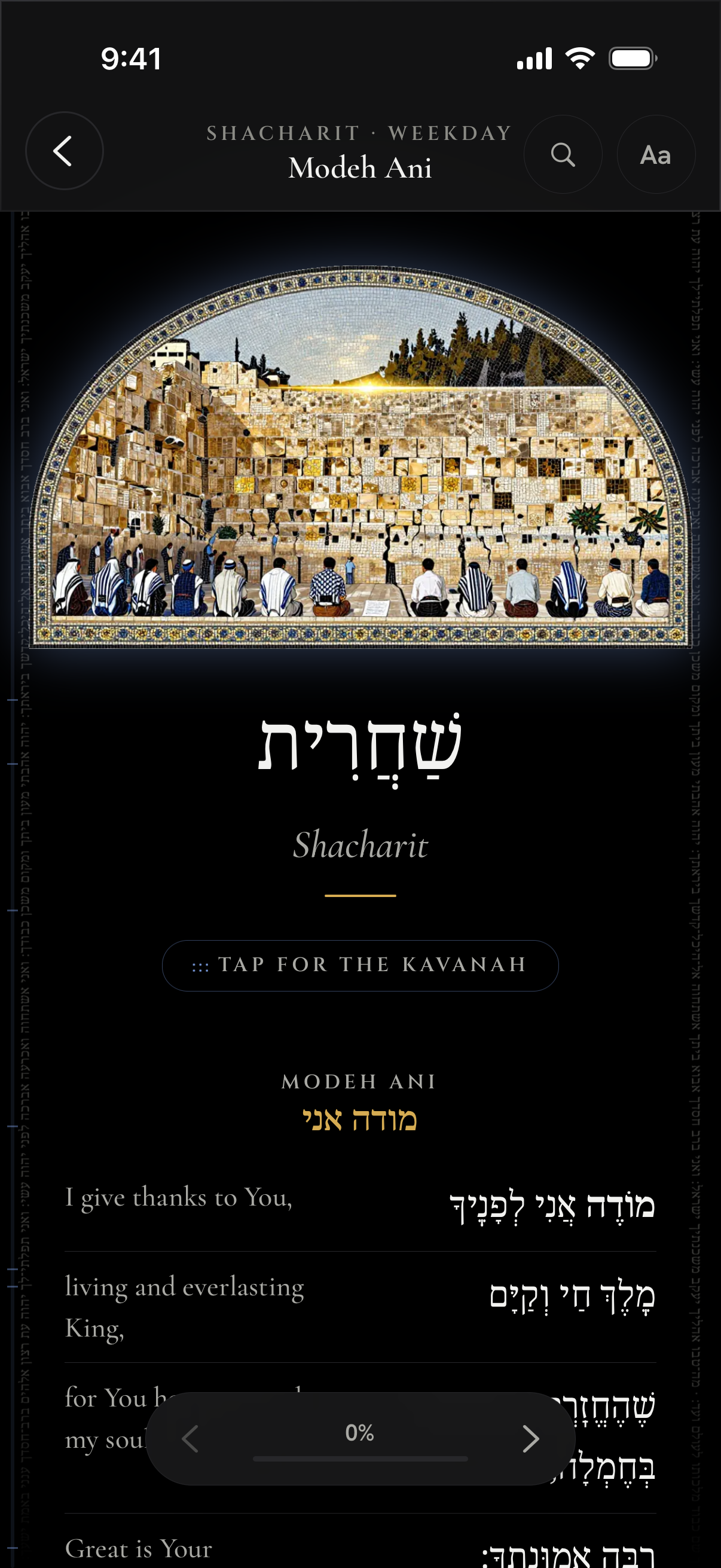
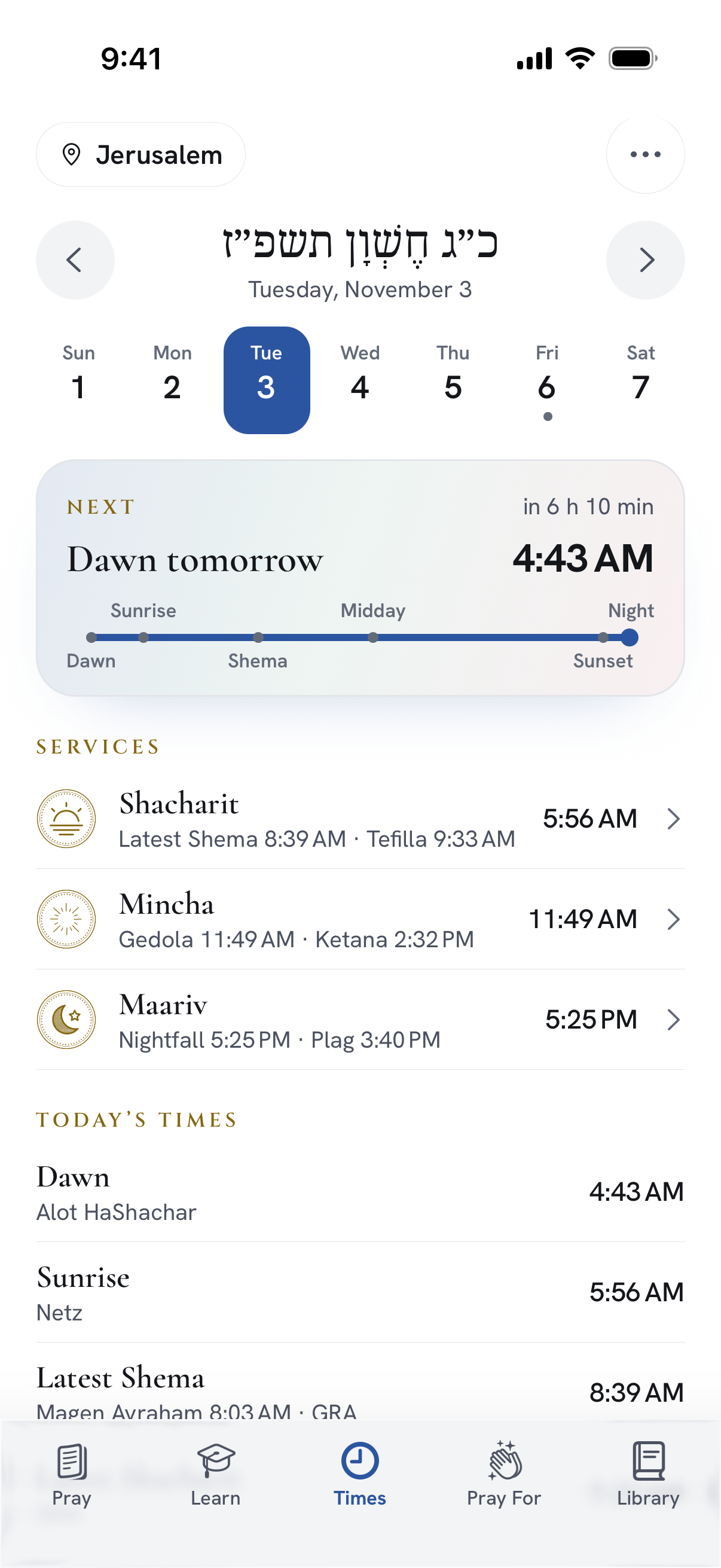
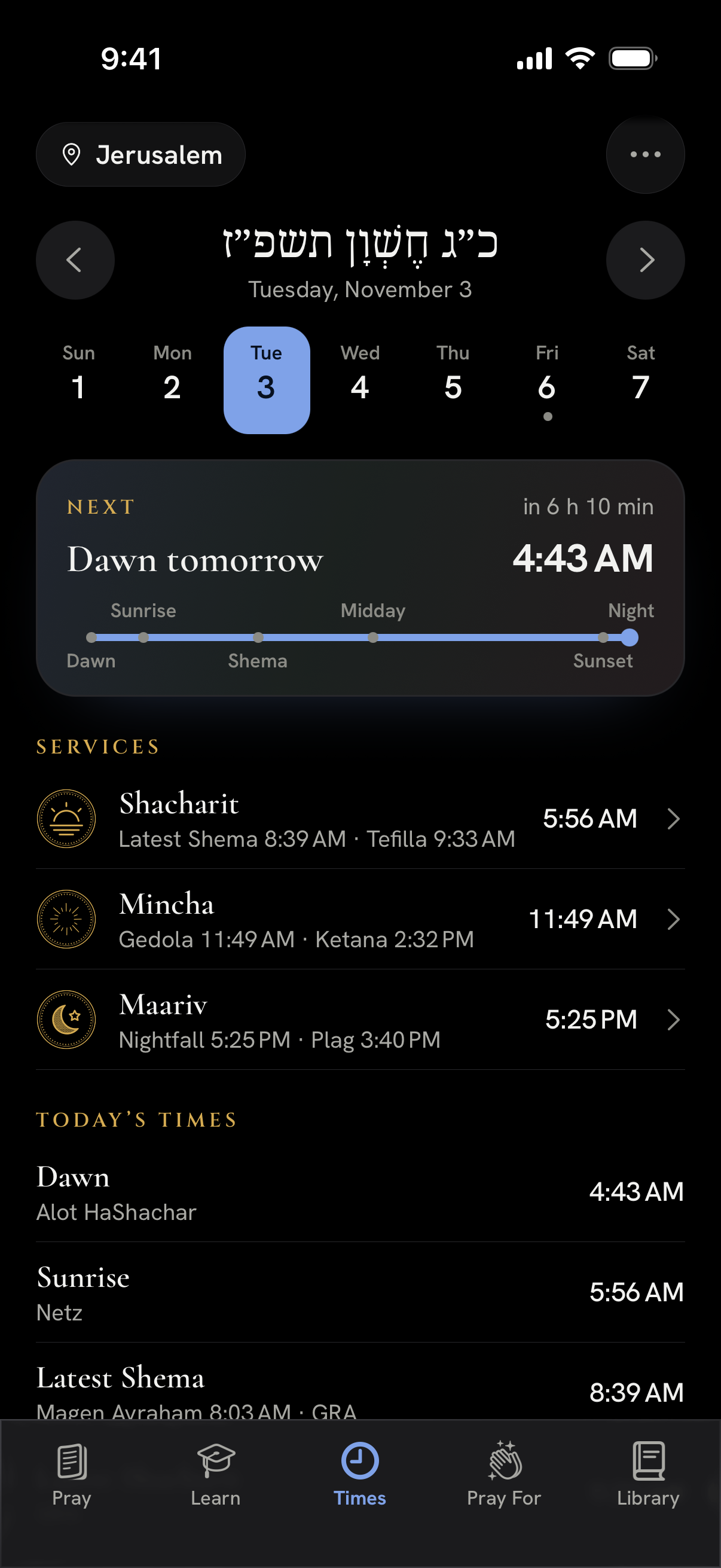
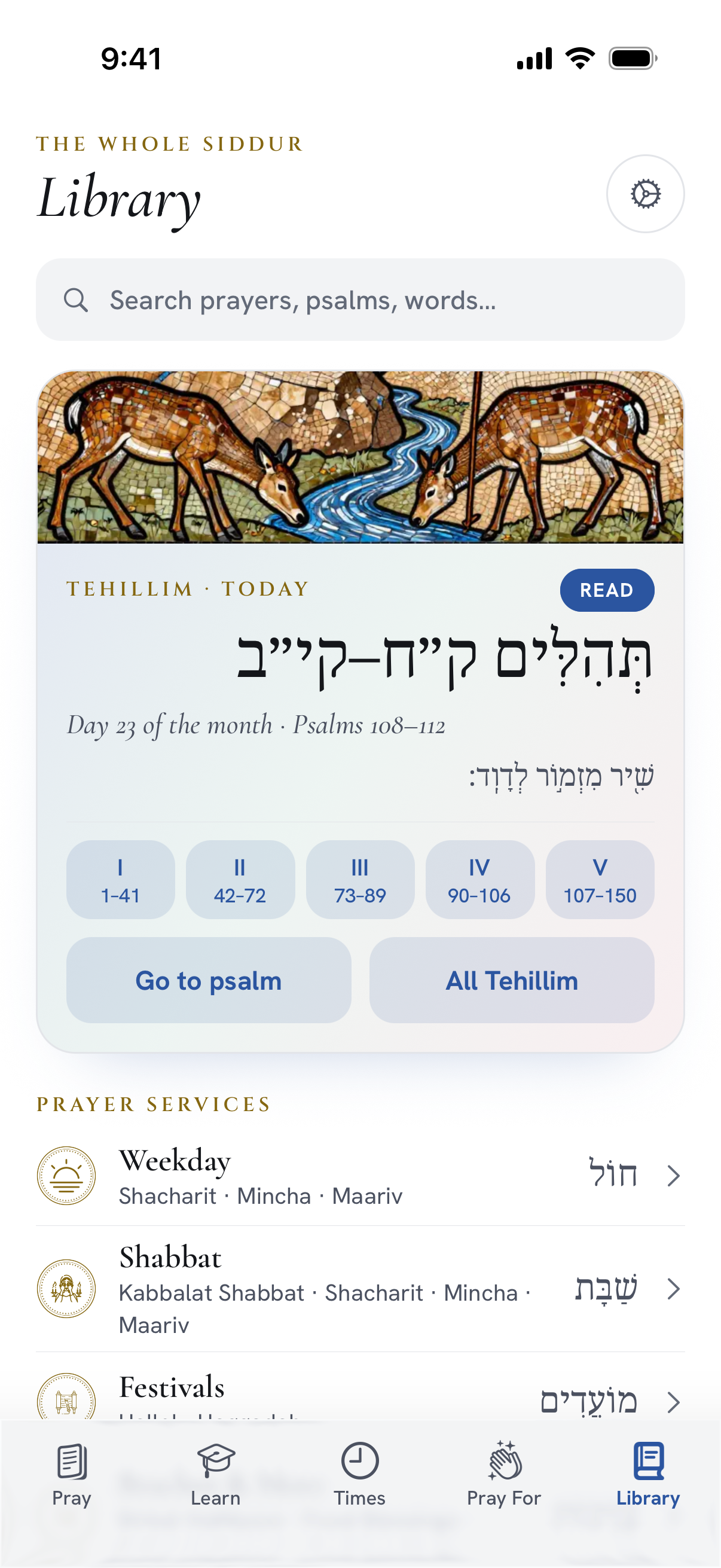
iPhone simulator preview.
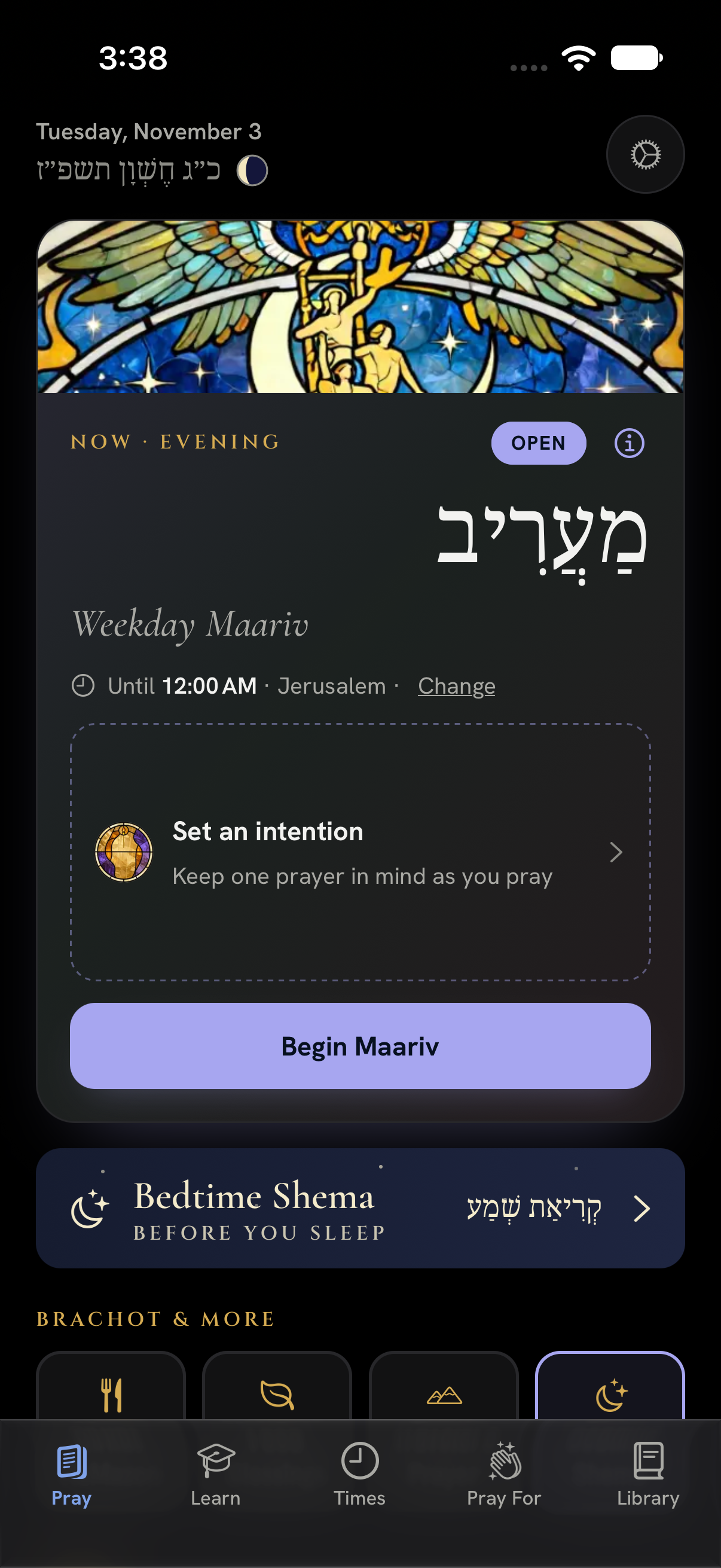
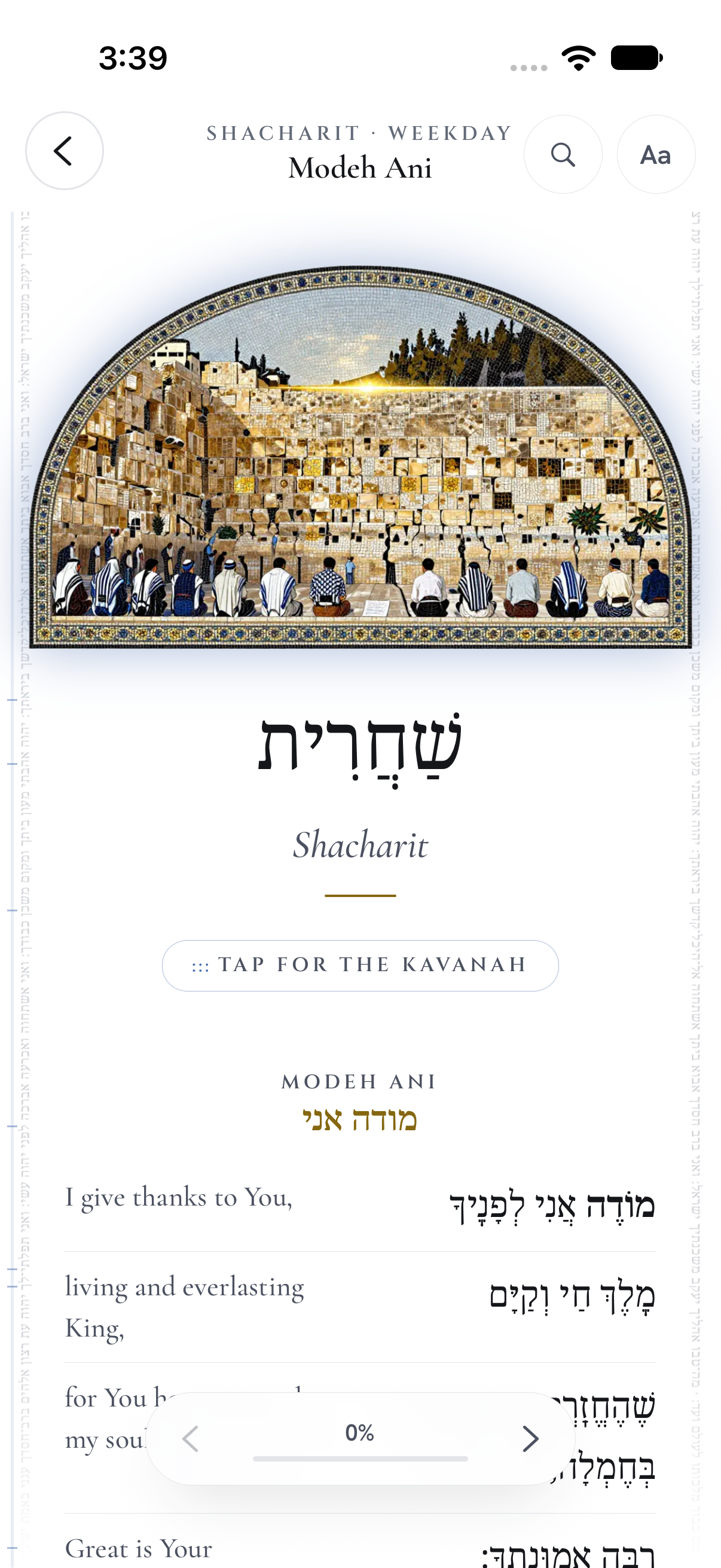
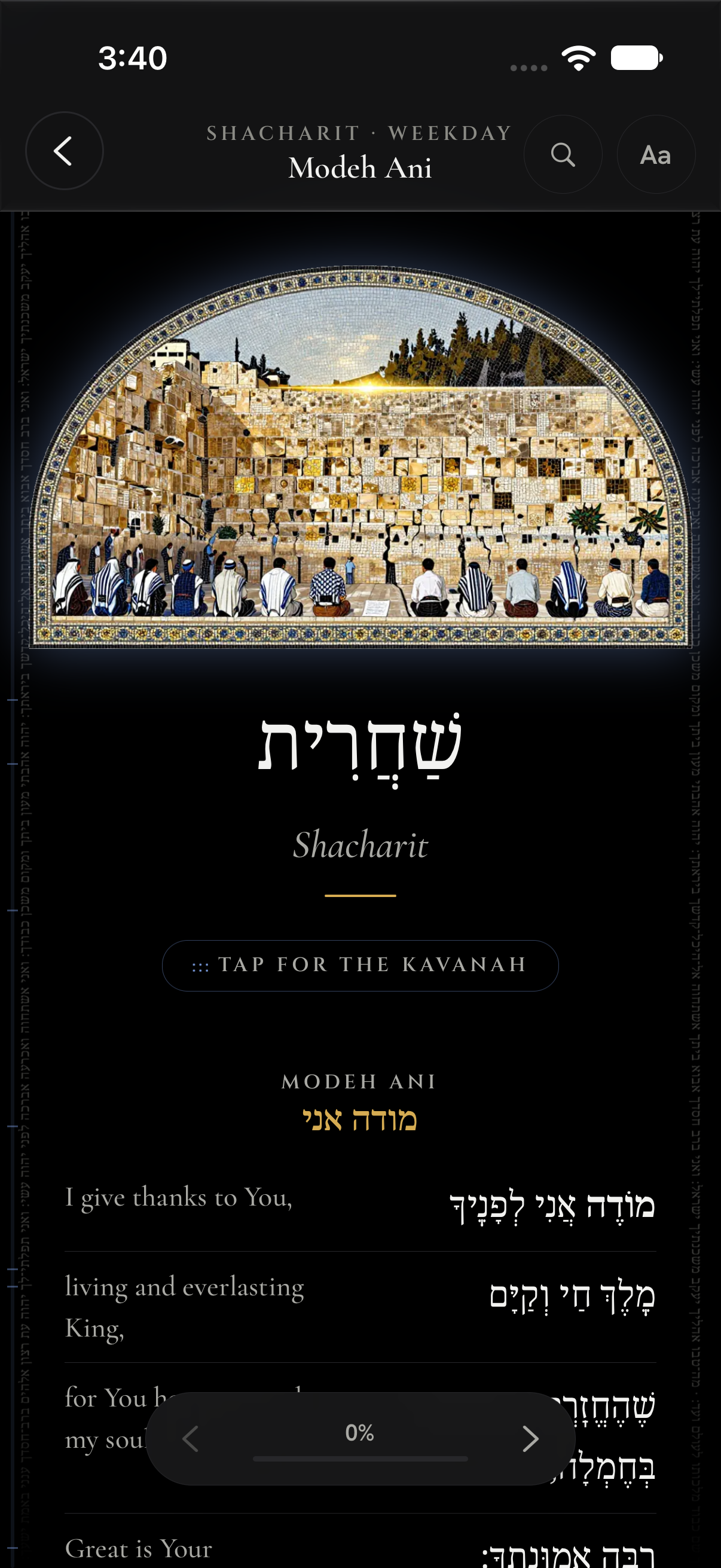
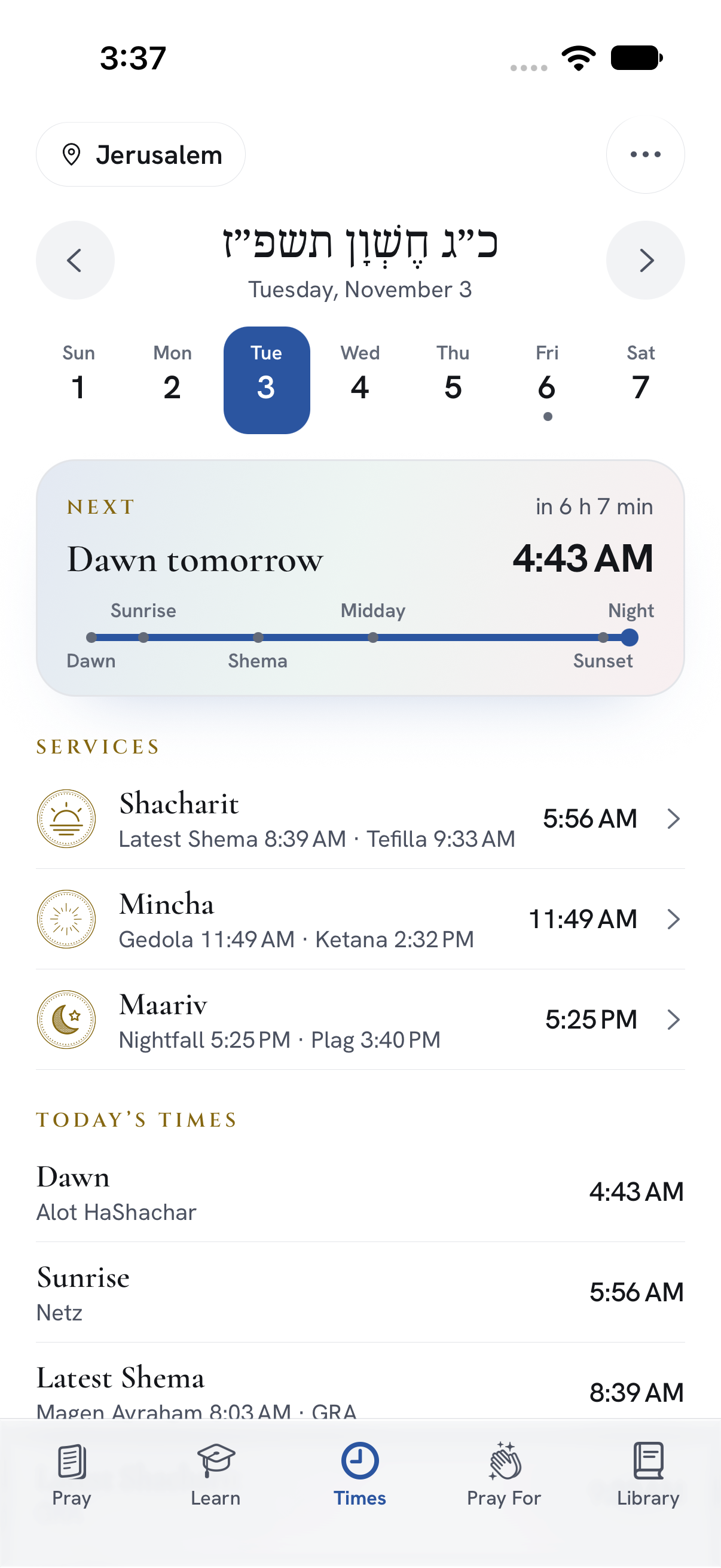
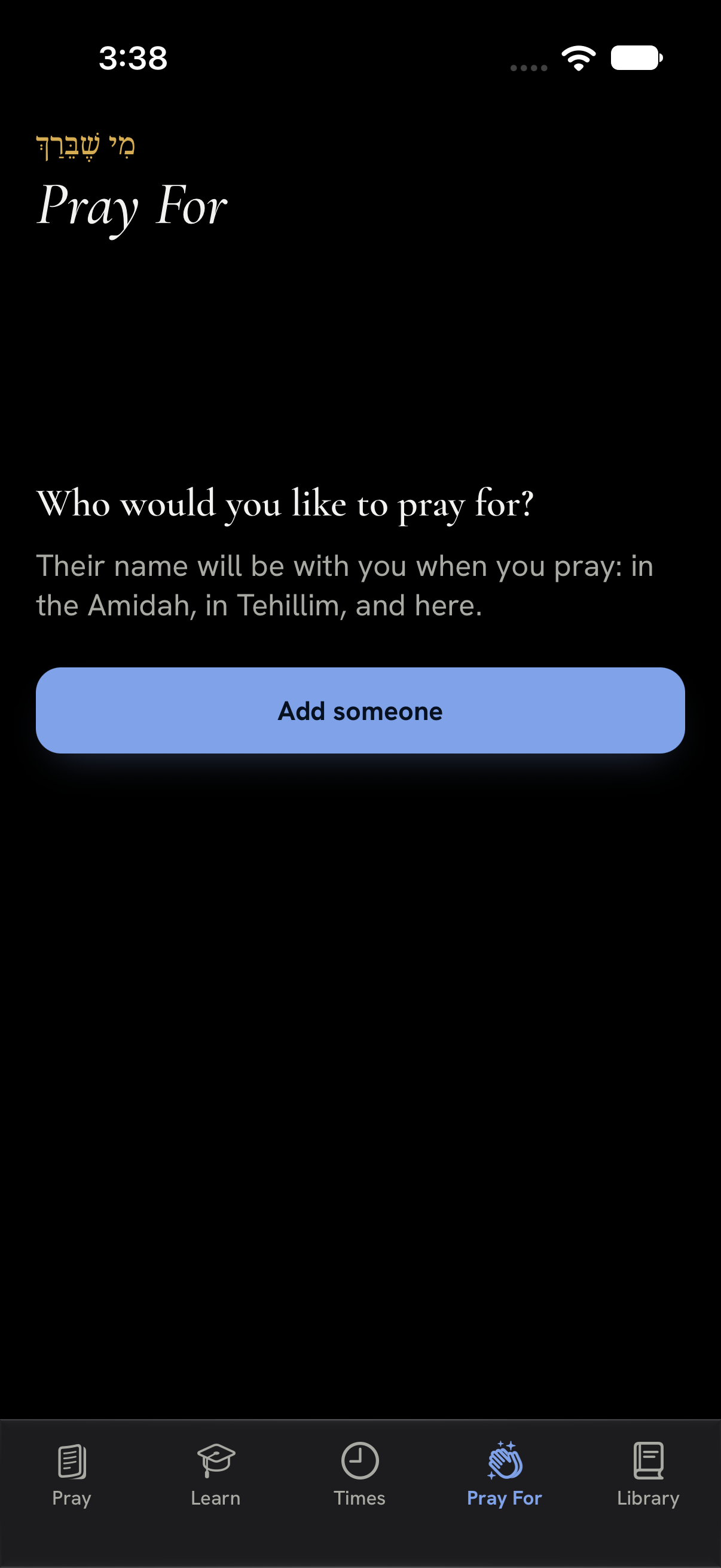
iPhone simulator preview.
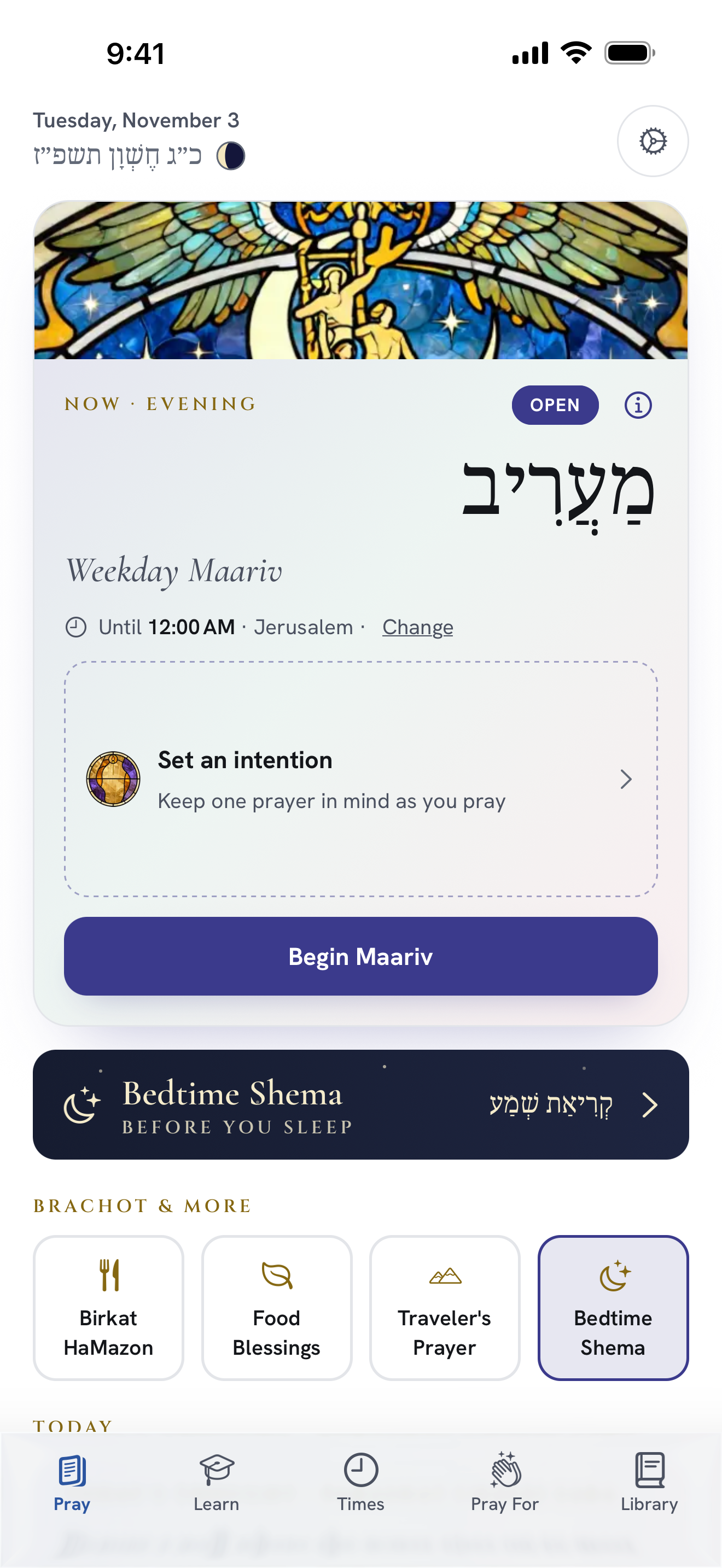
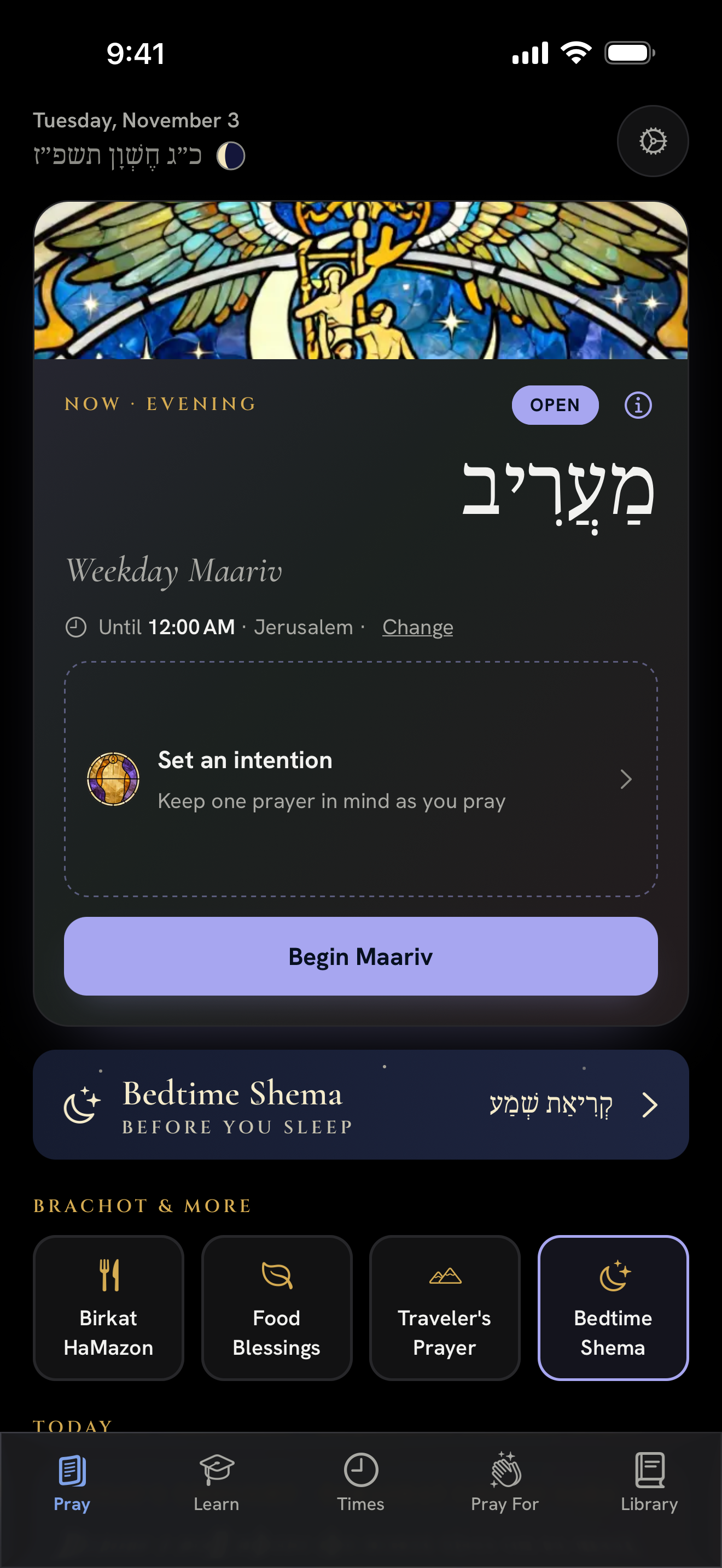
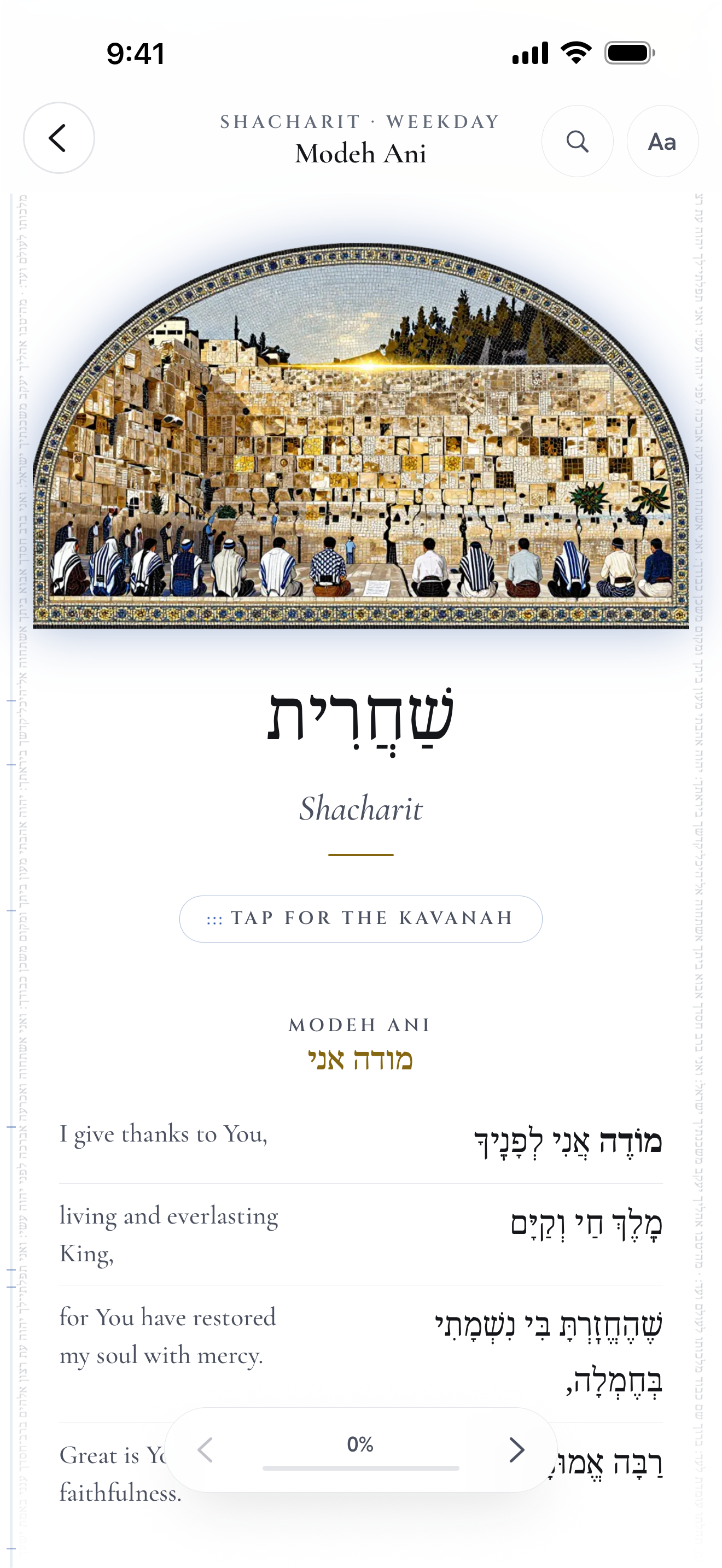
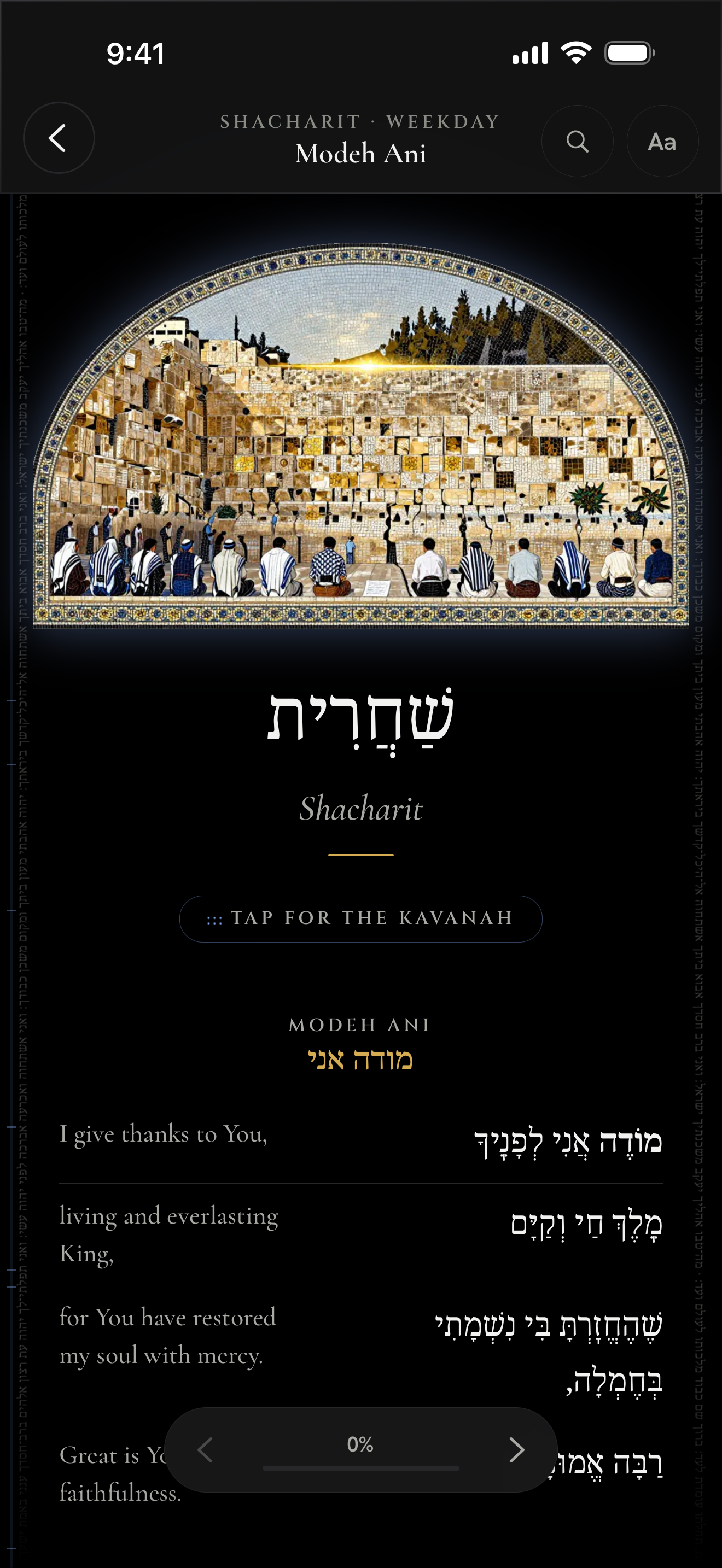
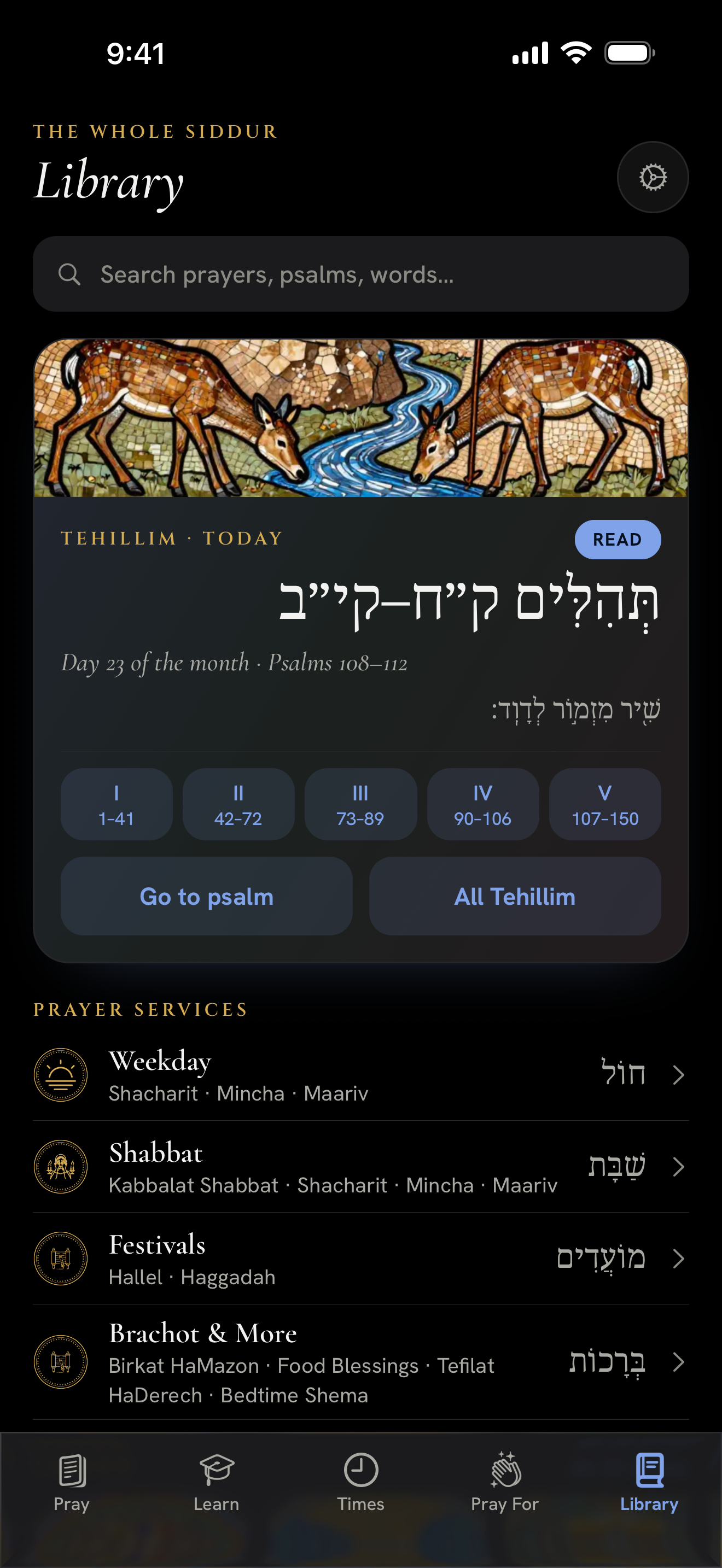
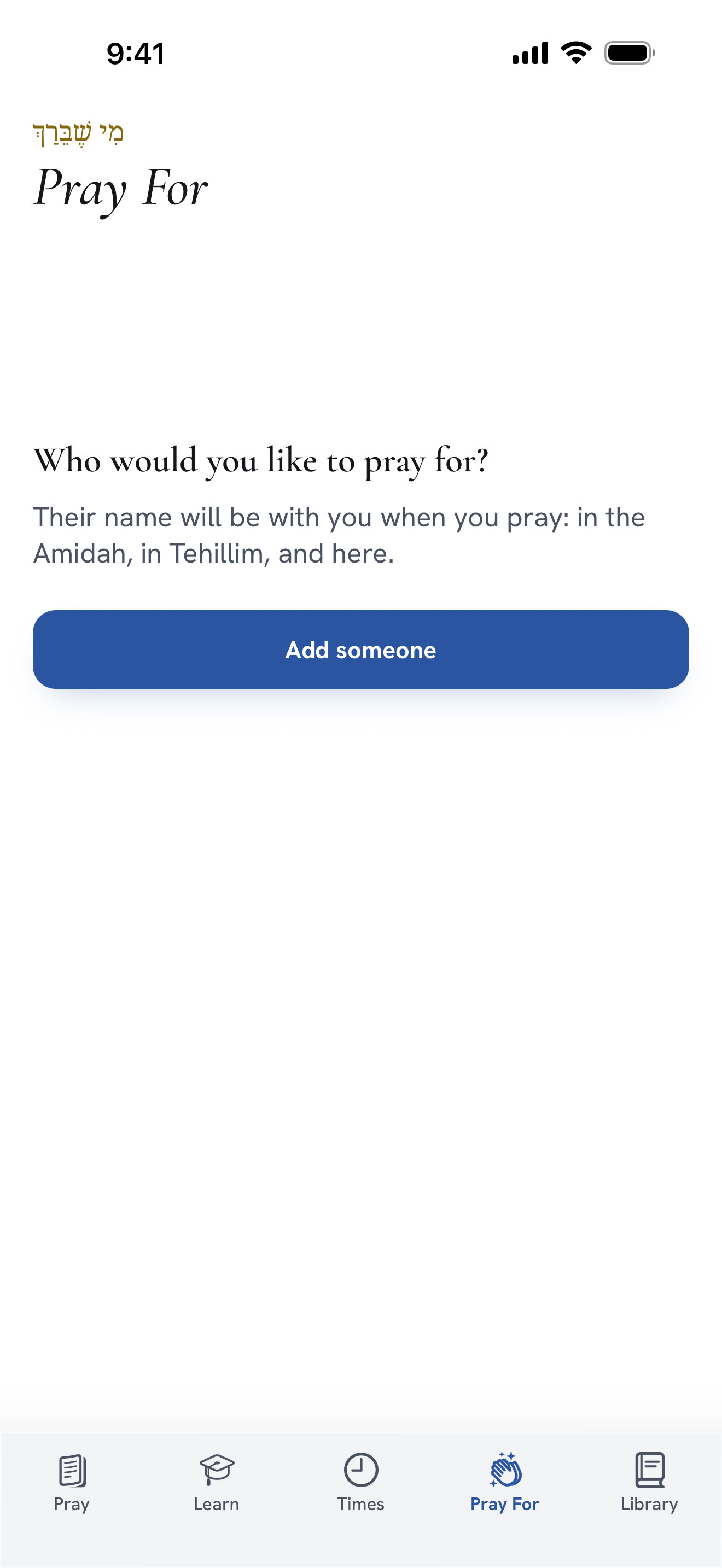
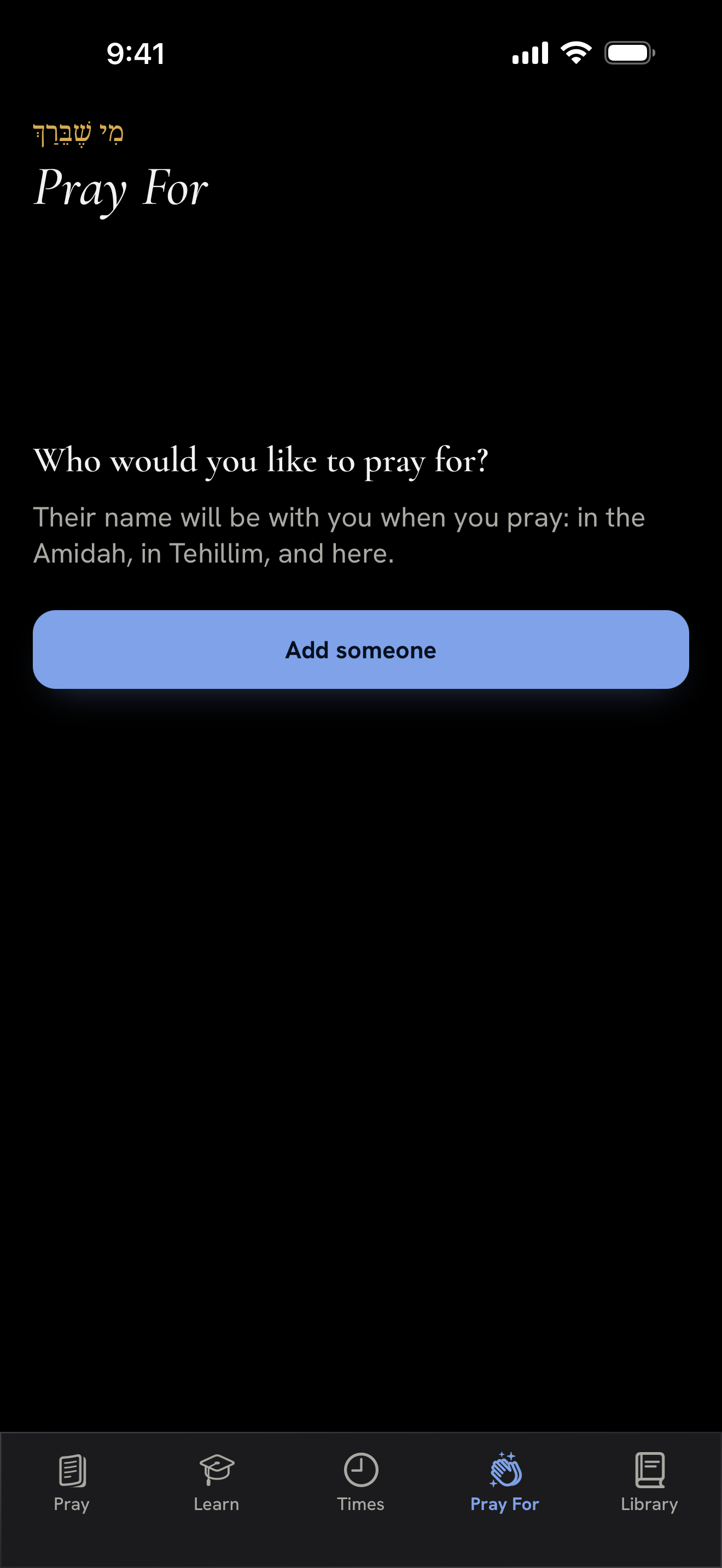
iPhone simulator preview.
Hardware preview. Simulator capture pending.
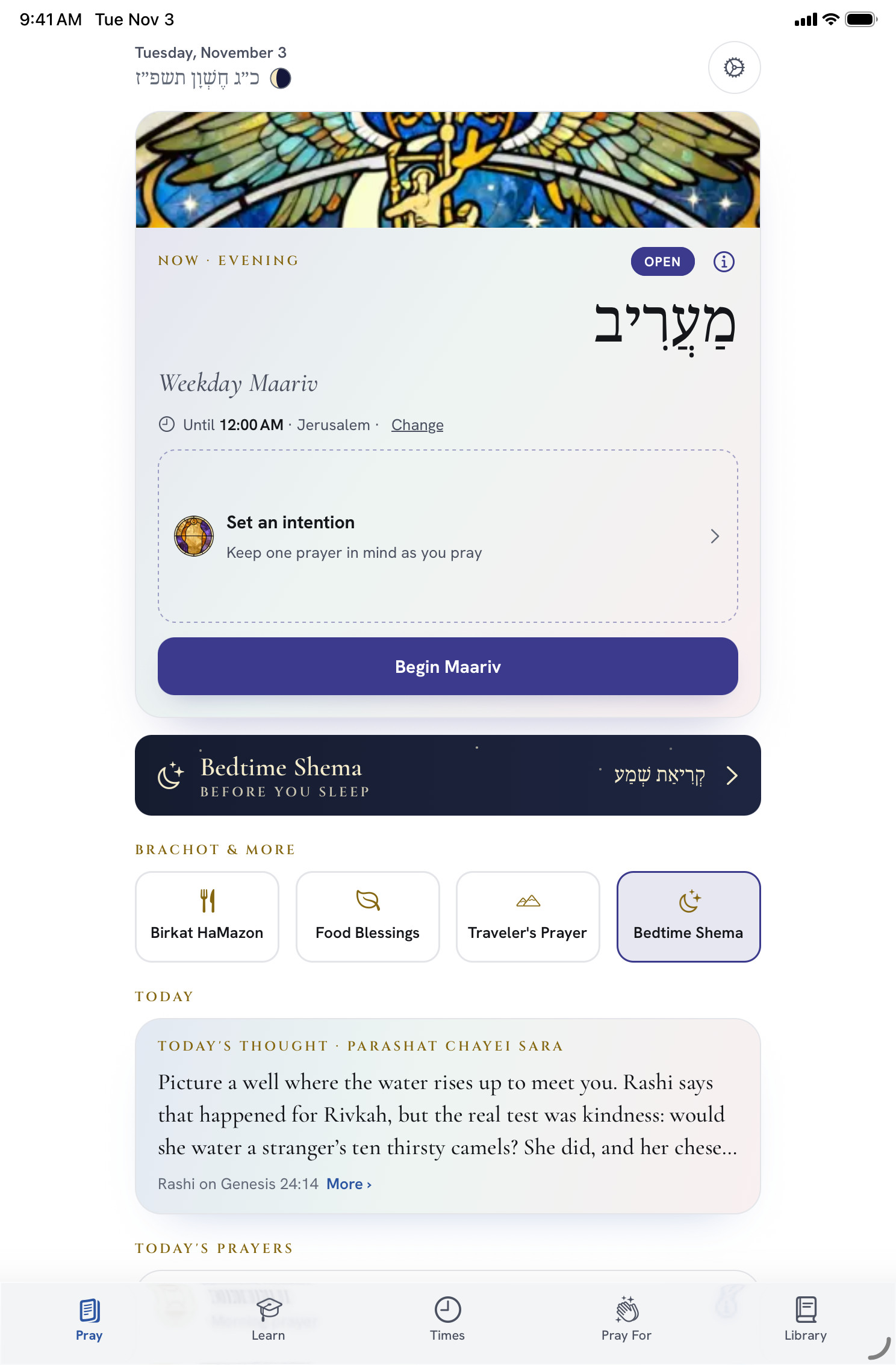
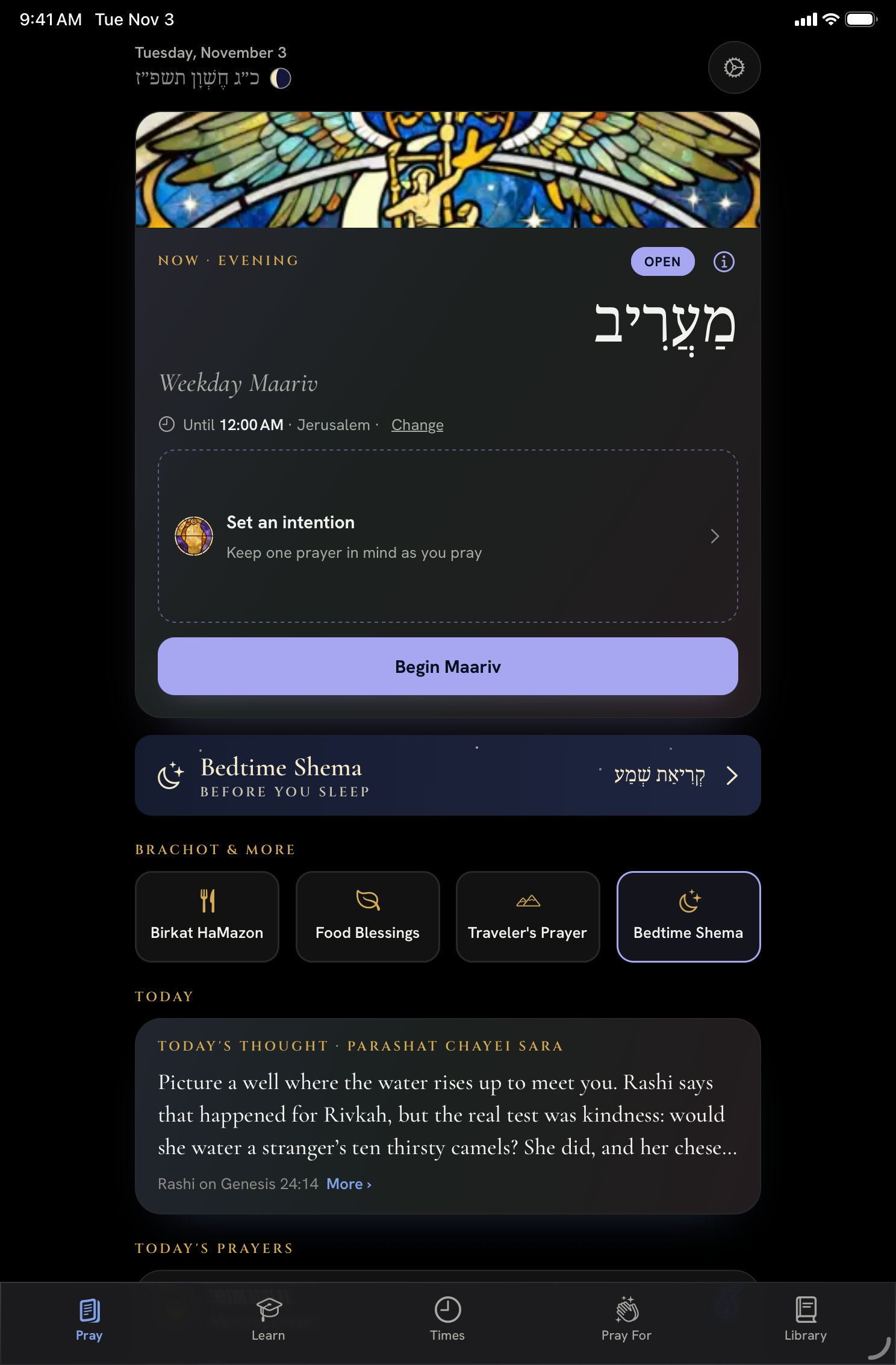
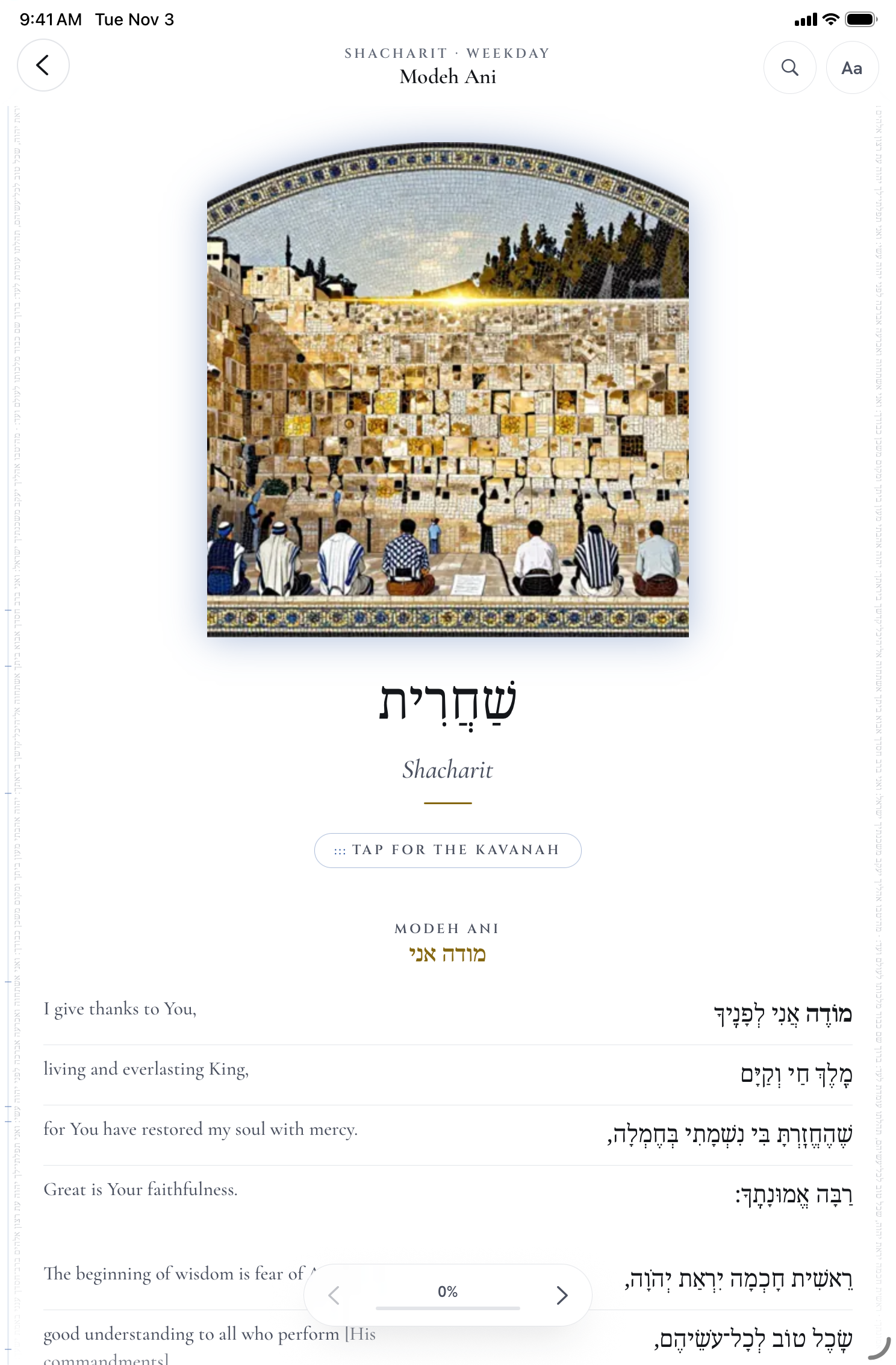
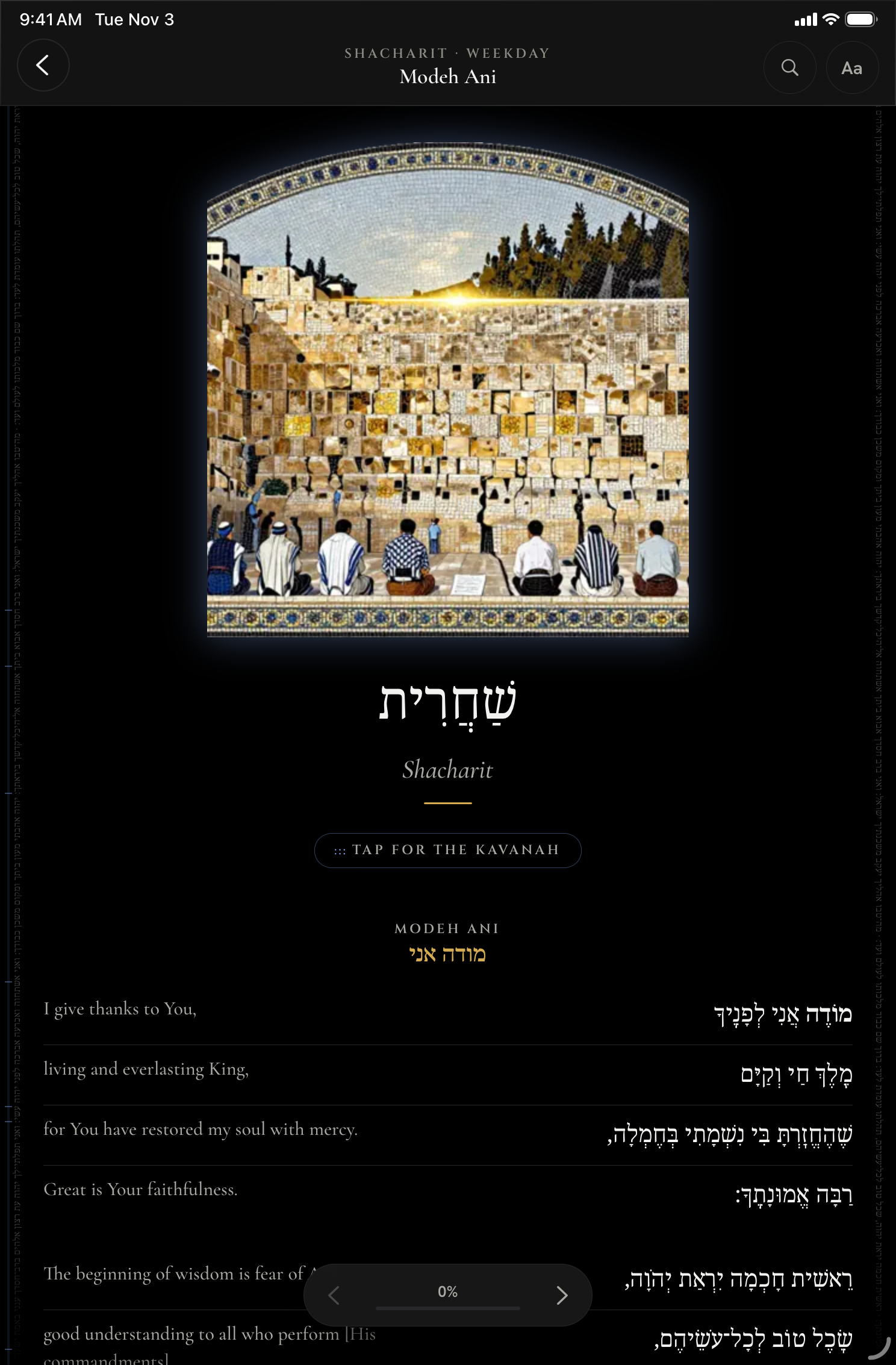
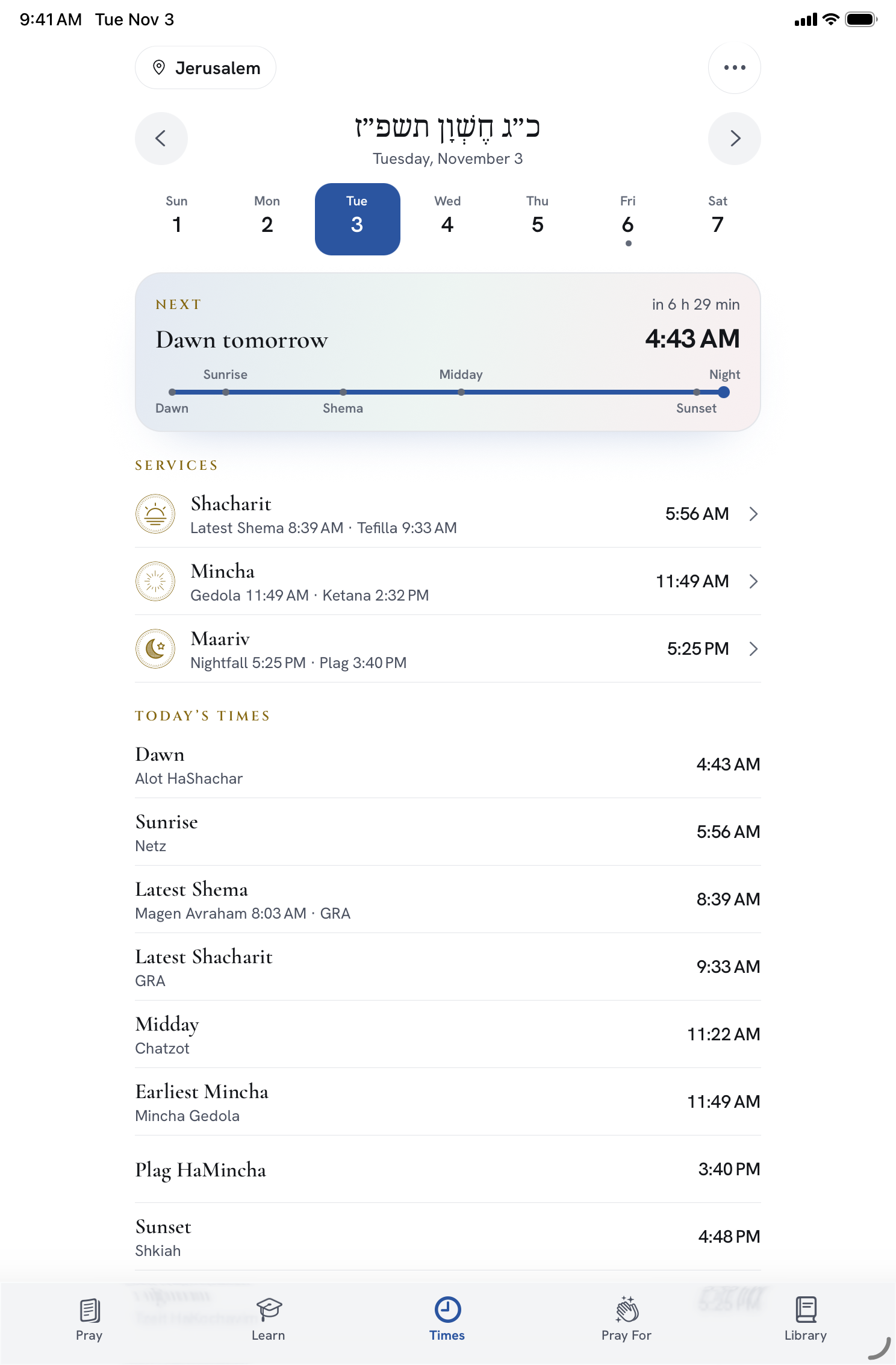
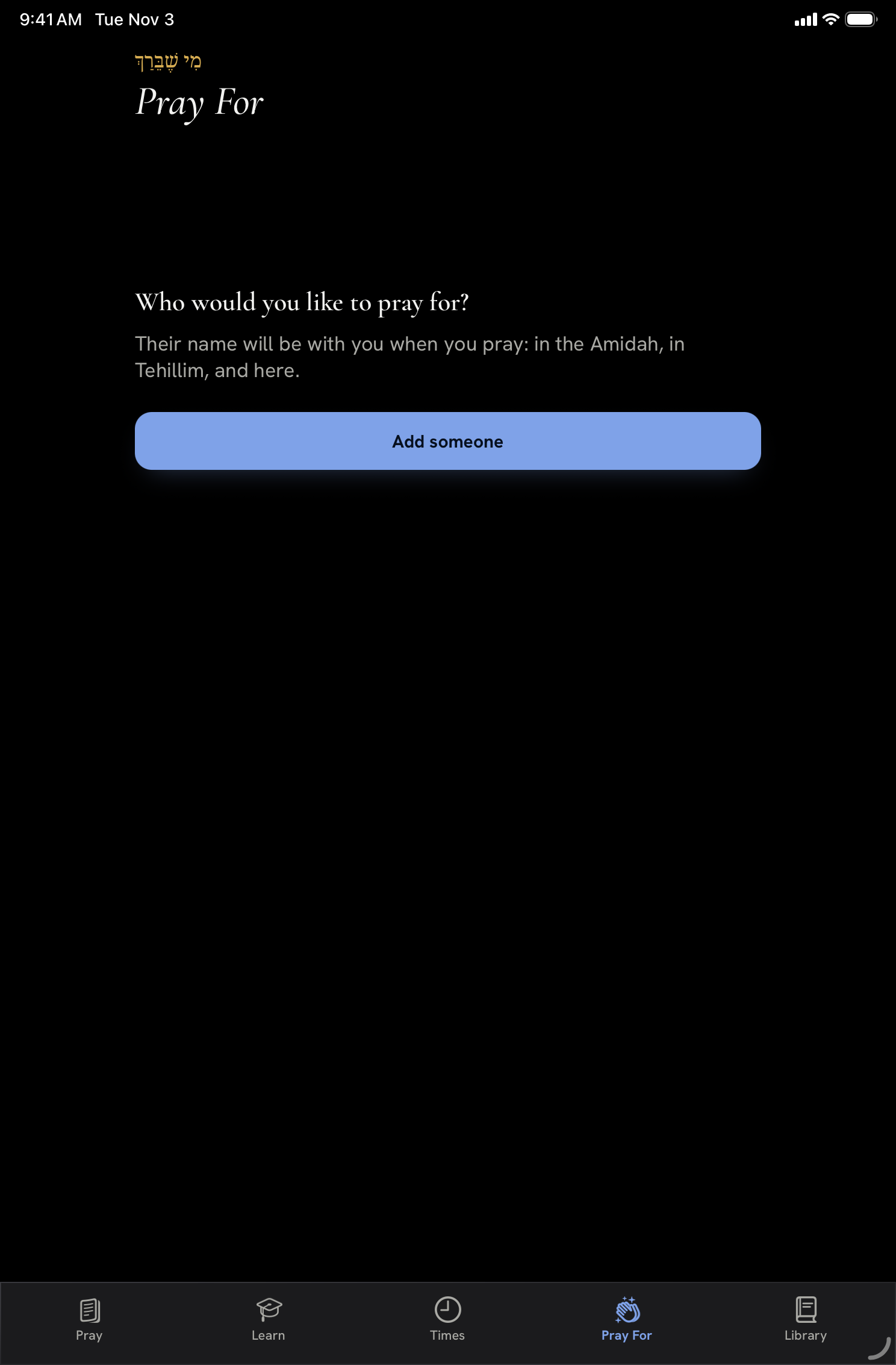
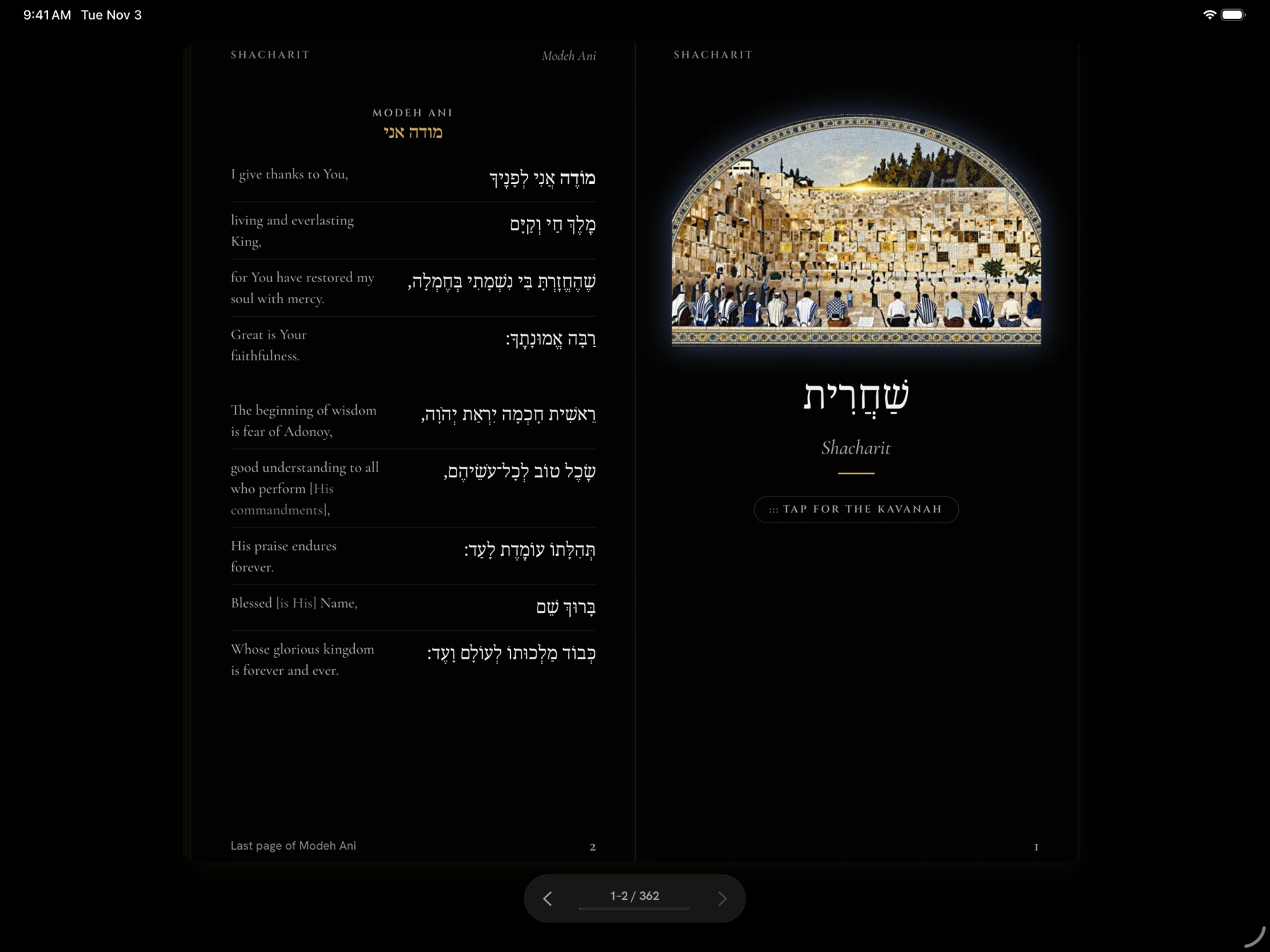
Experimental iPad simulator preview.
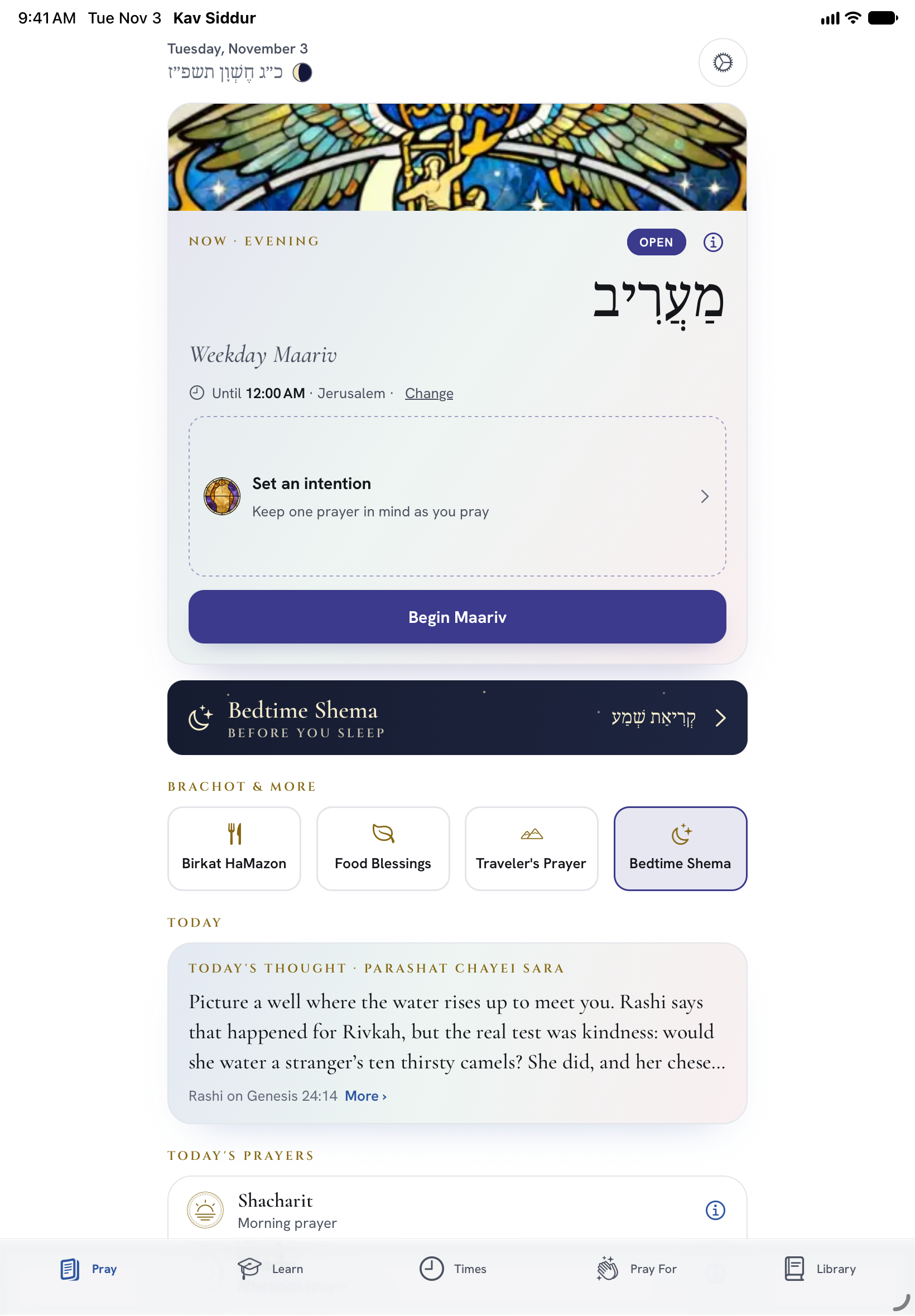
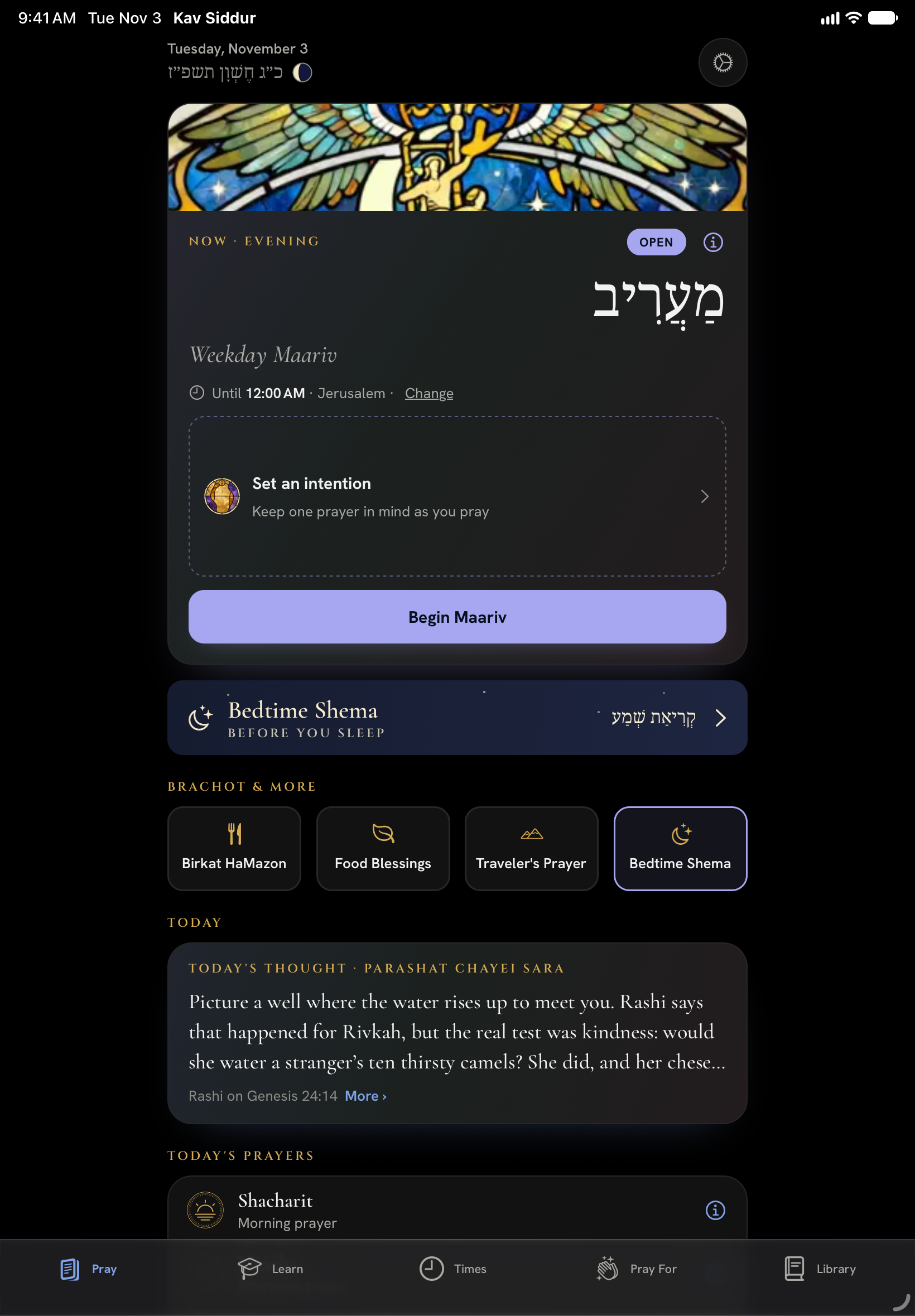
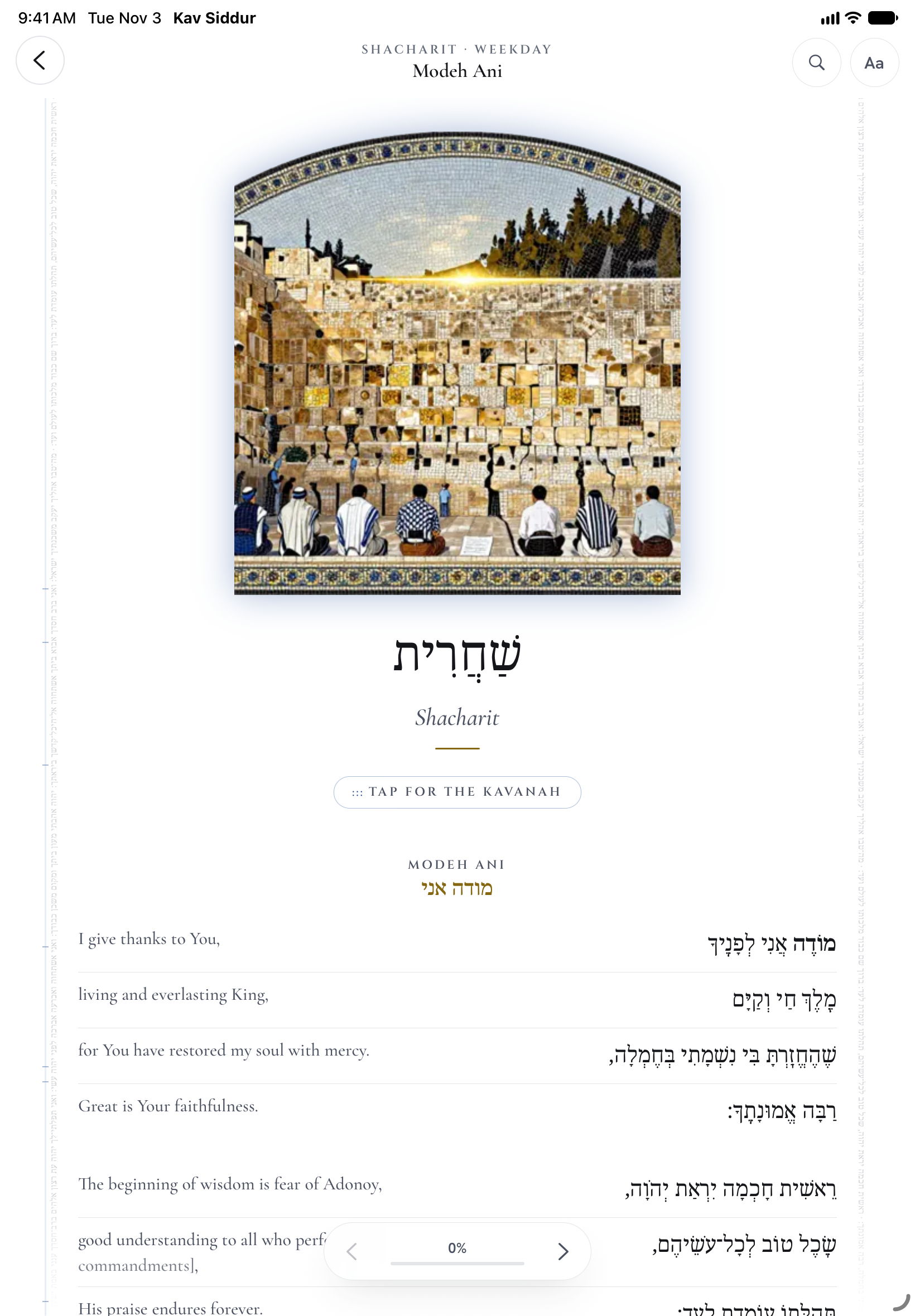
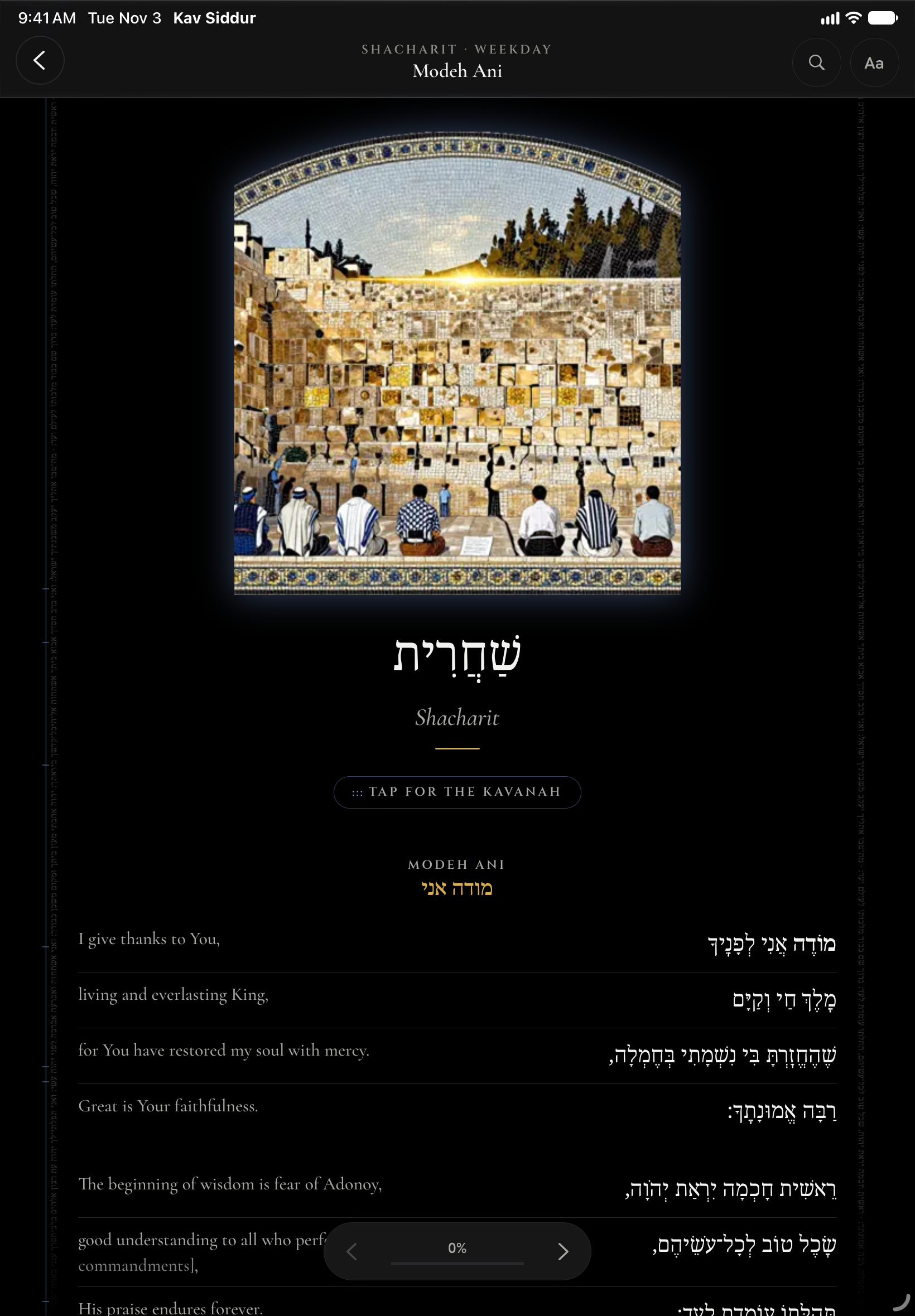
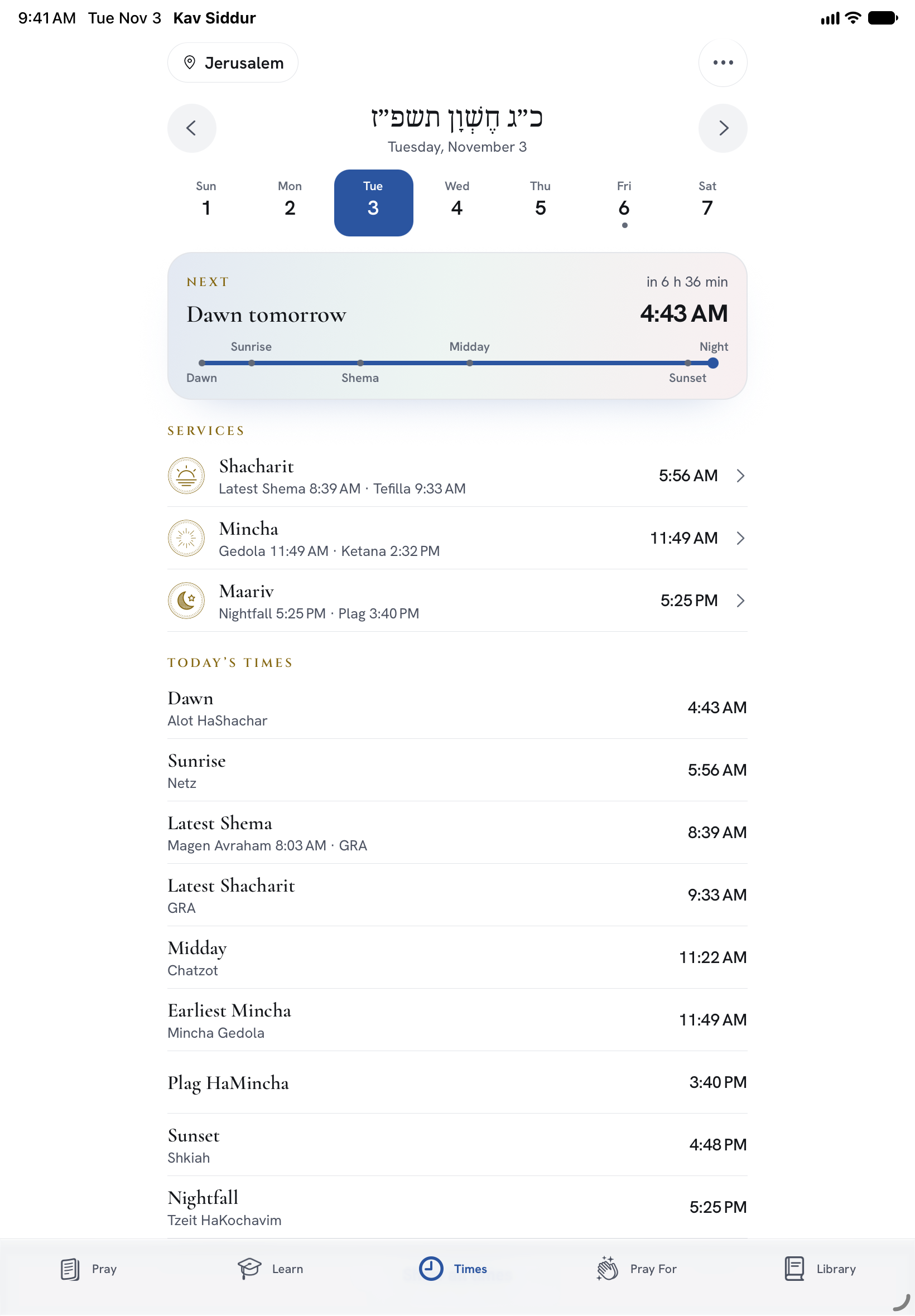
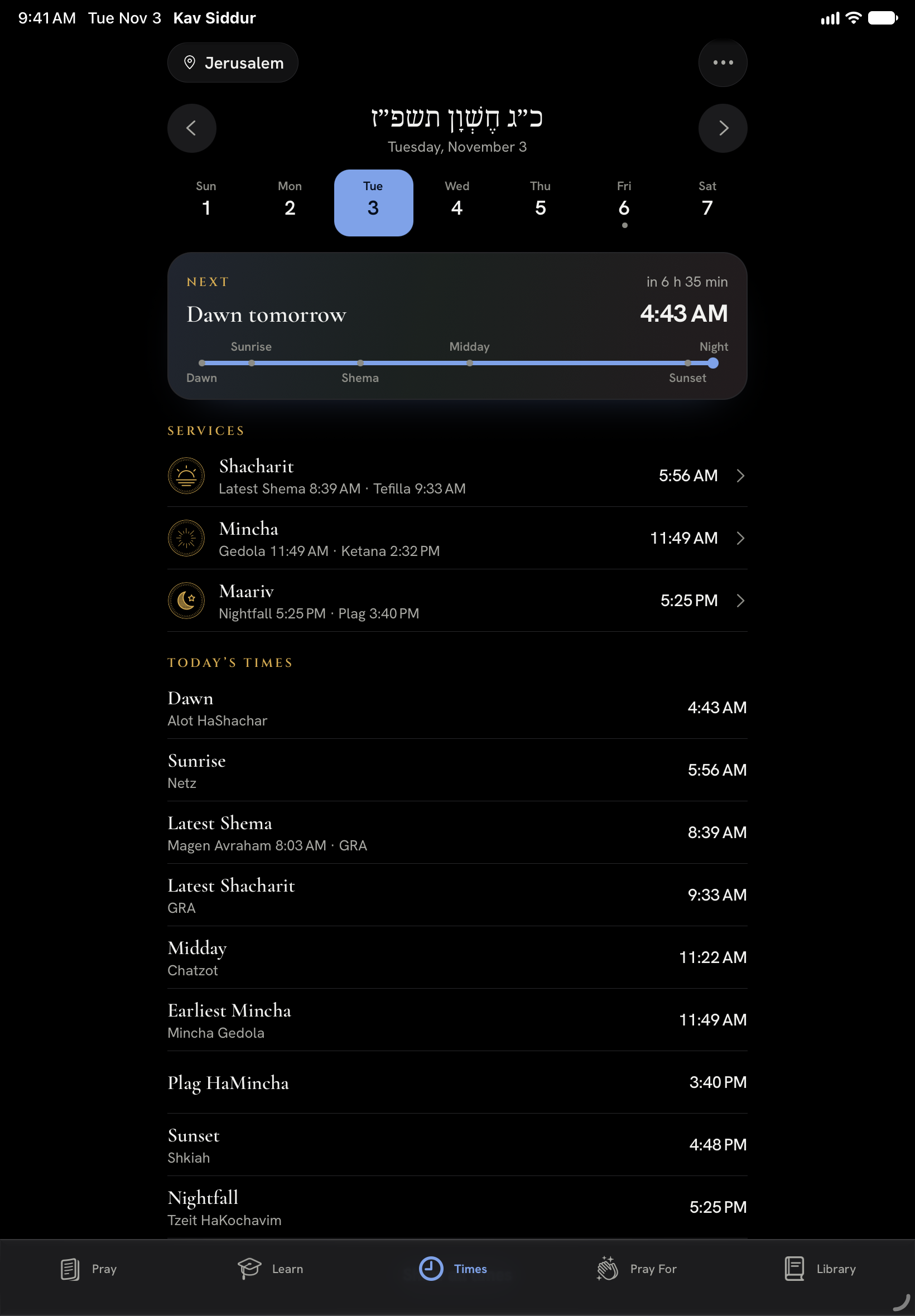
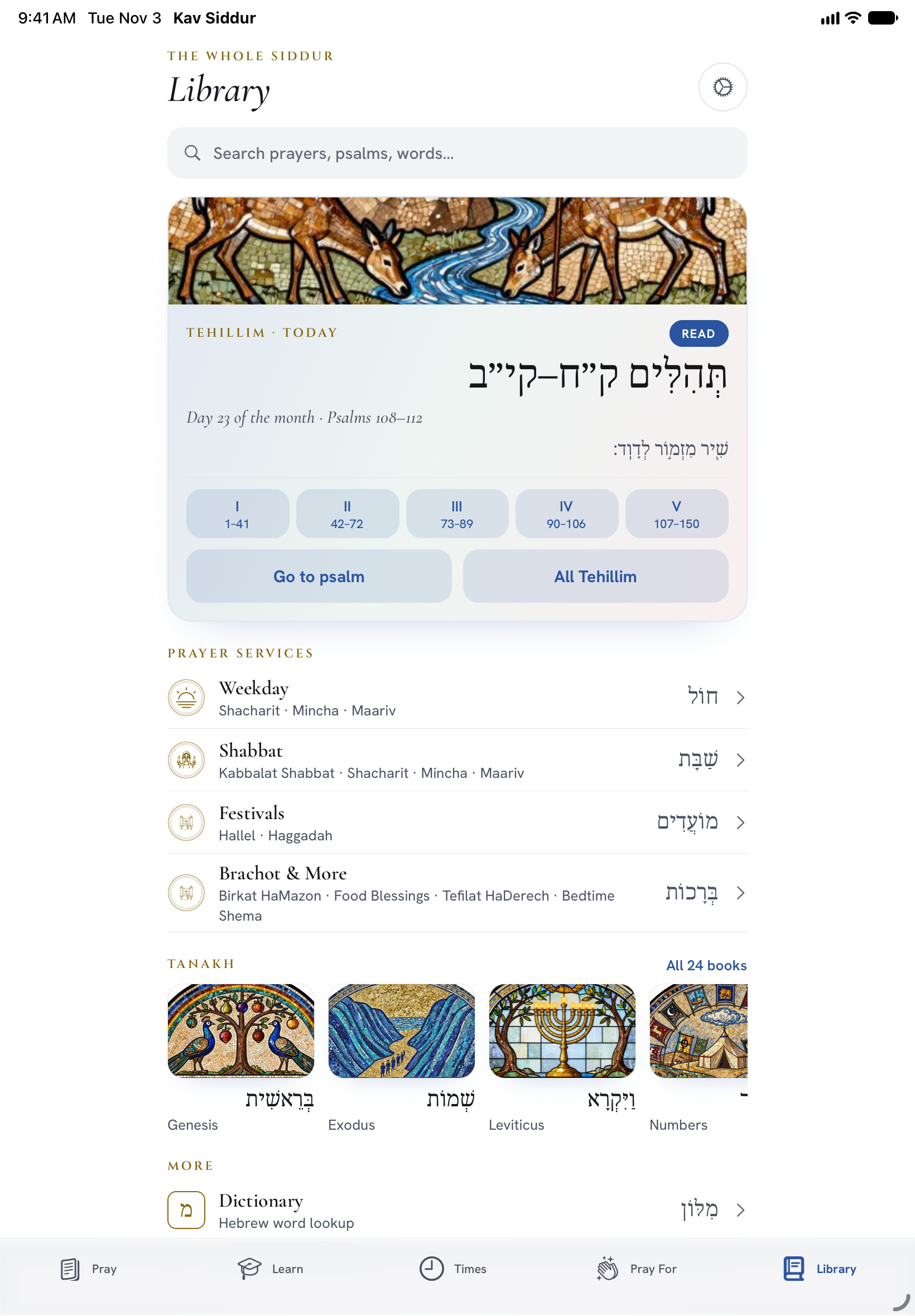
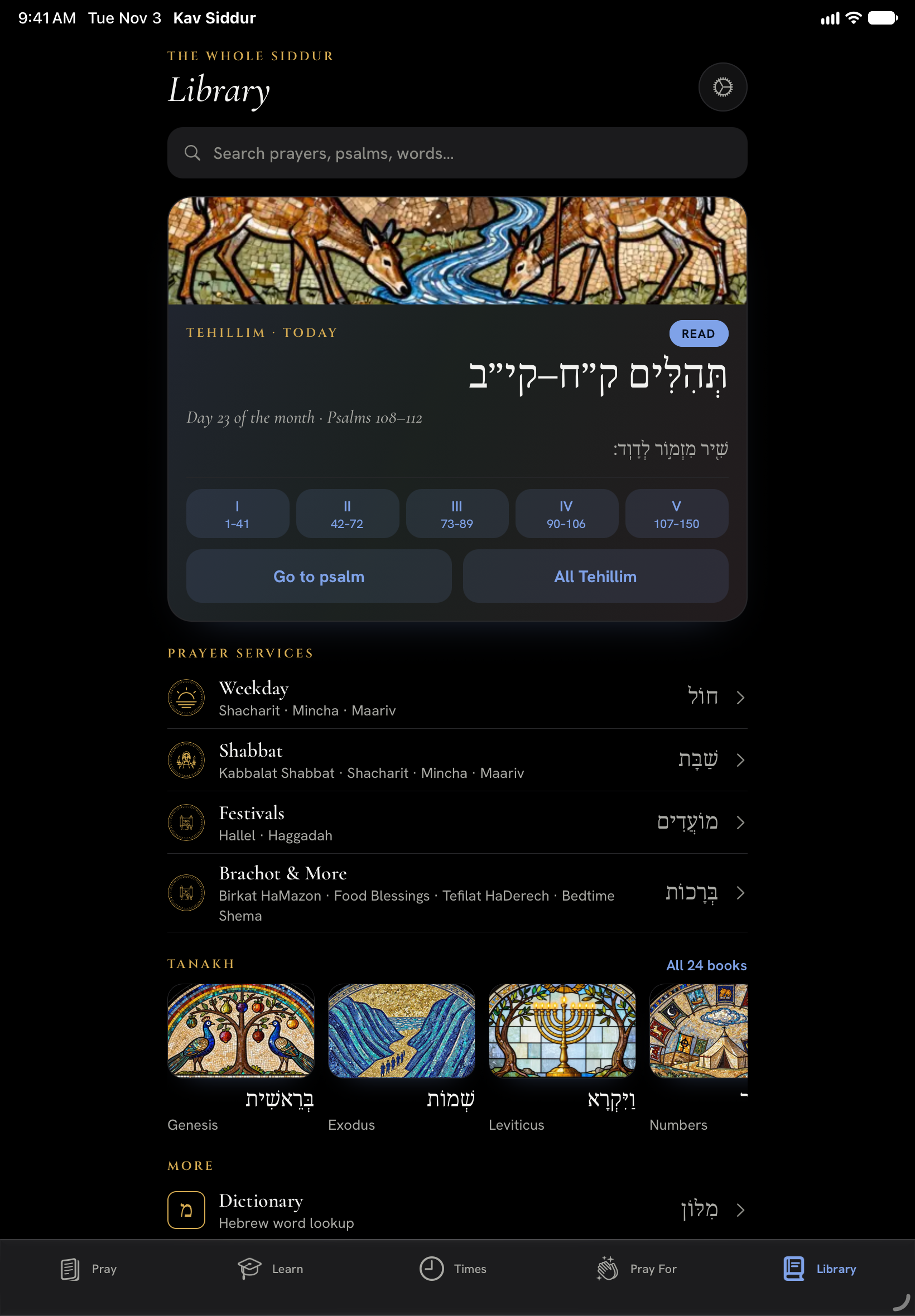
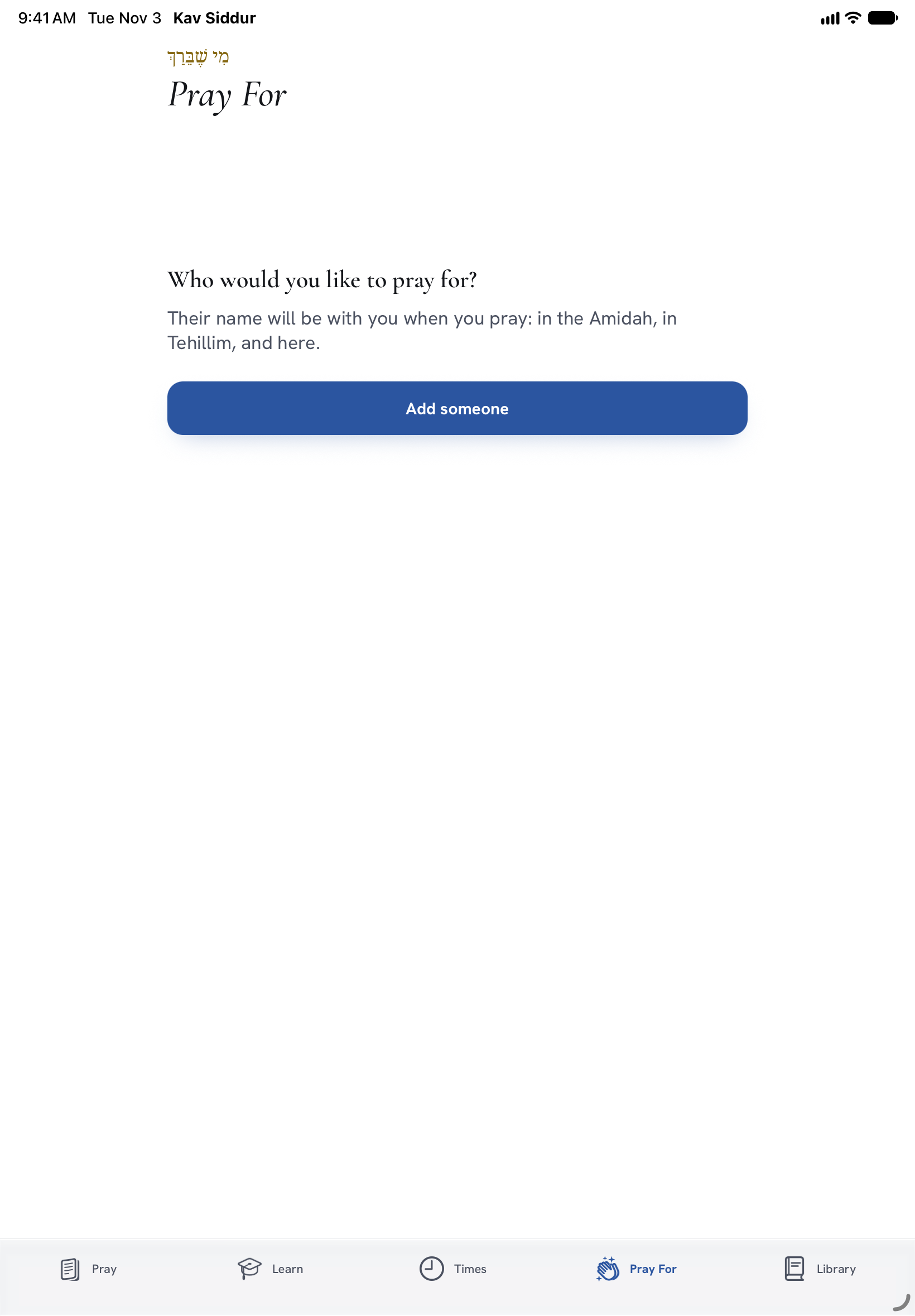
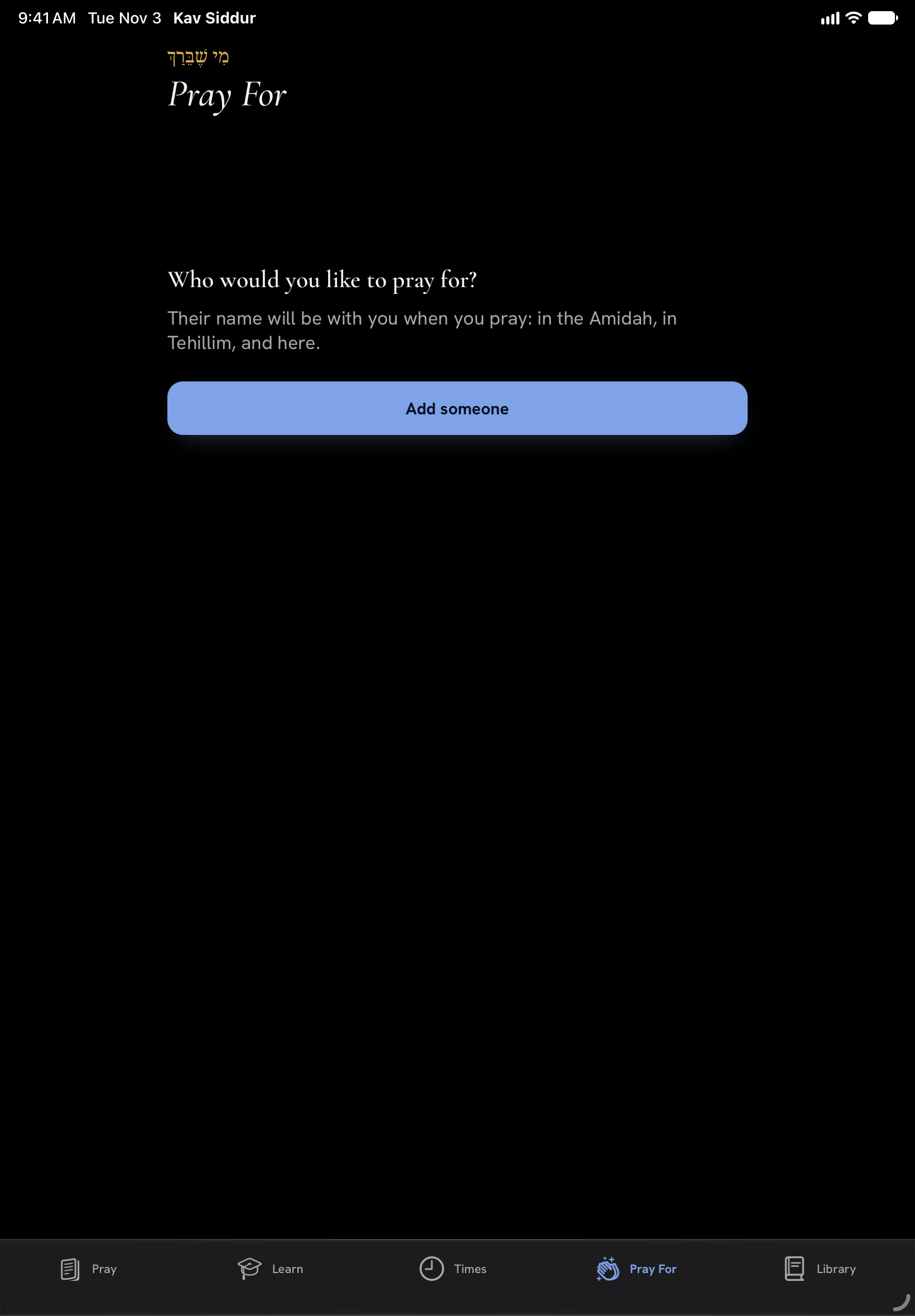
Experimental iPad simulator preview.
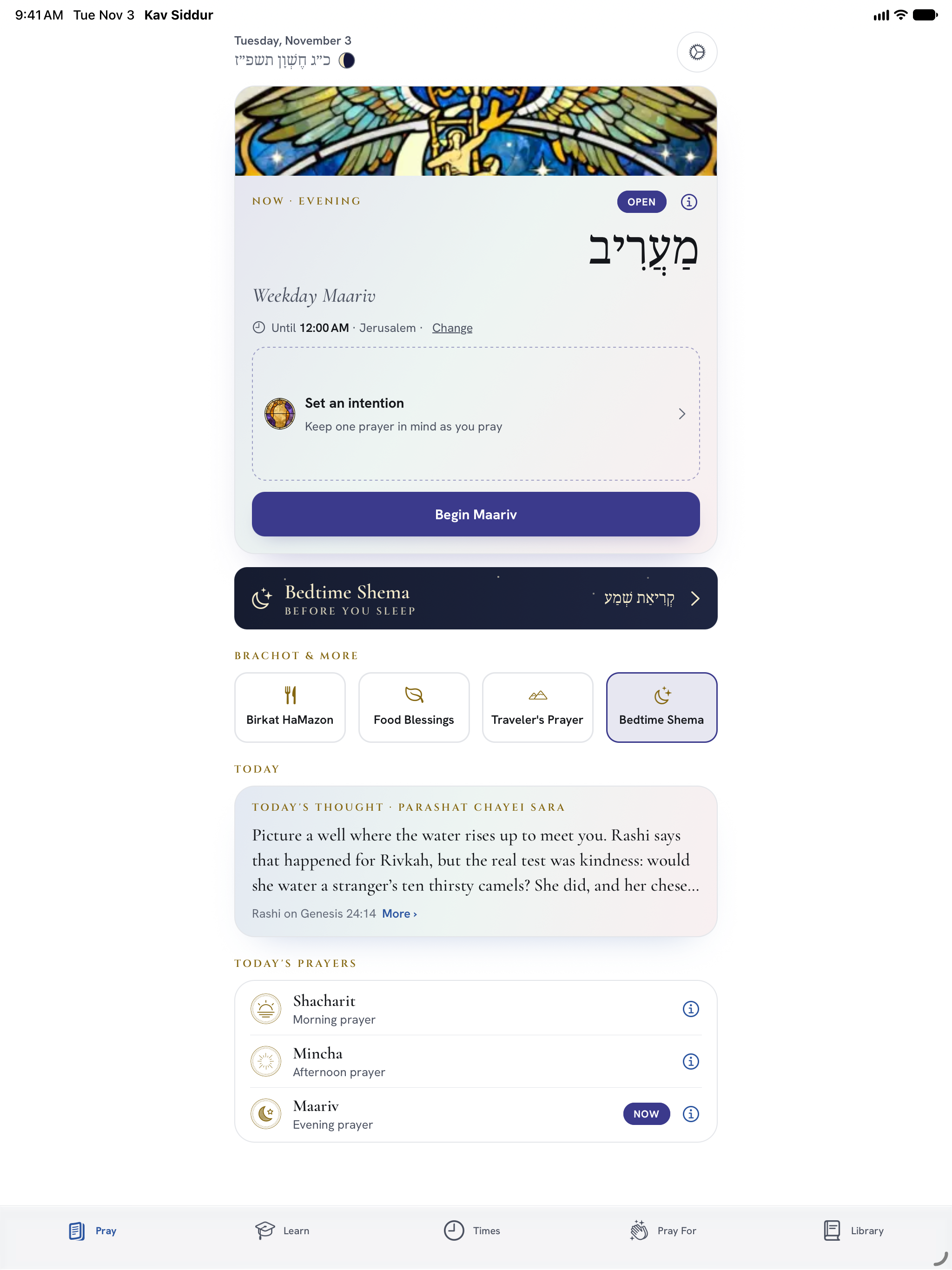
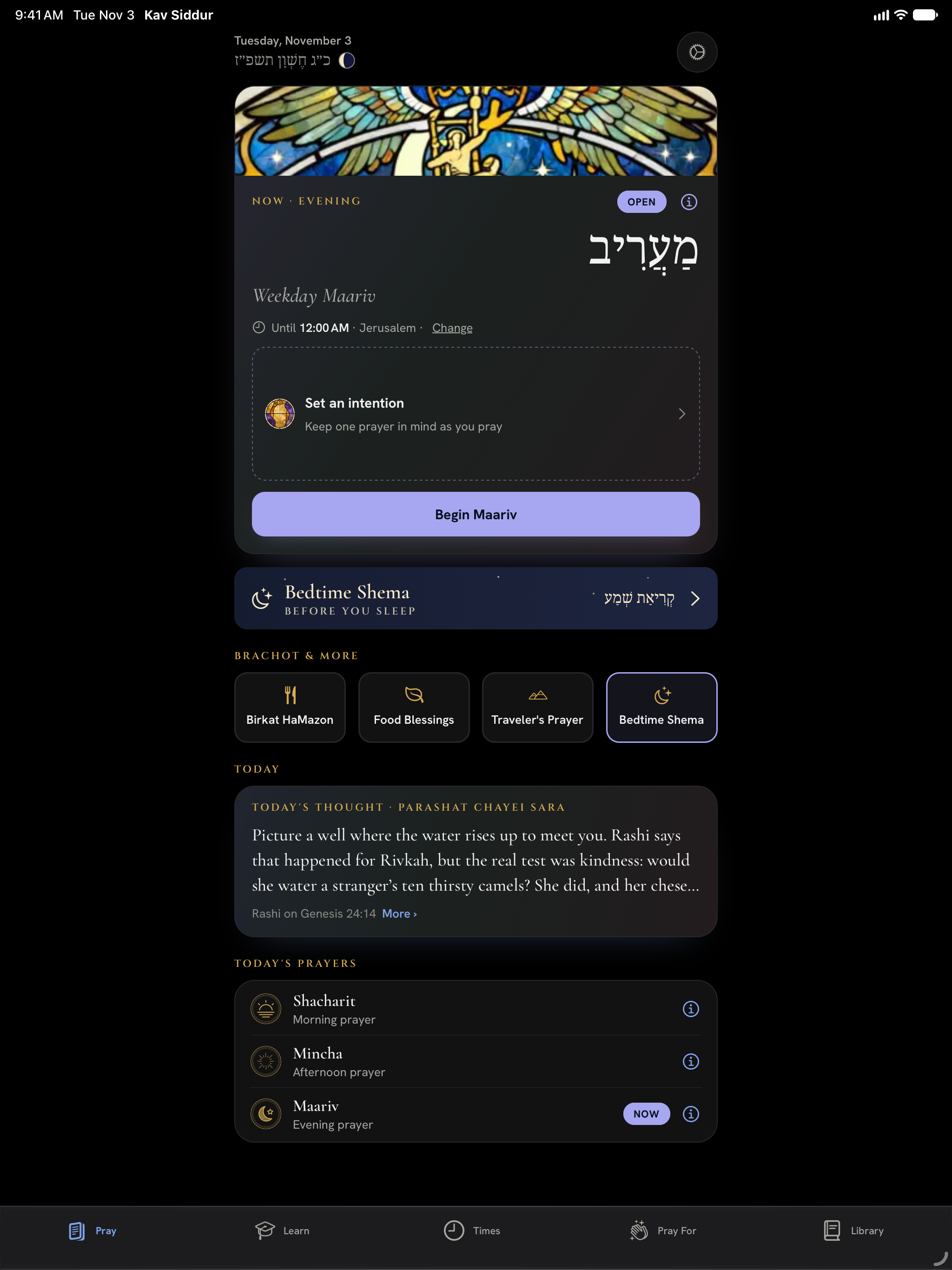
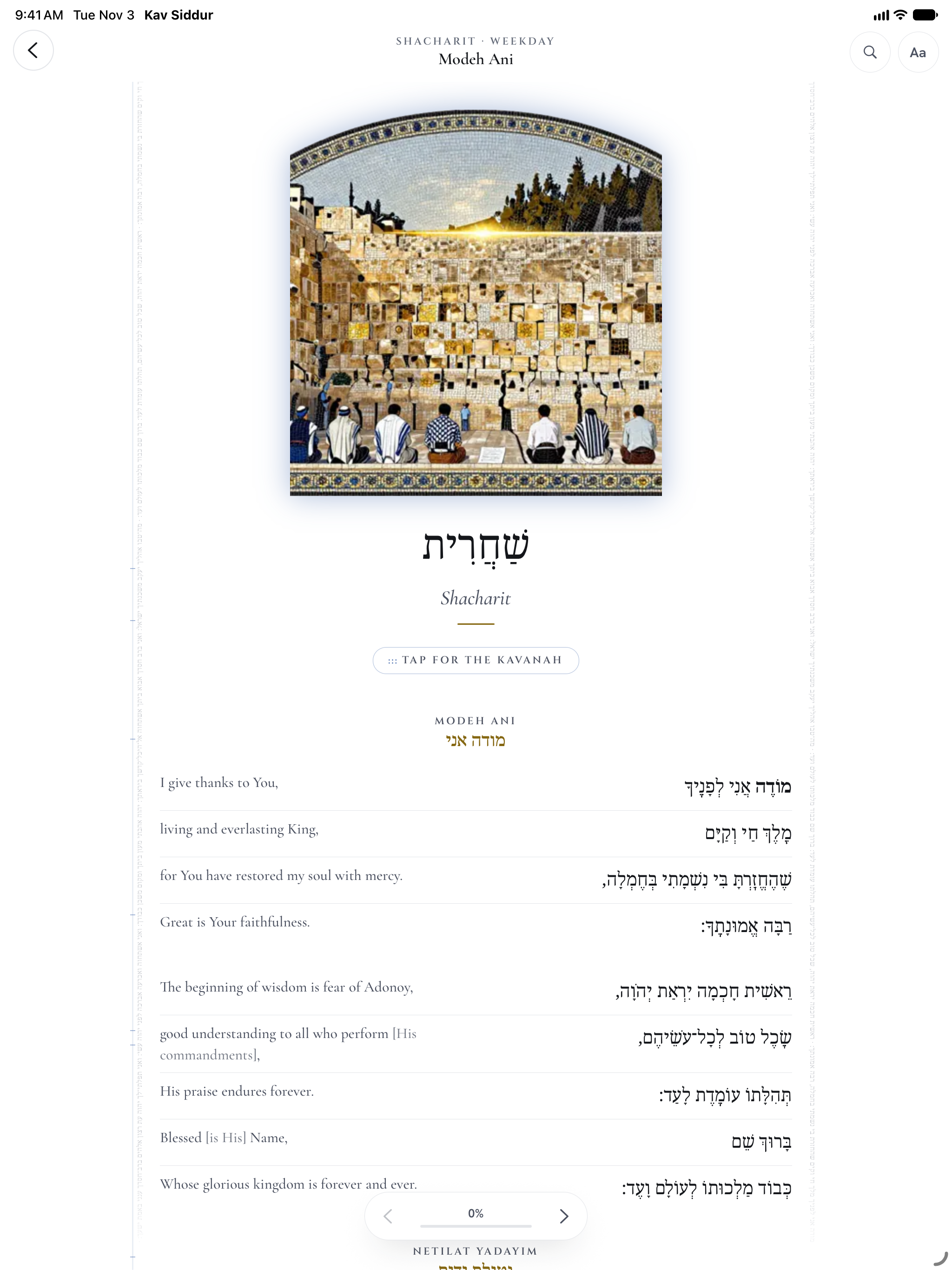
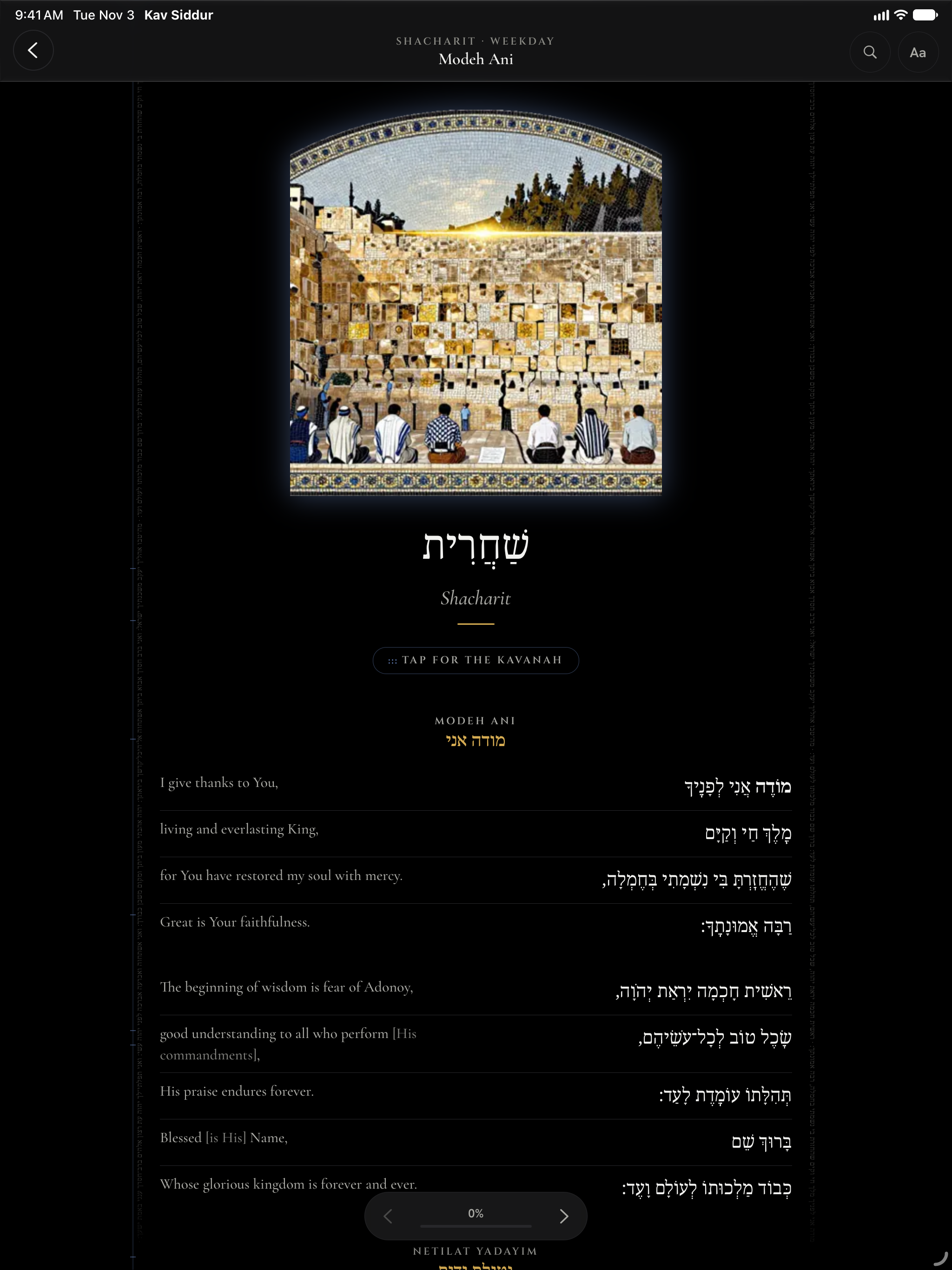
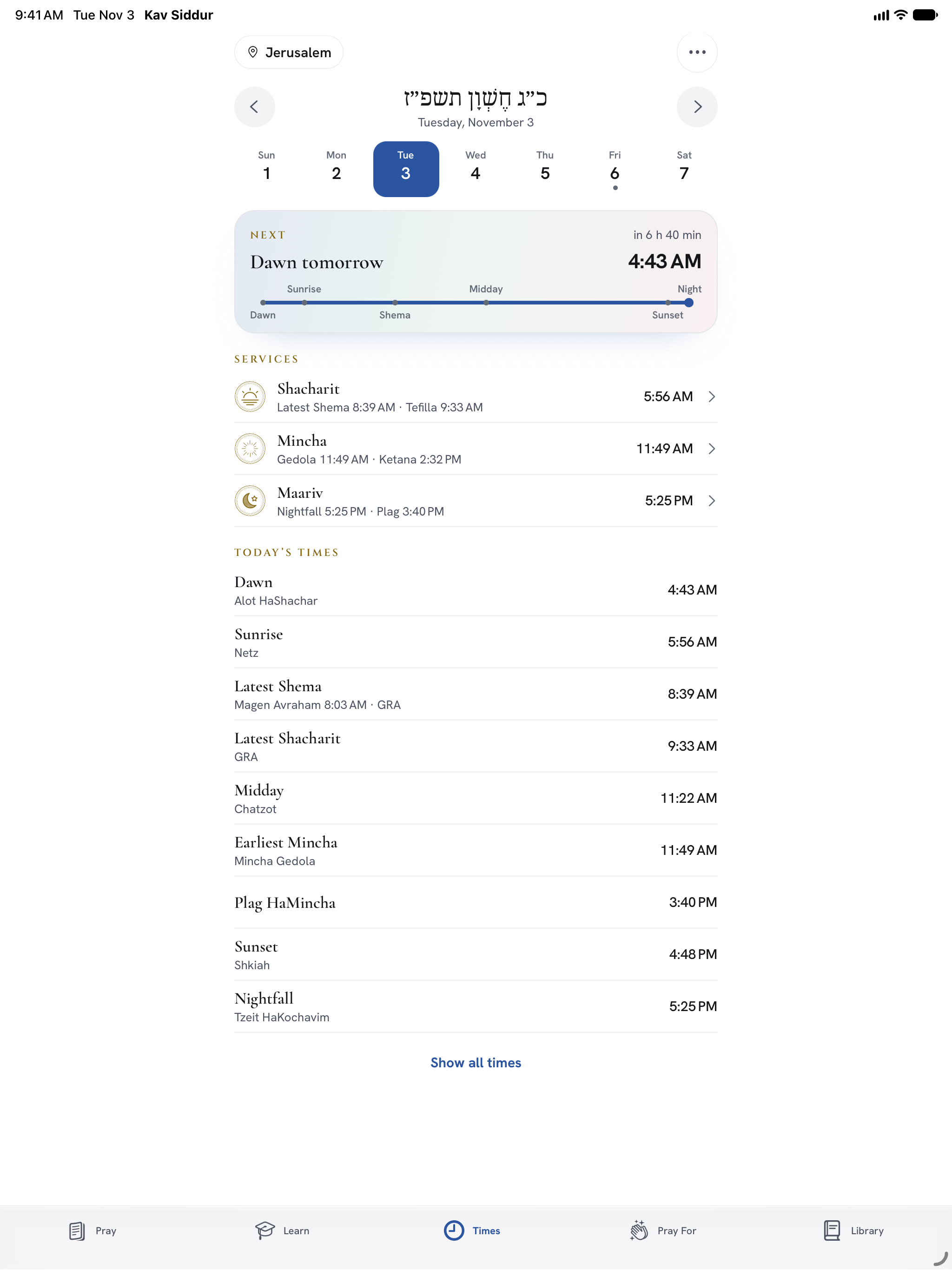
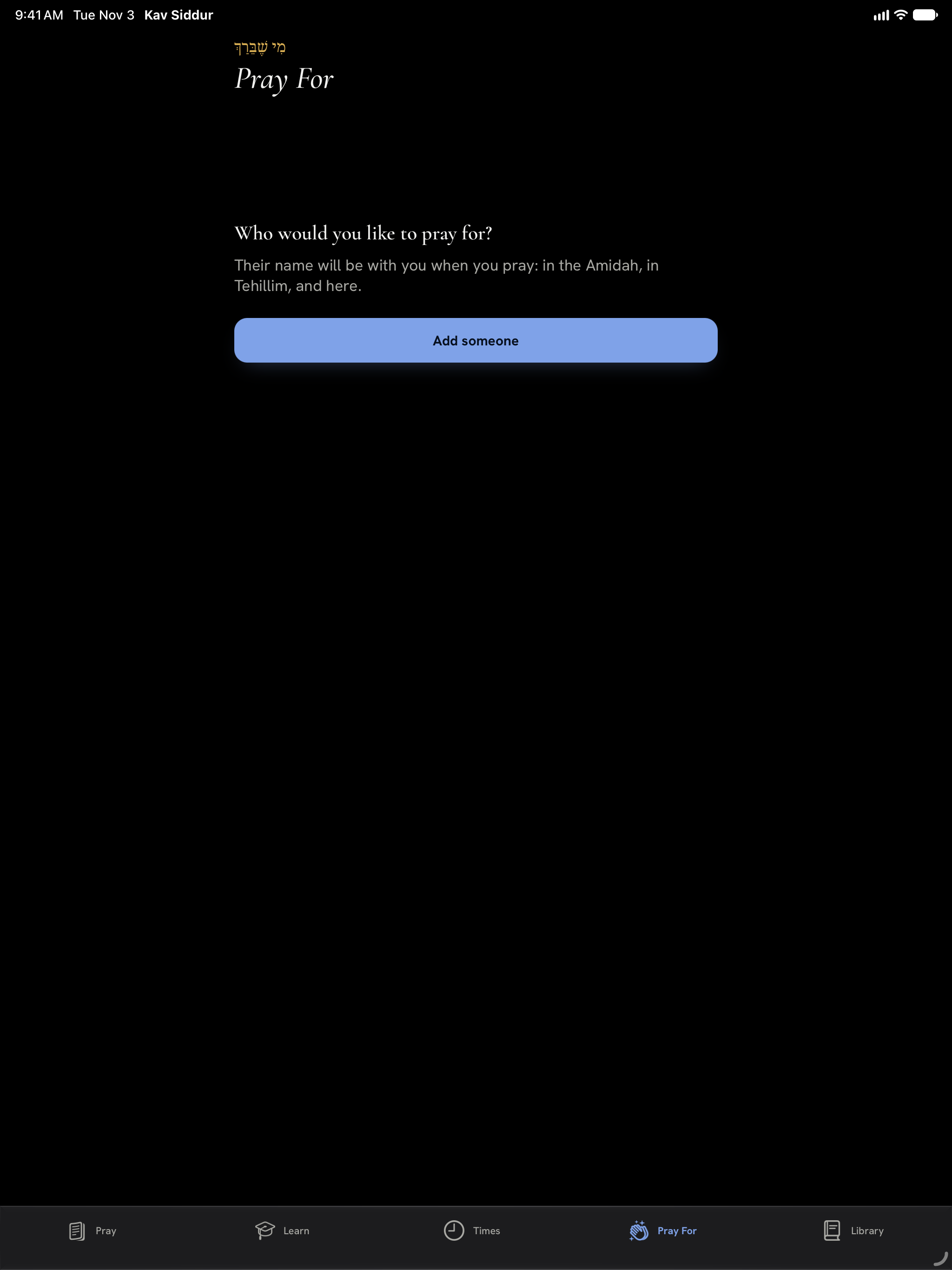
Experimental iPad simulator preview.
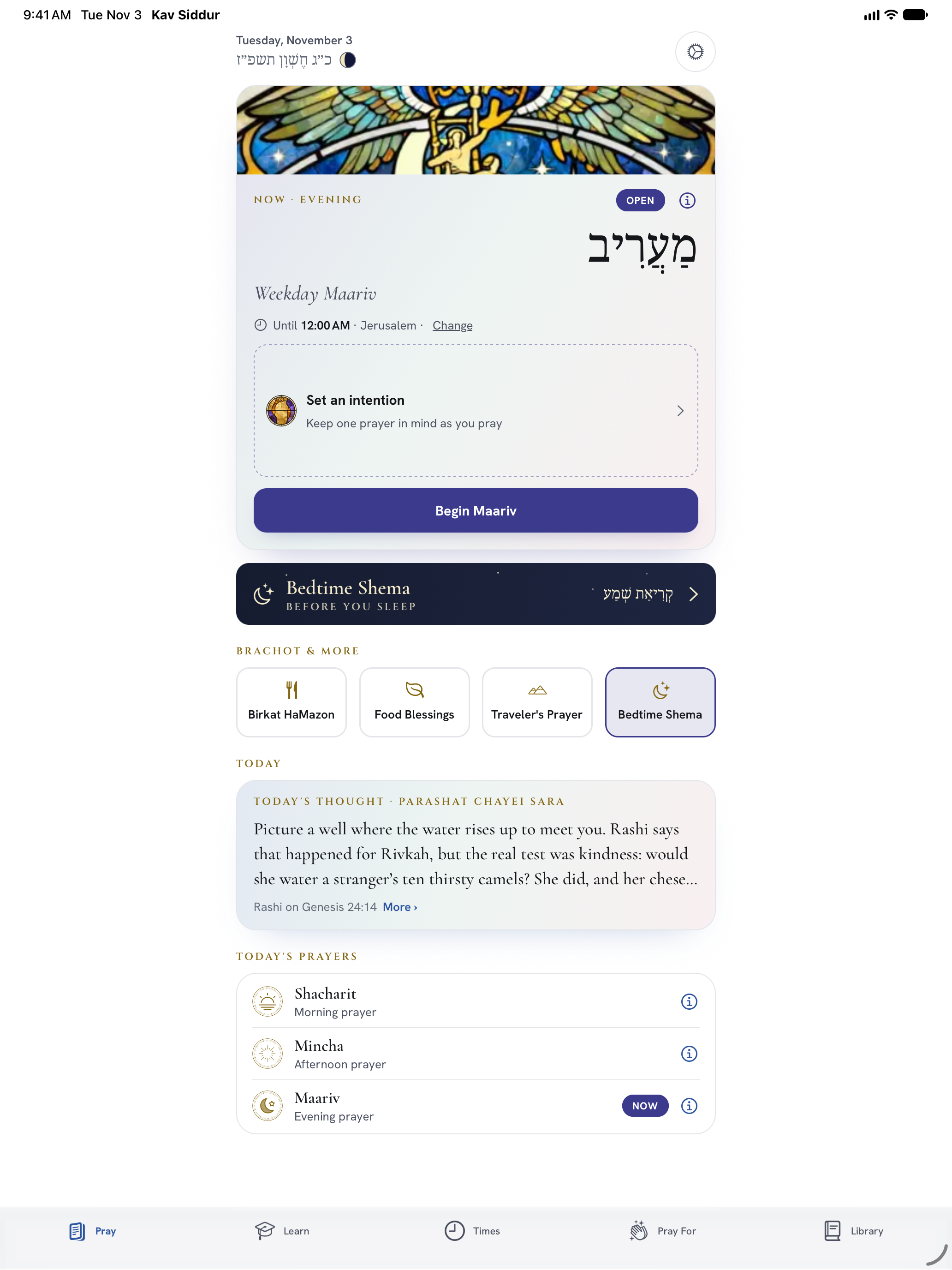
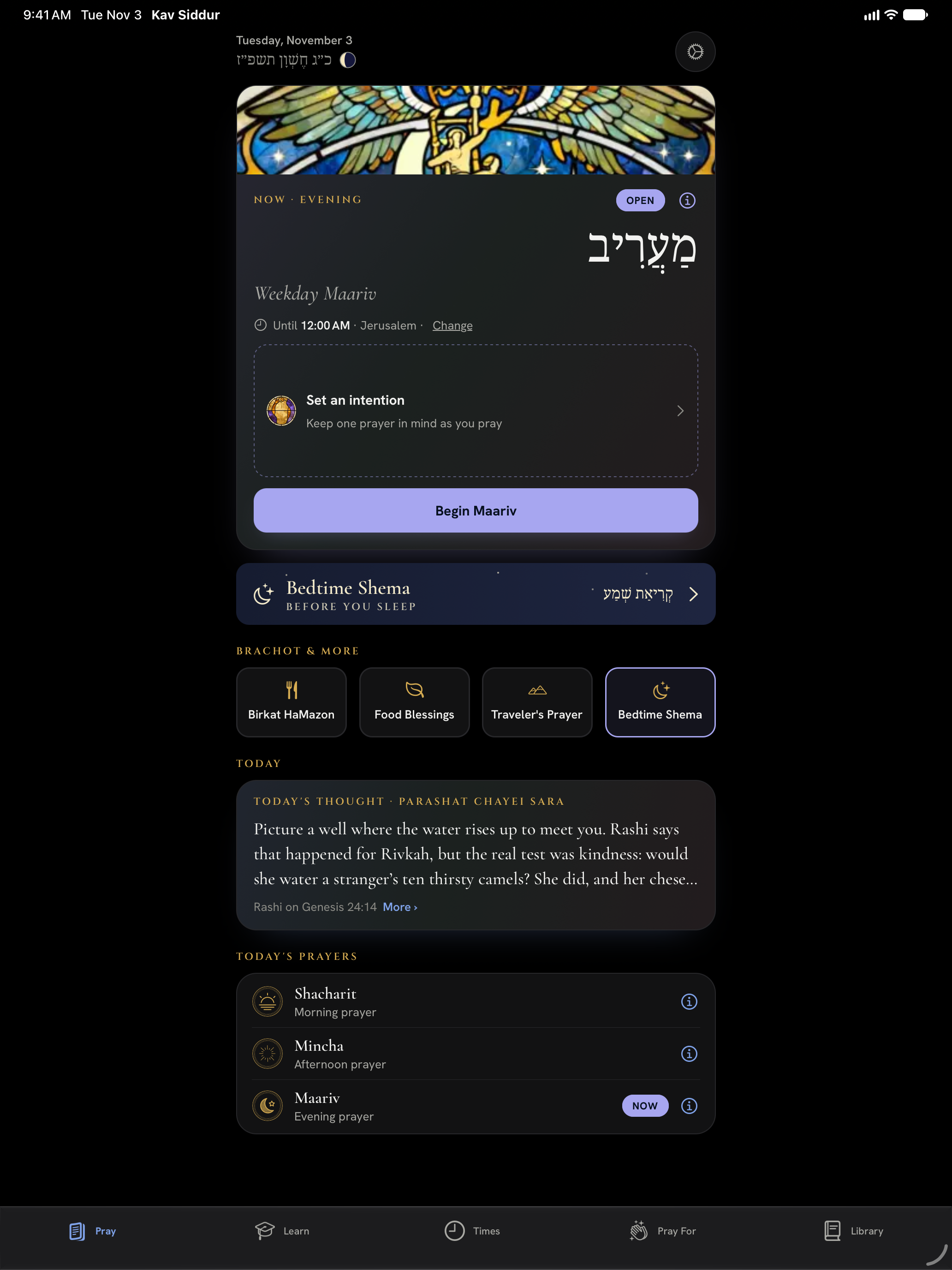
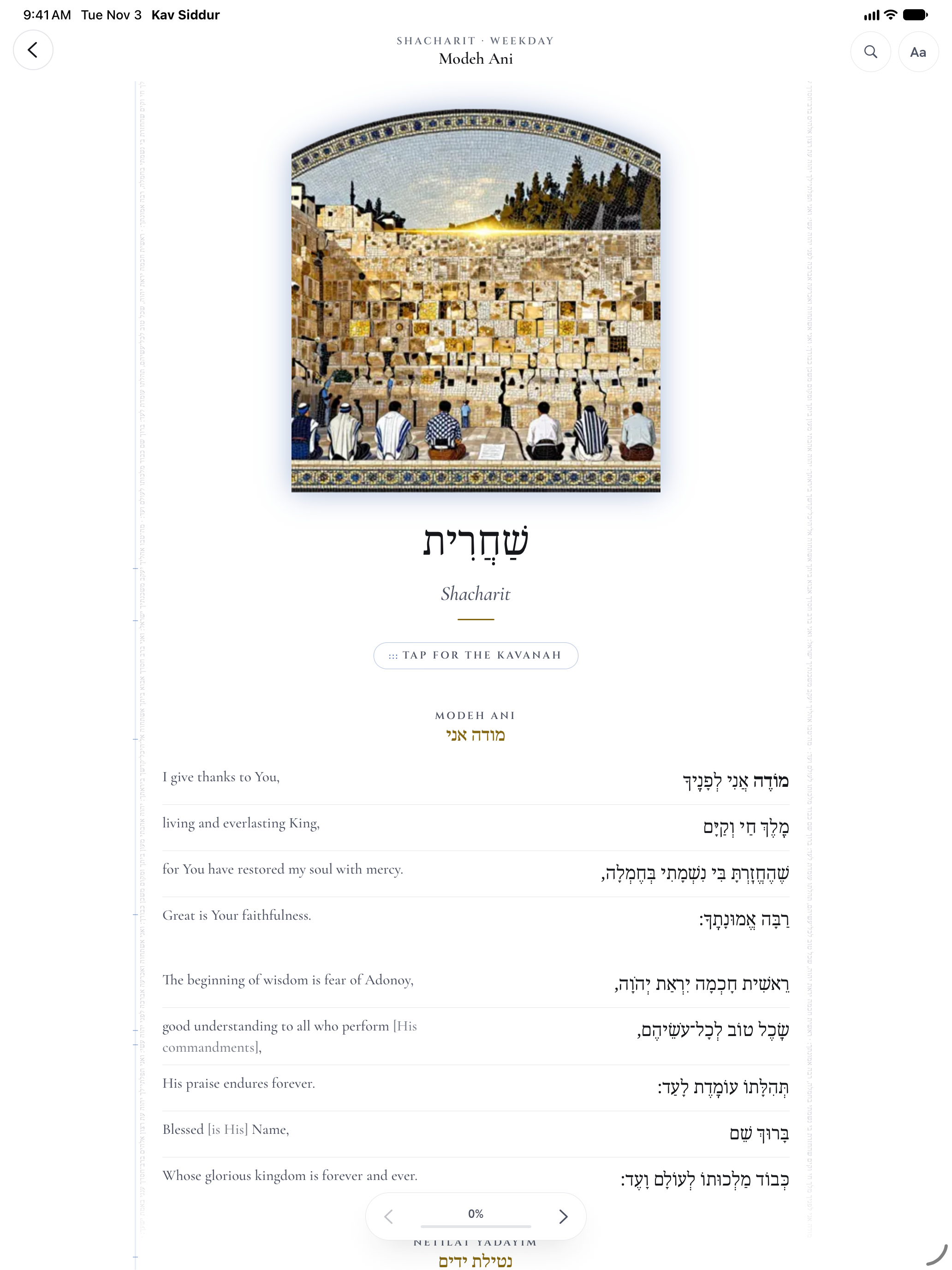
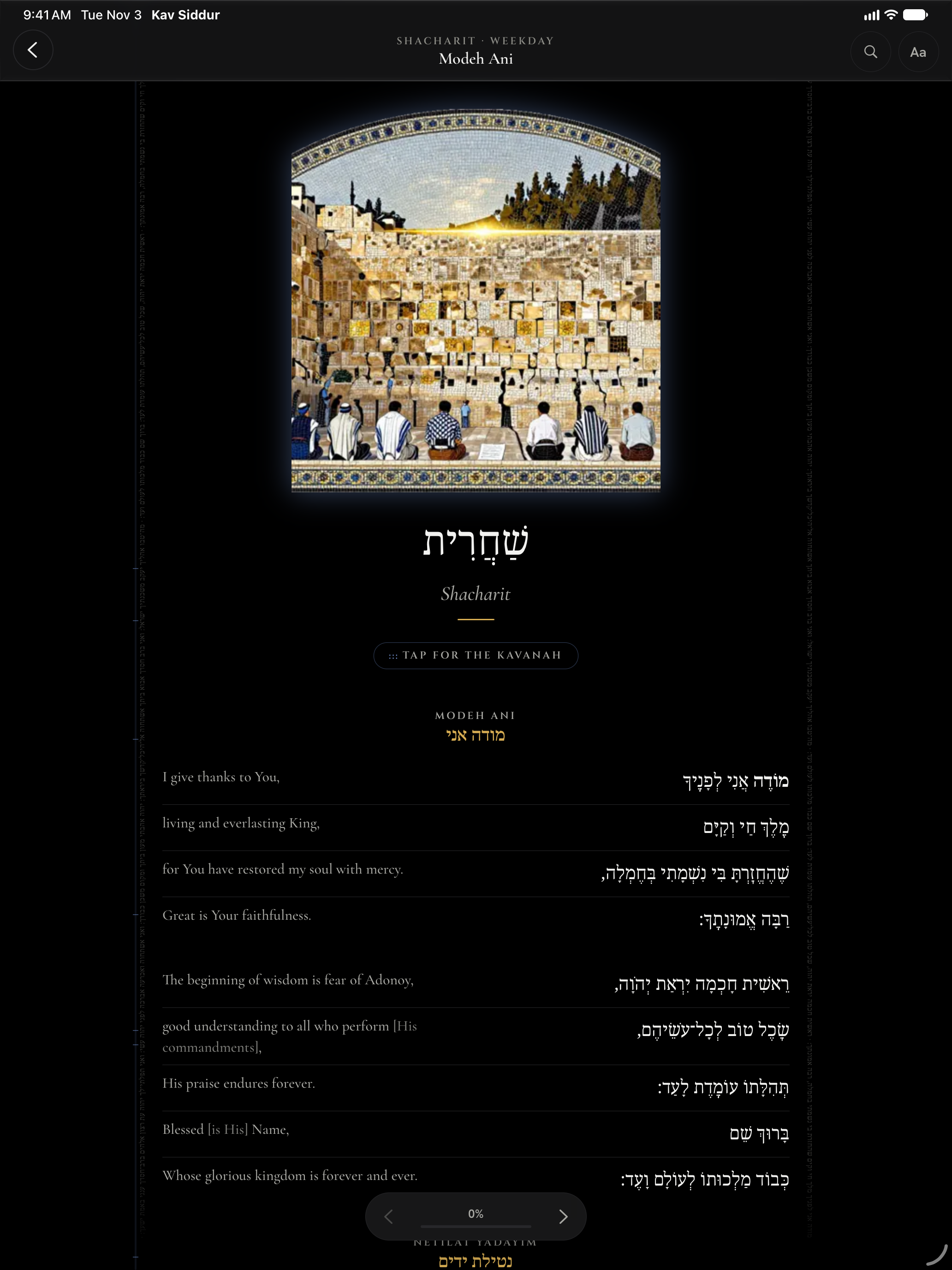
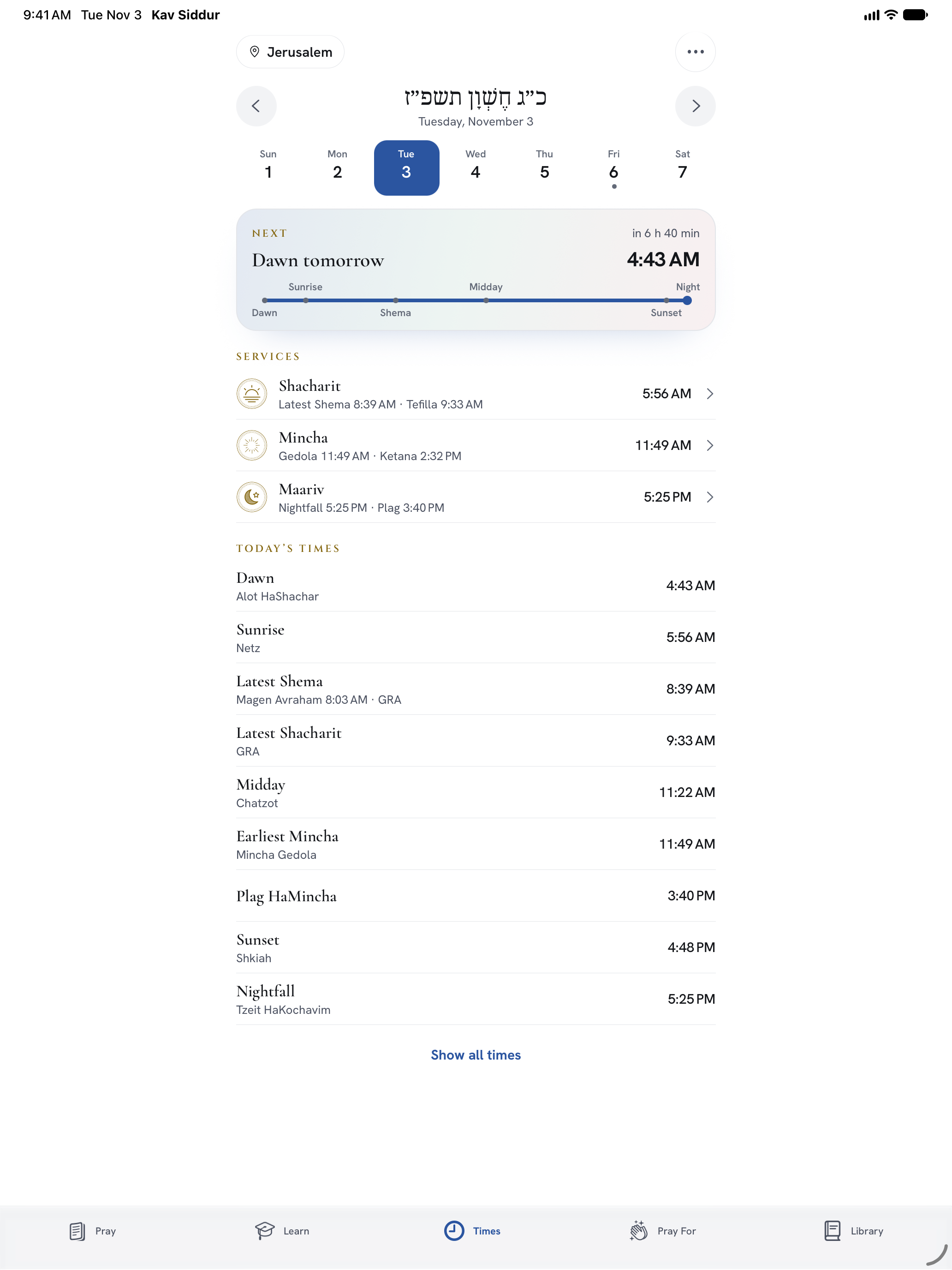
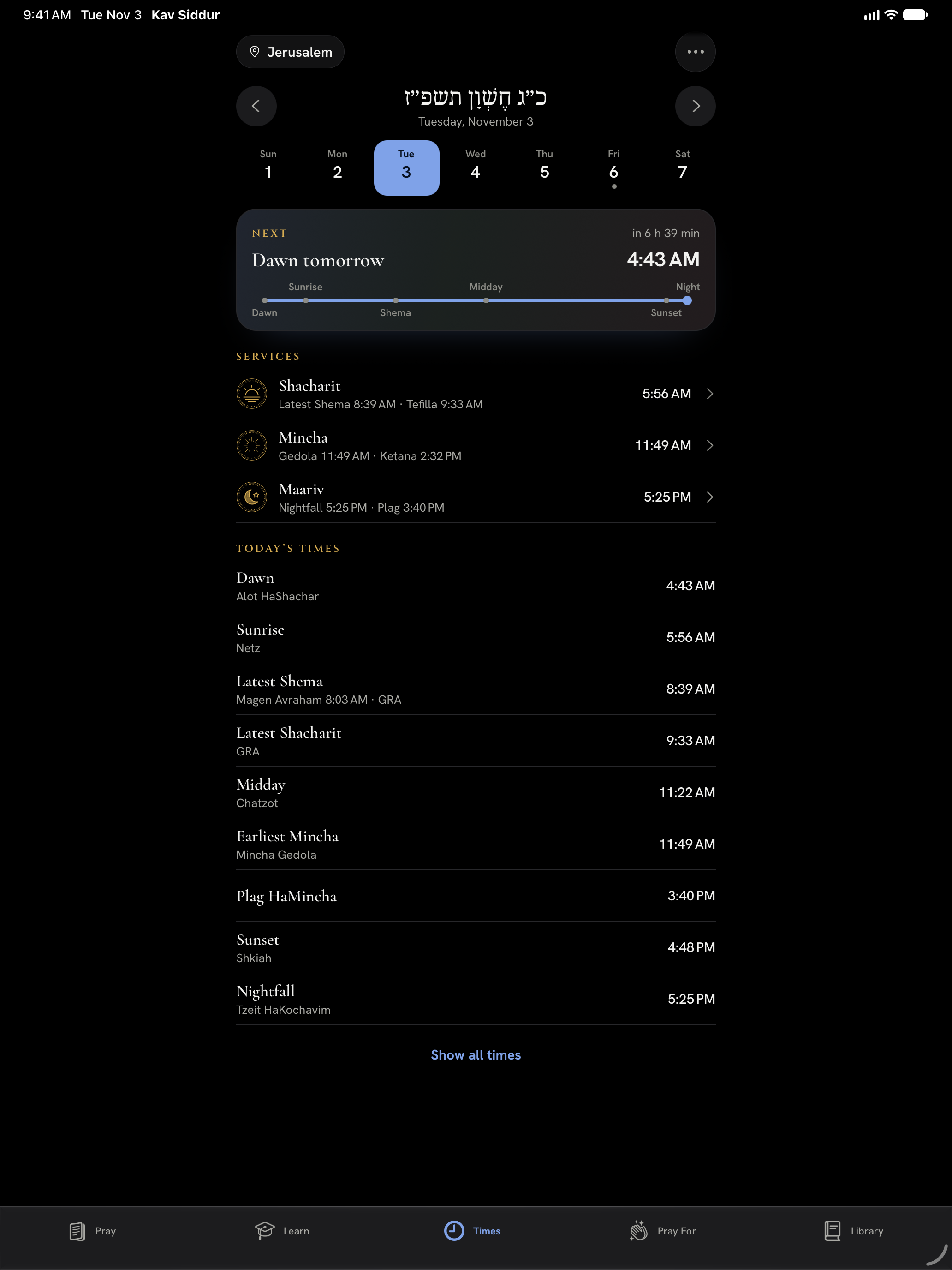
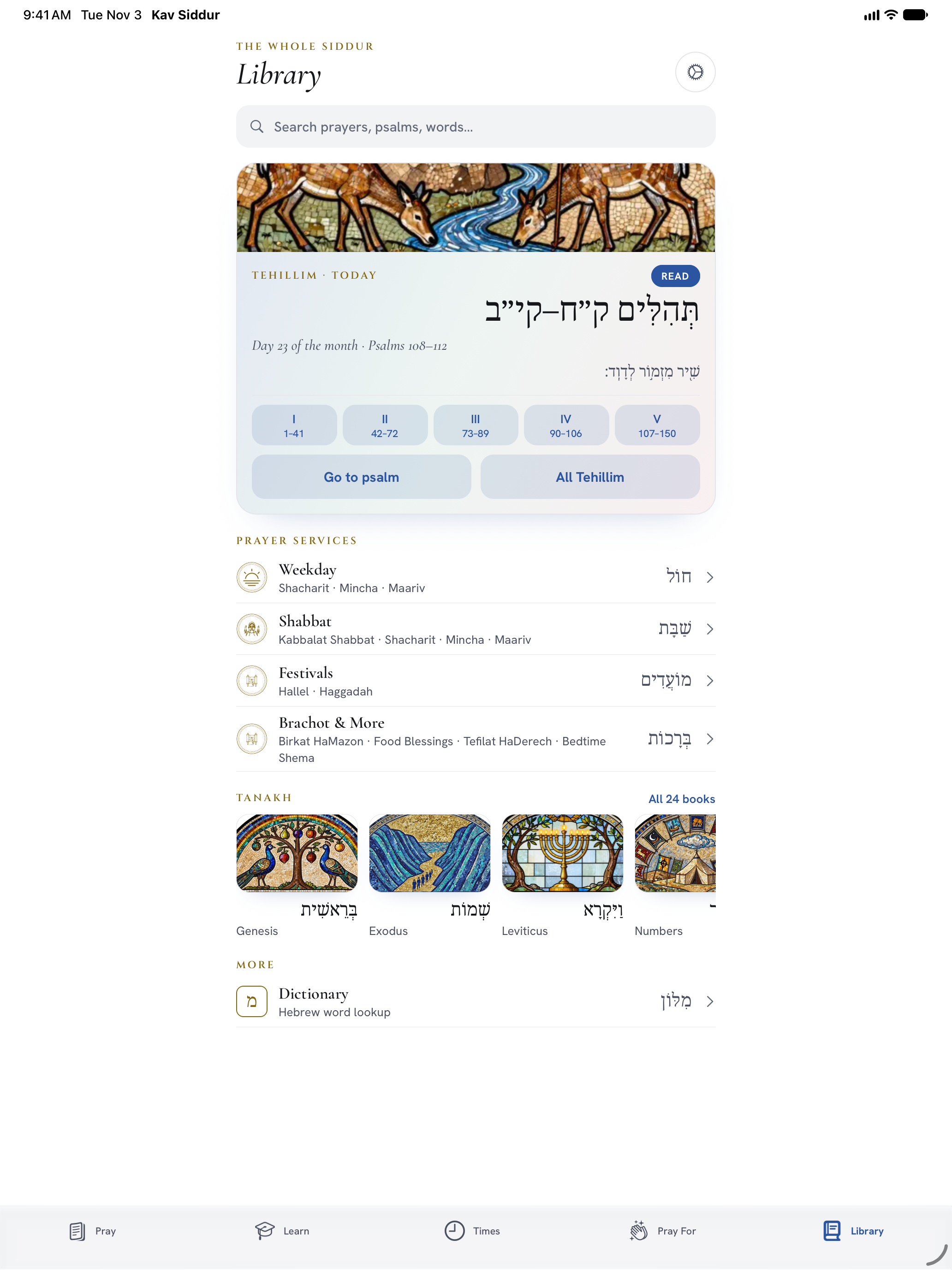
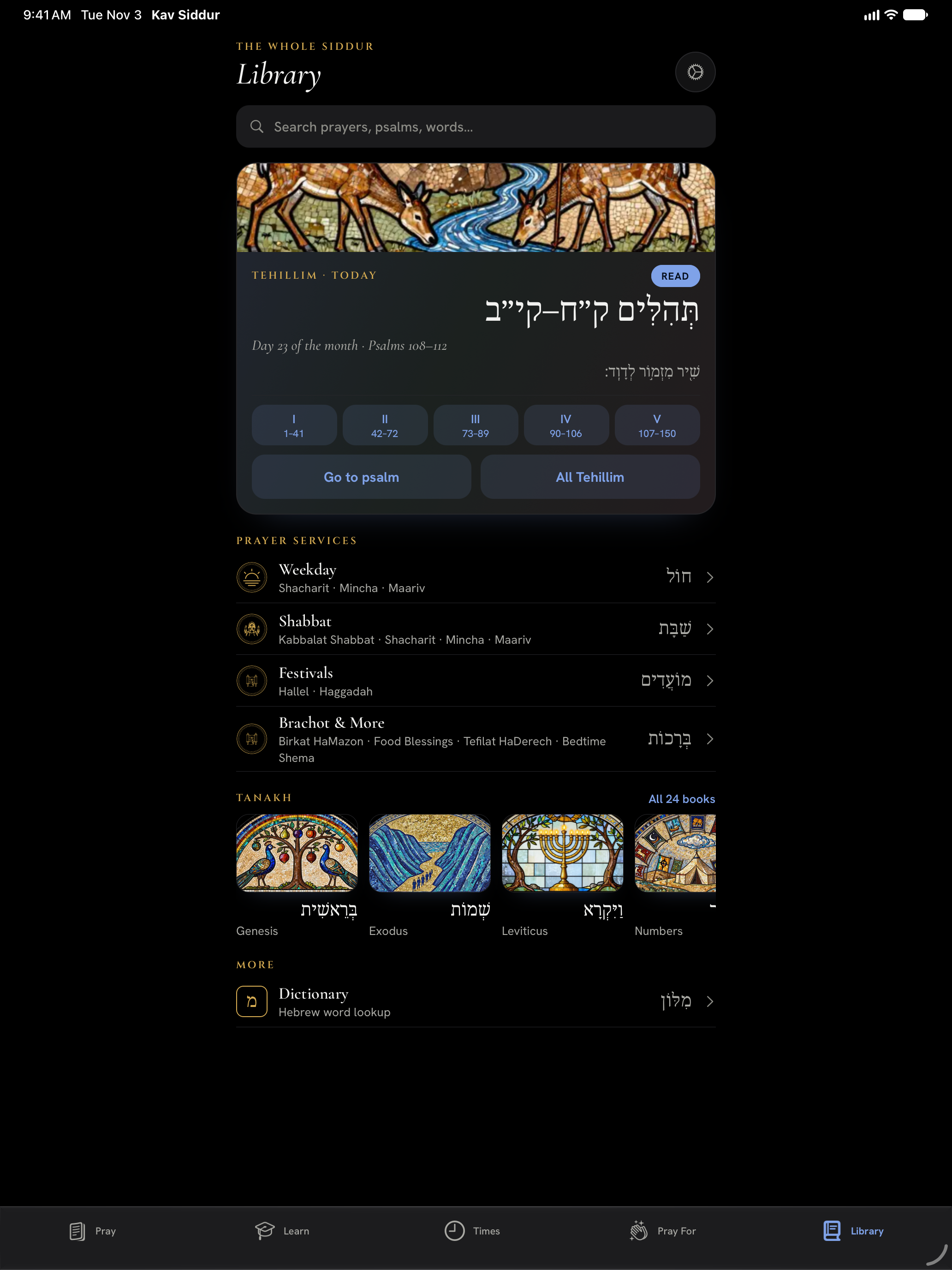
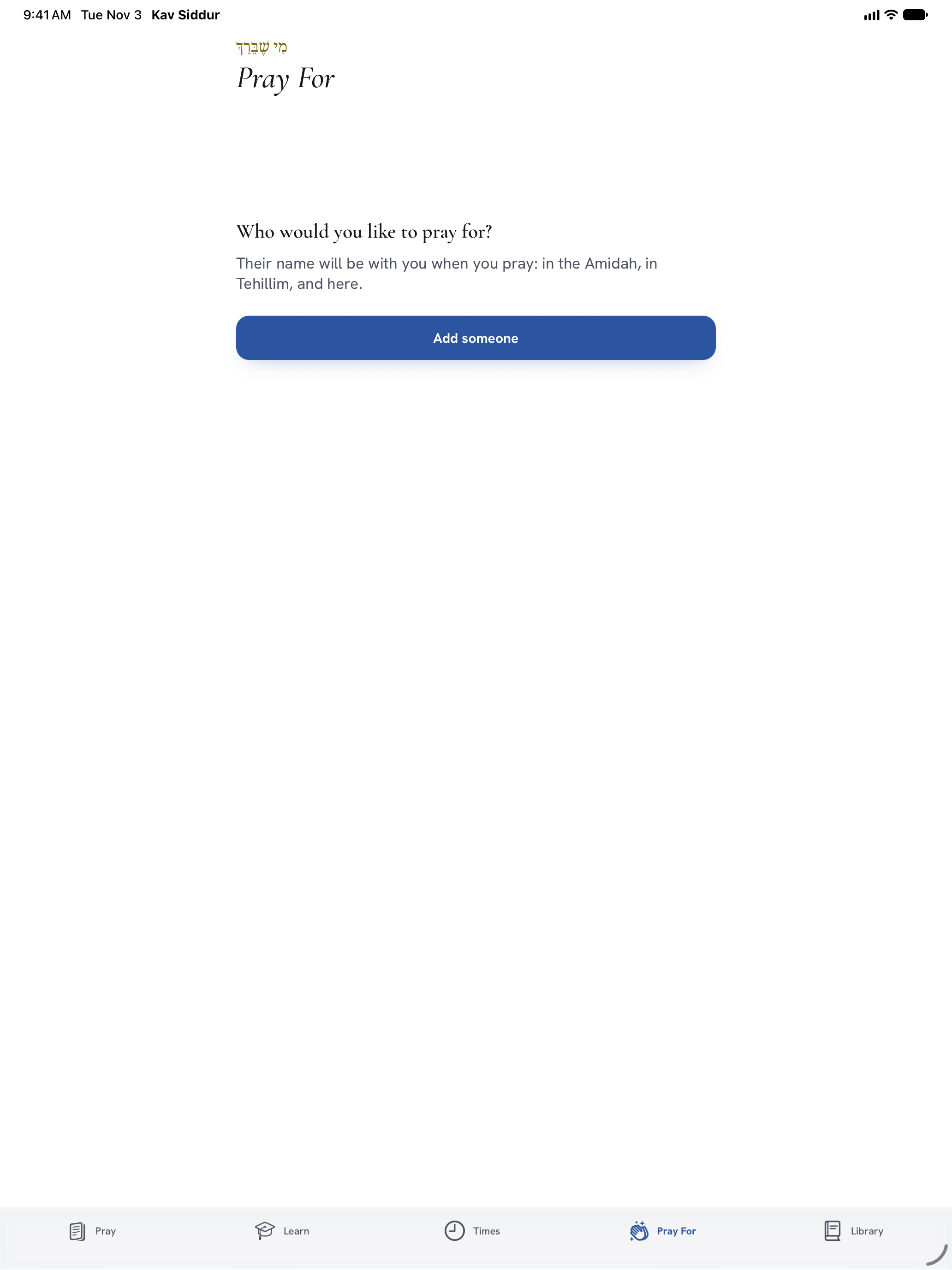
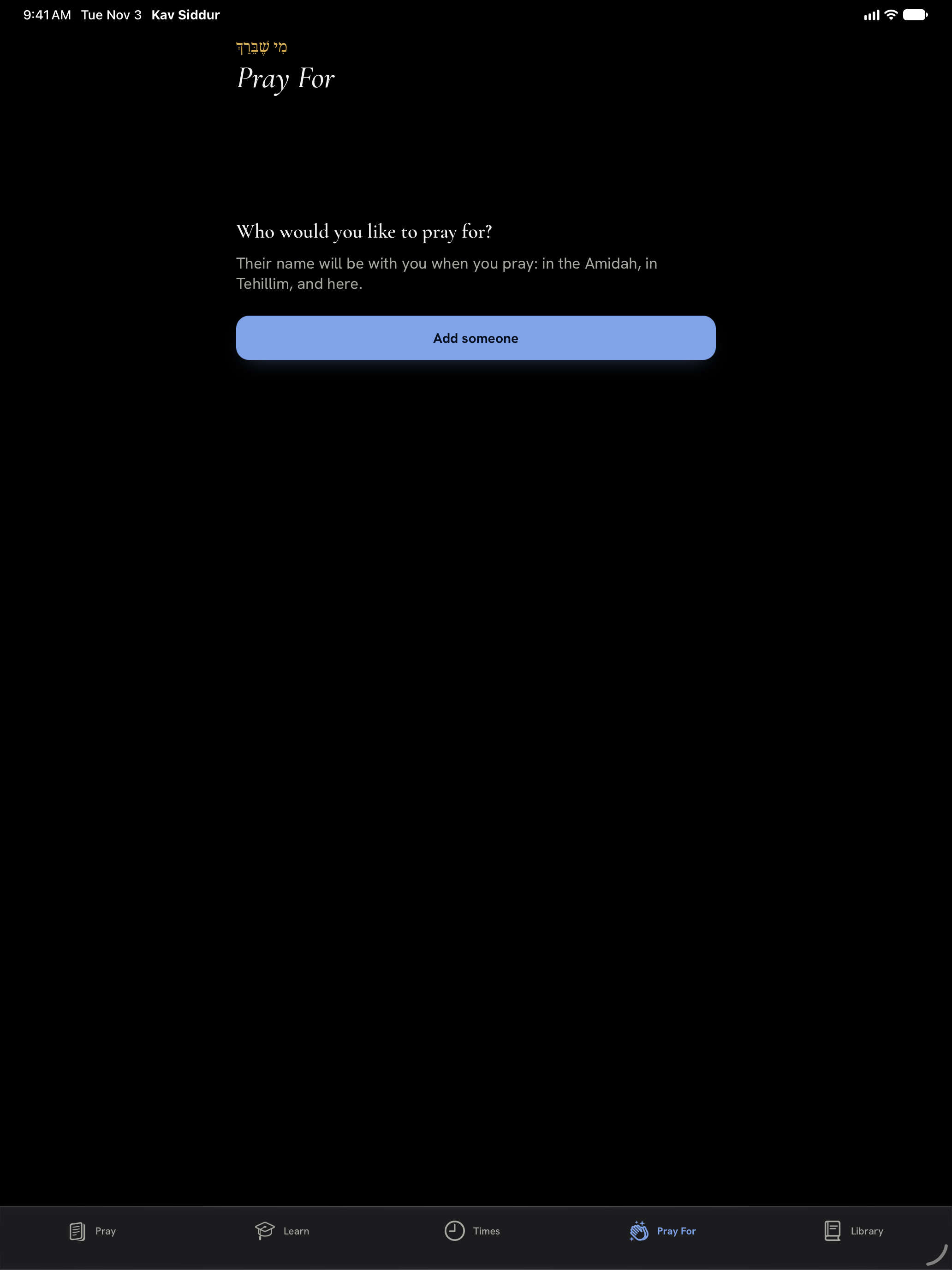
Experimental iPad simulator preview.
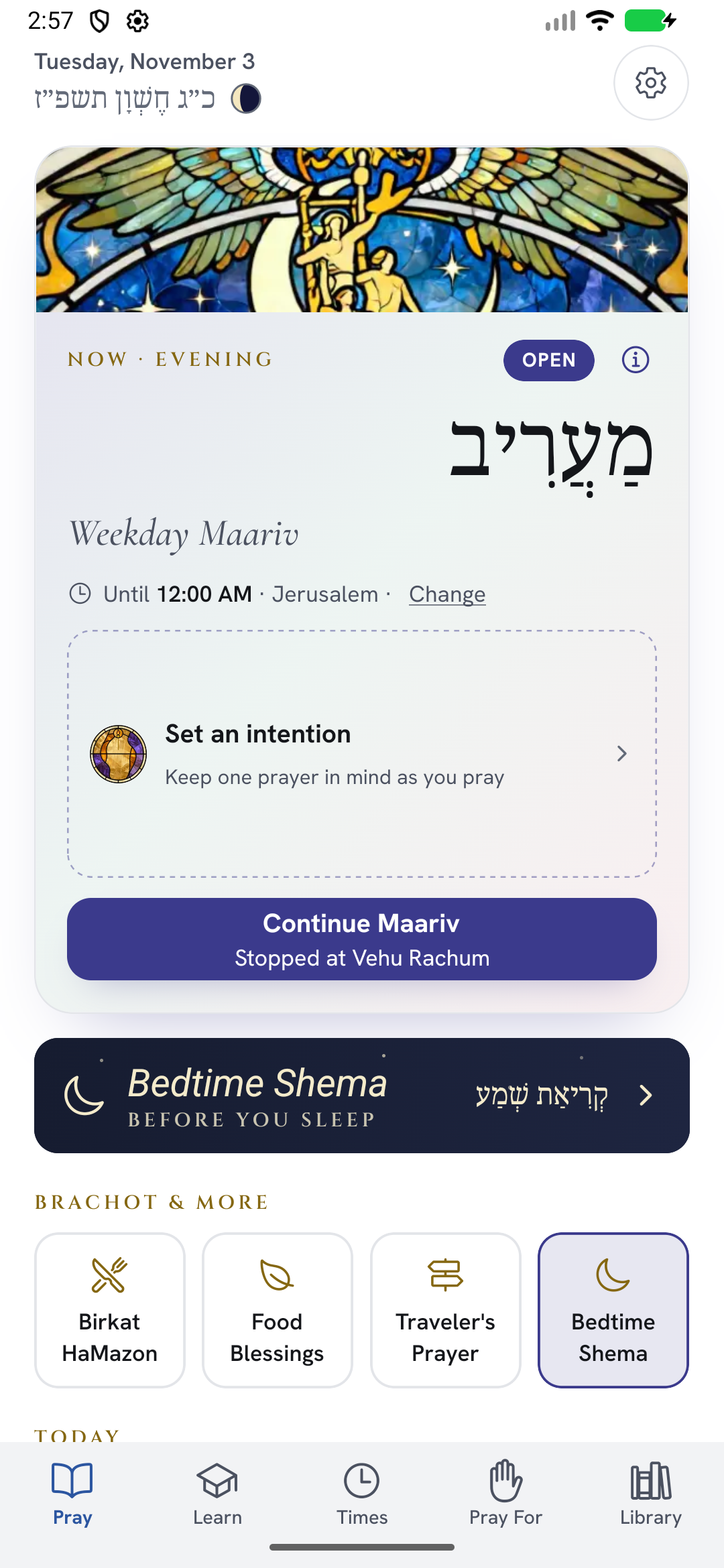
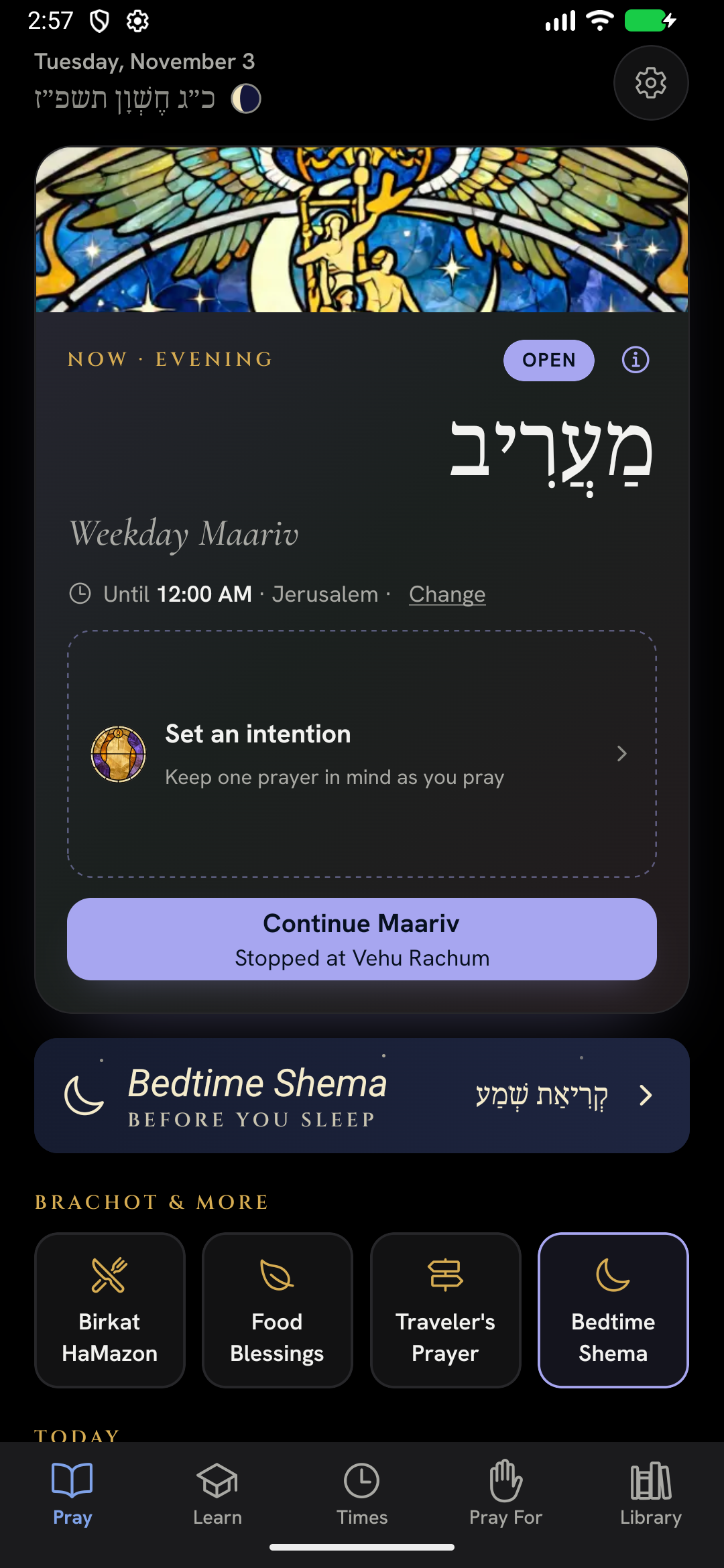
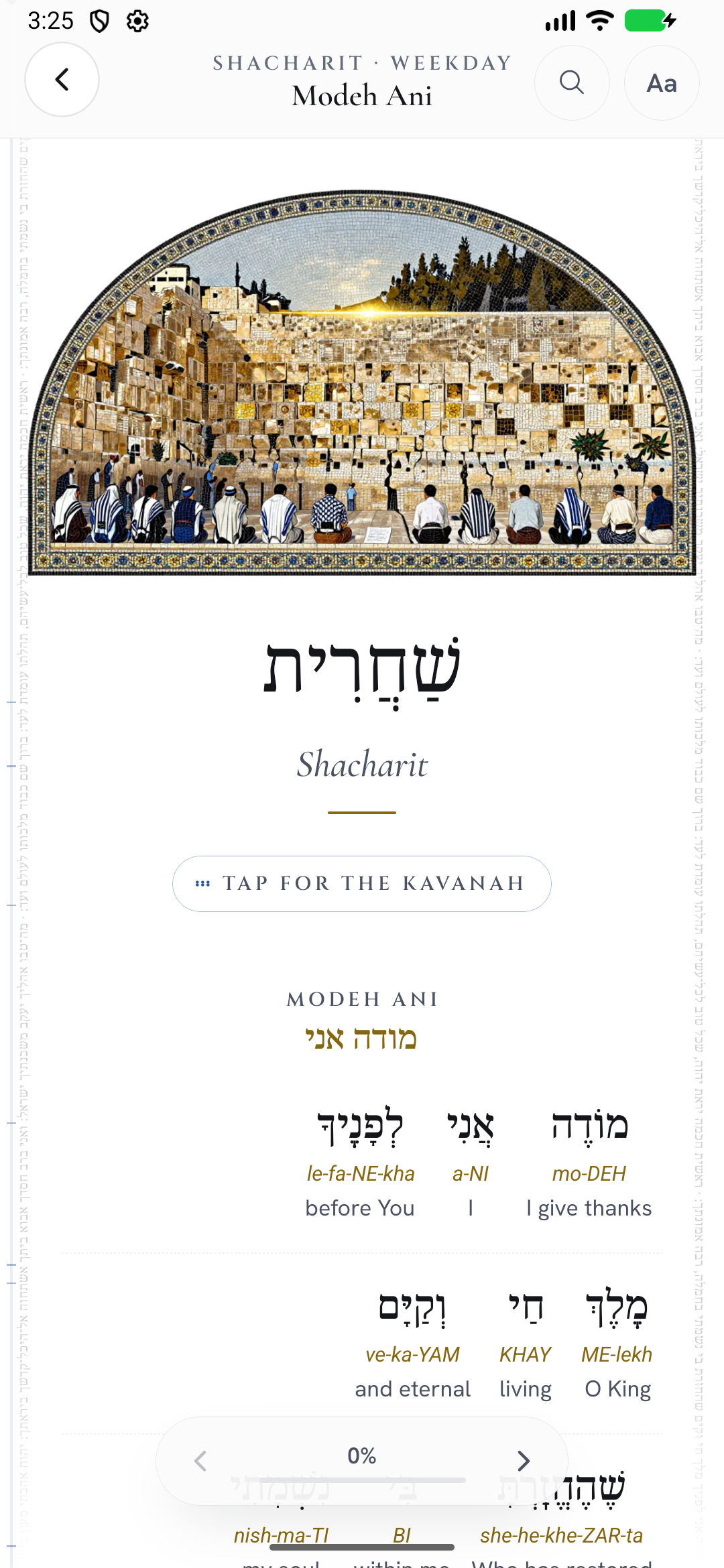
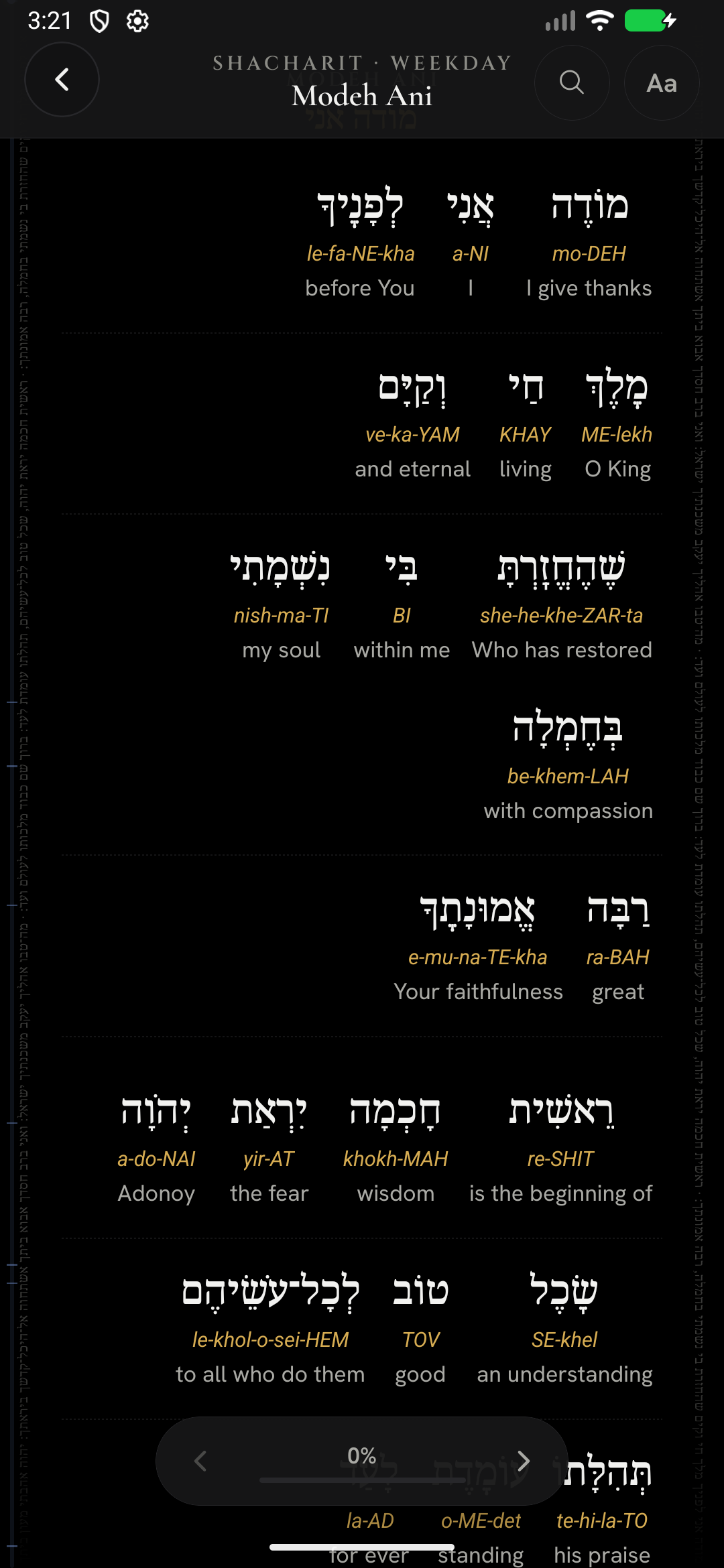
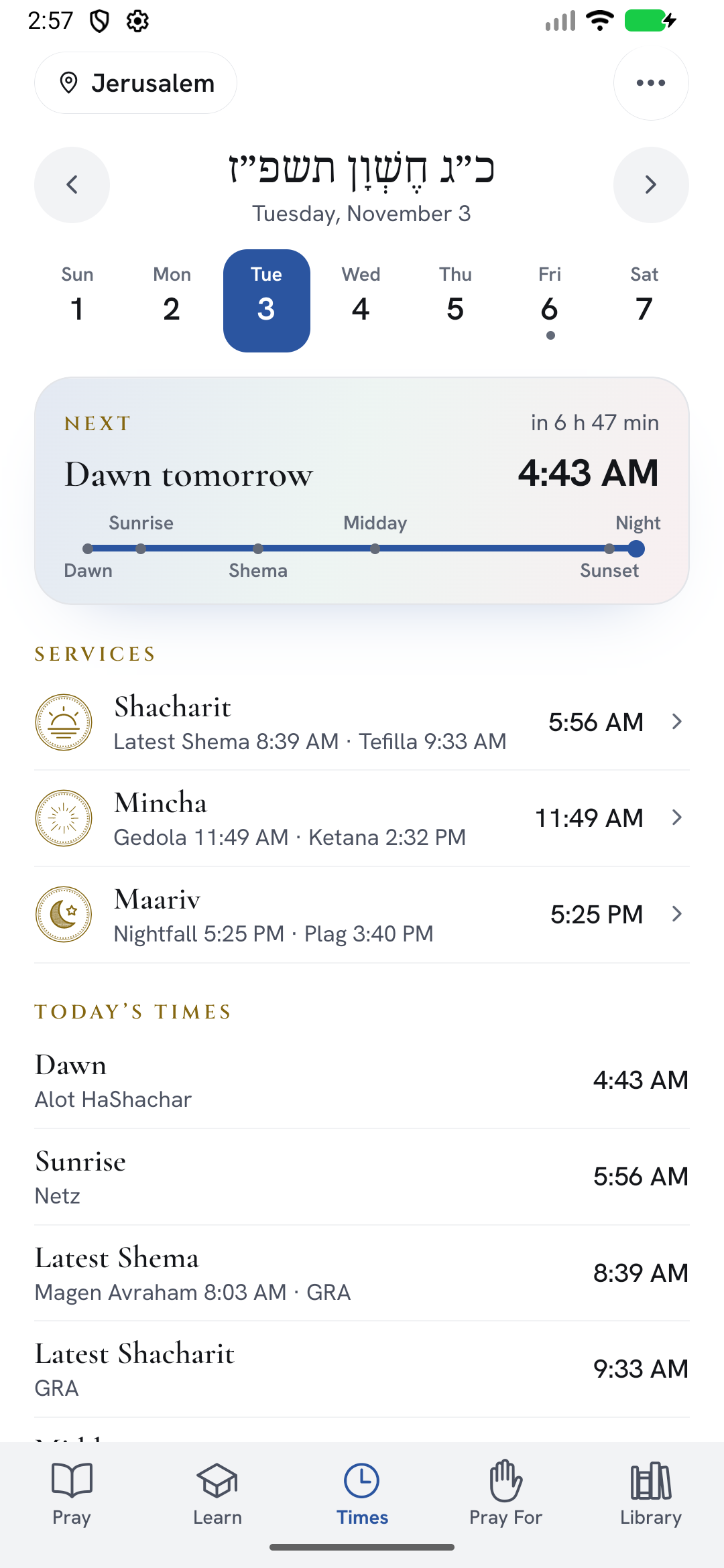
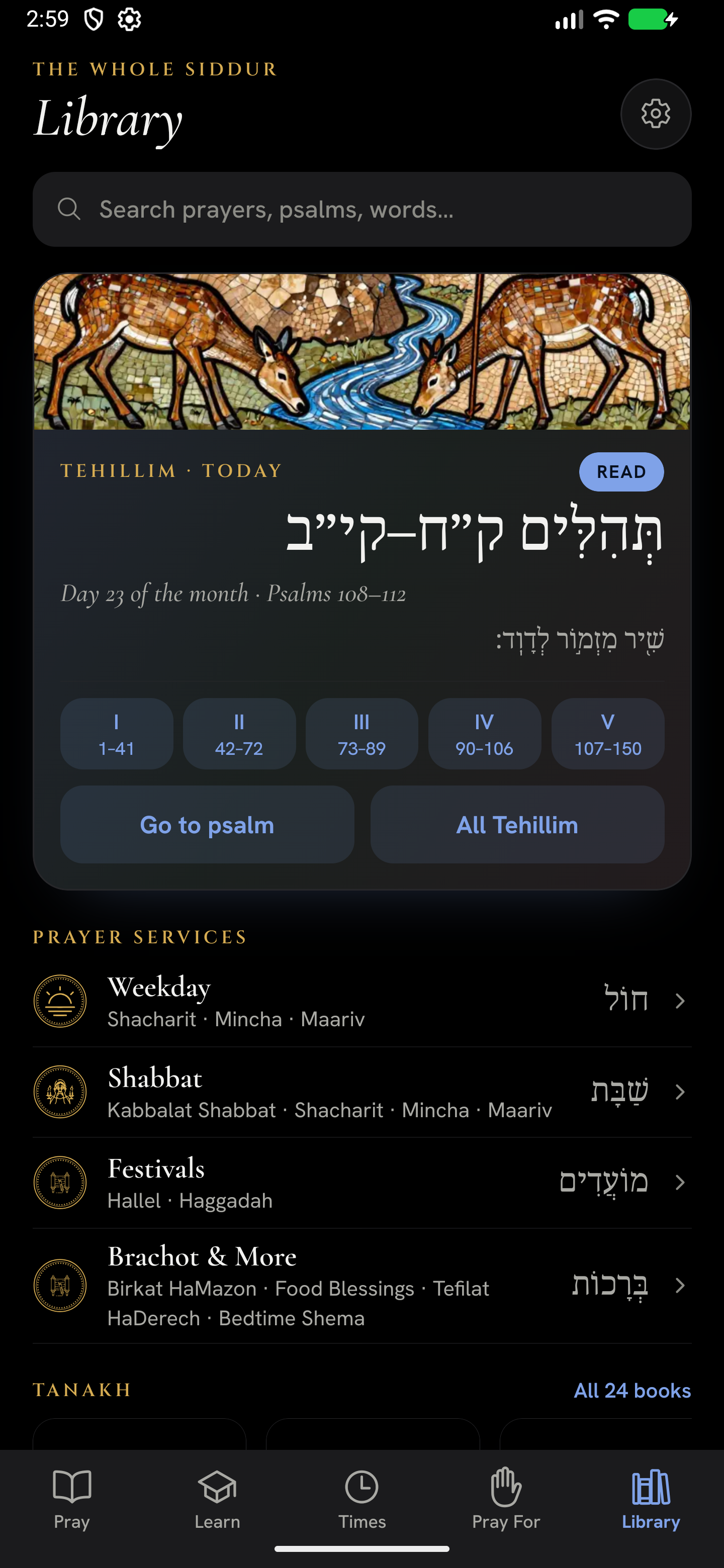
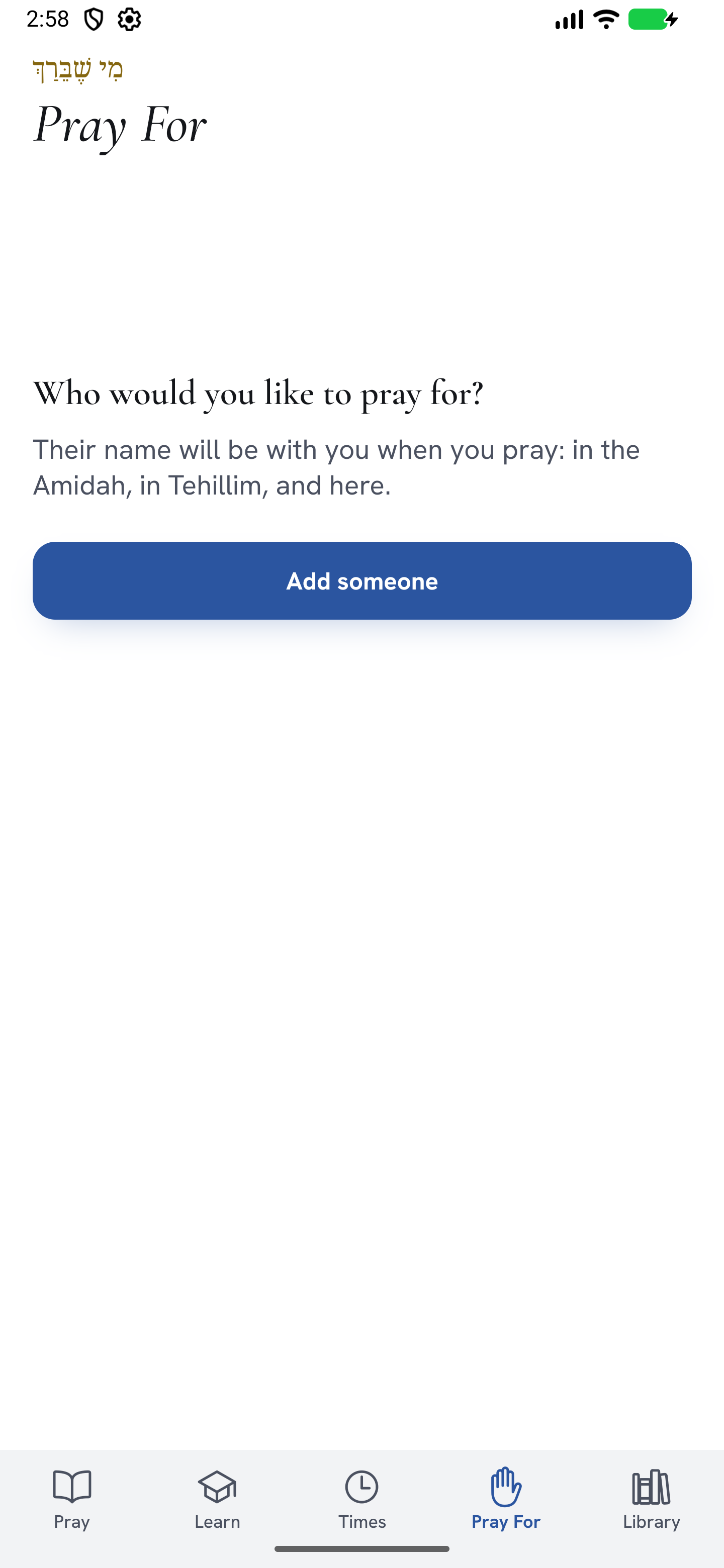
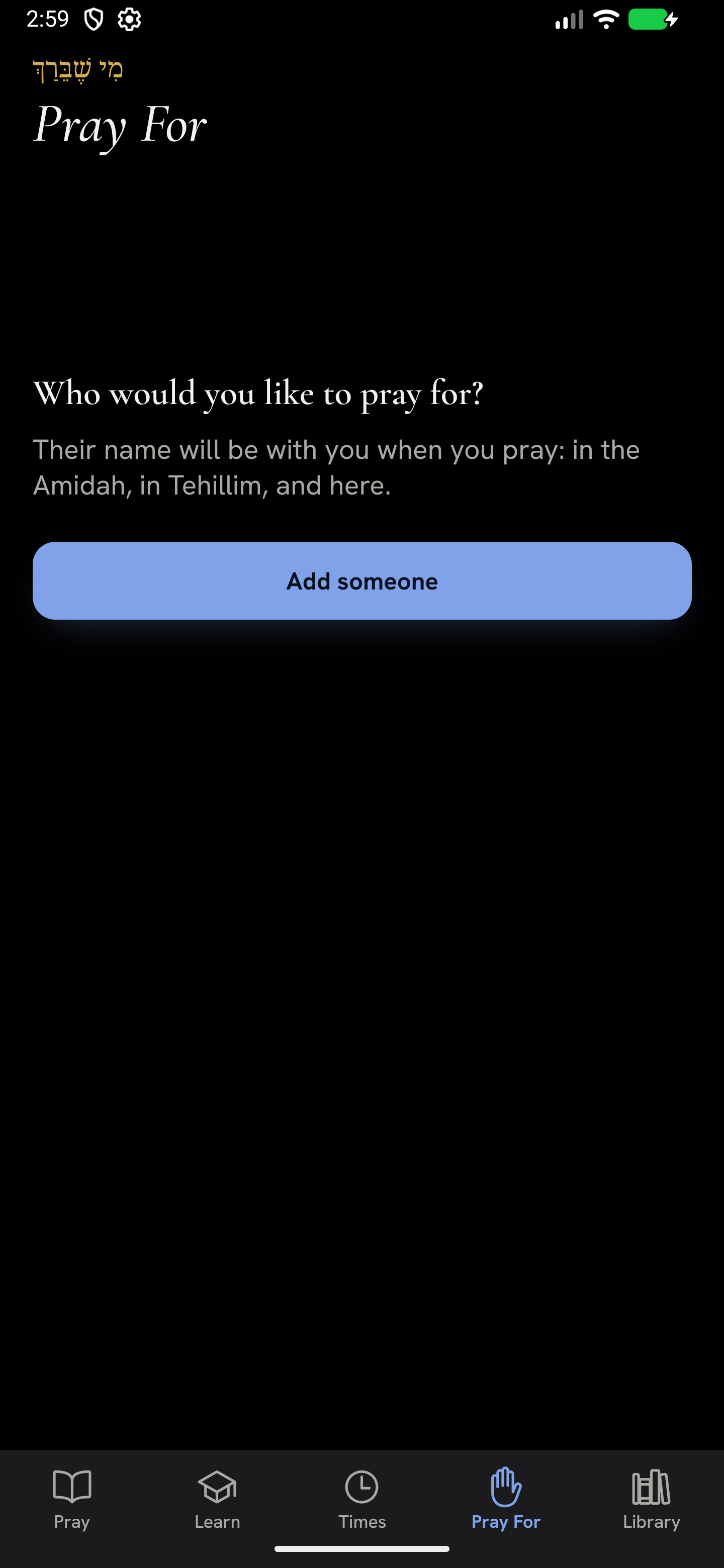
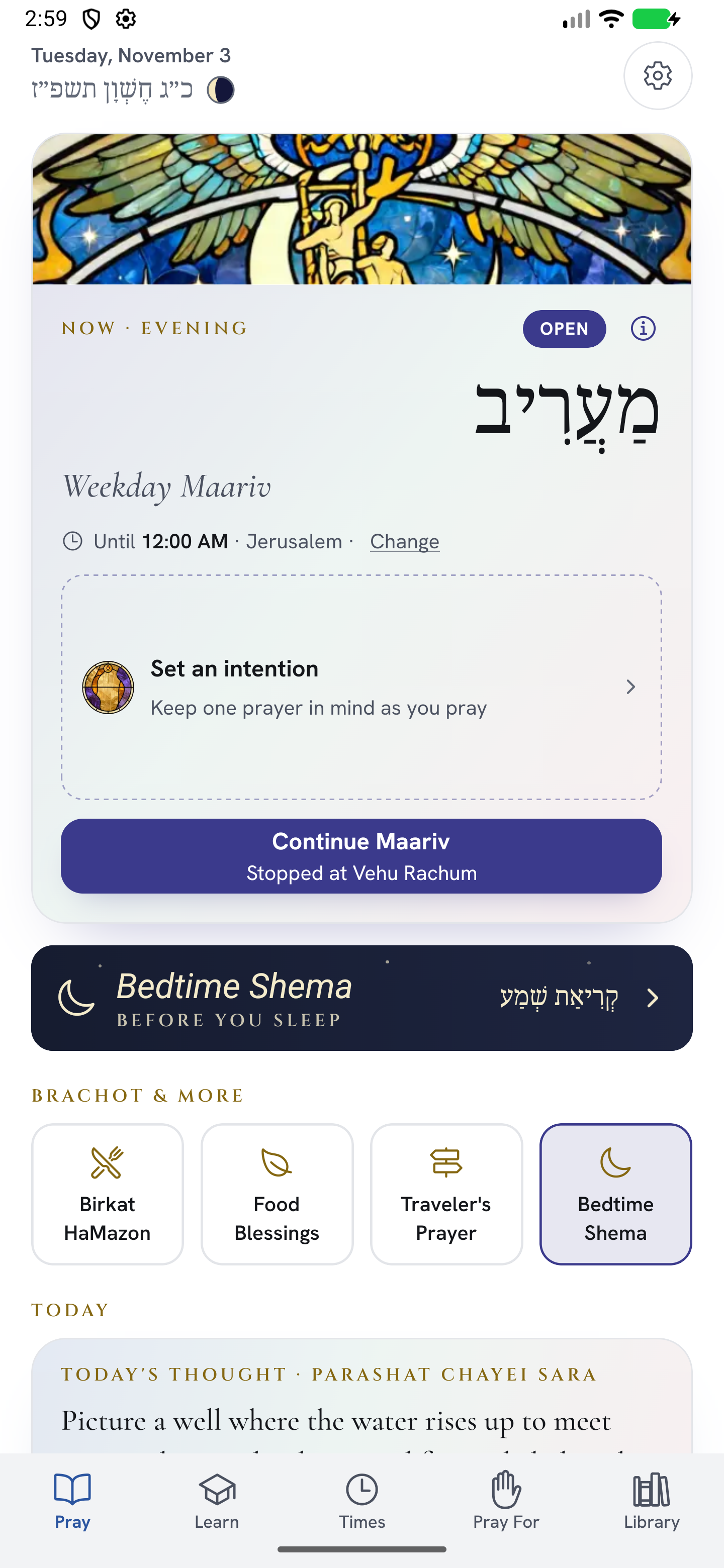
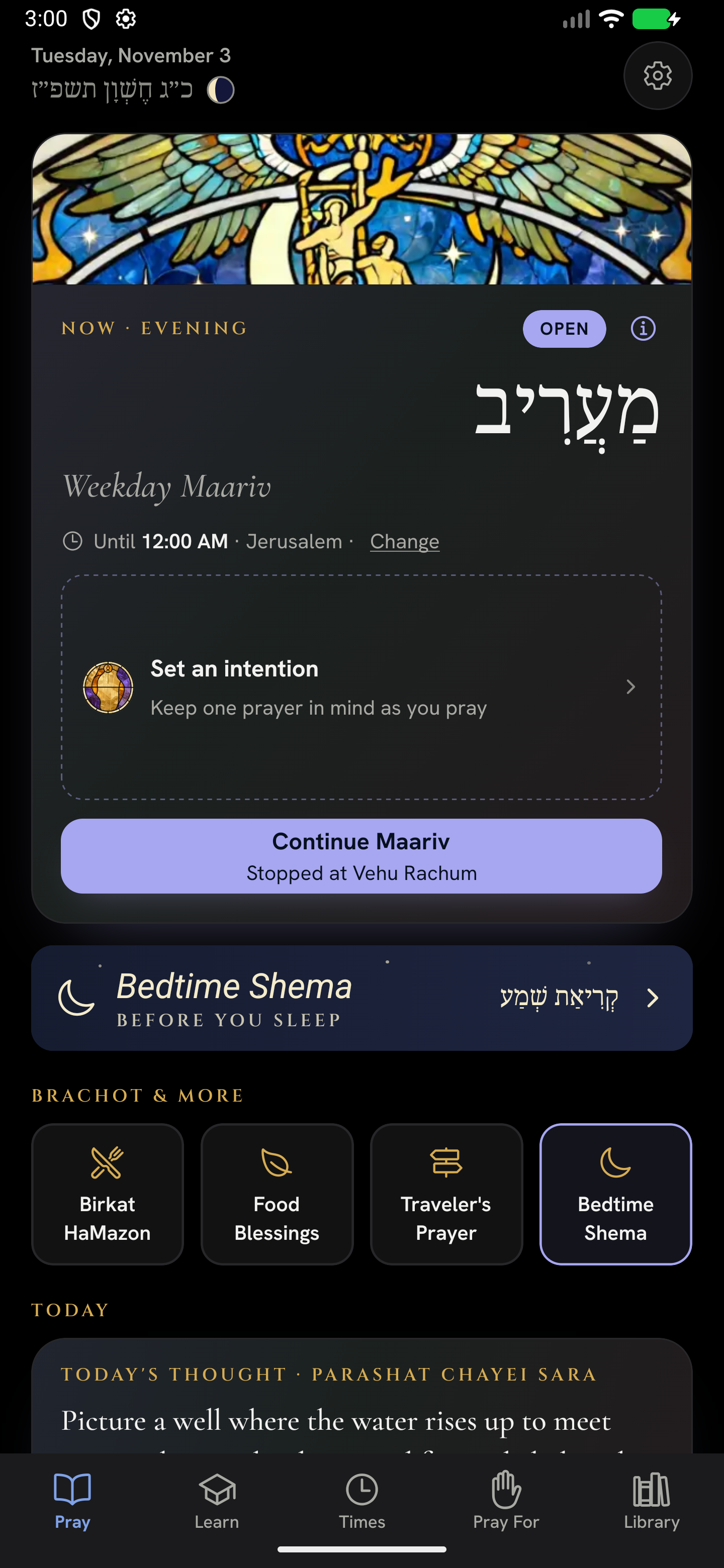
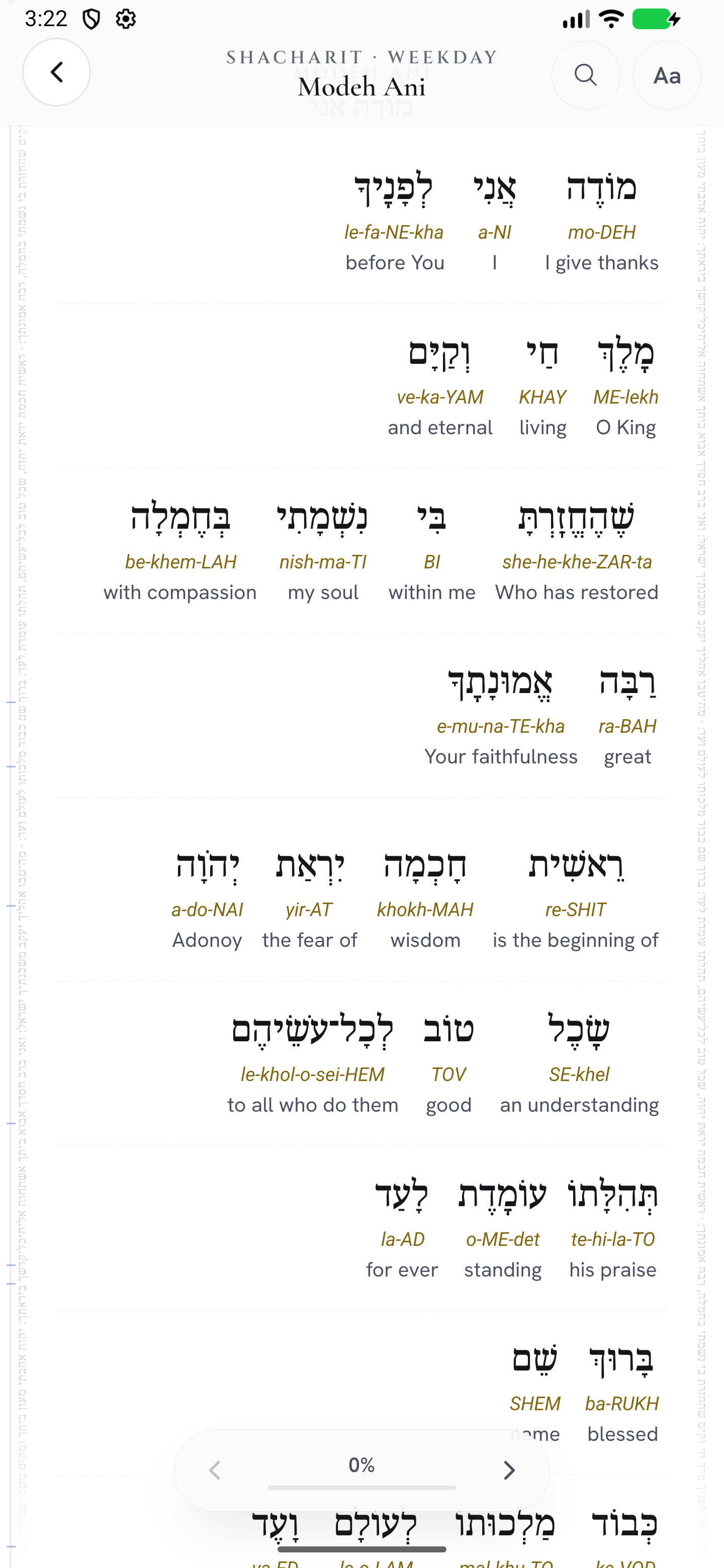
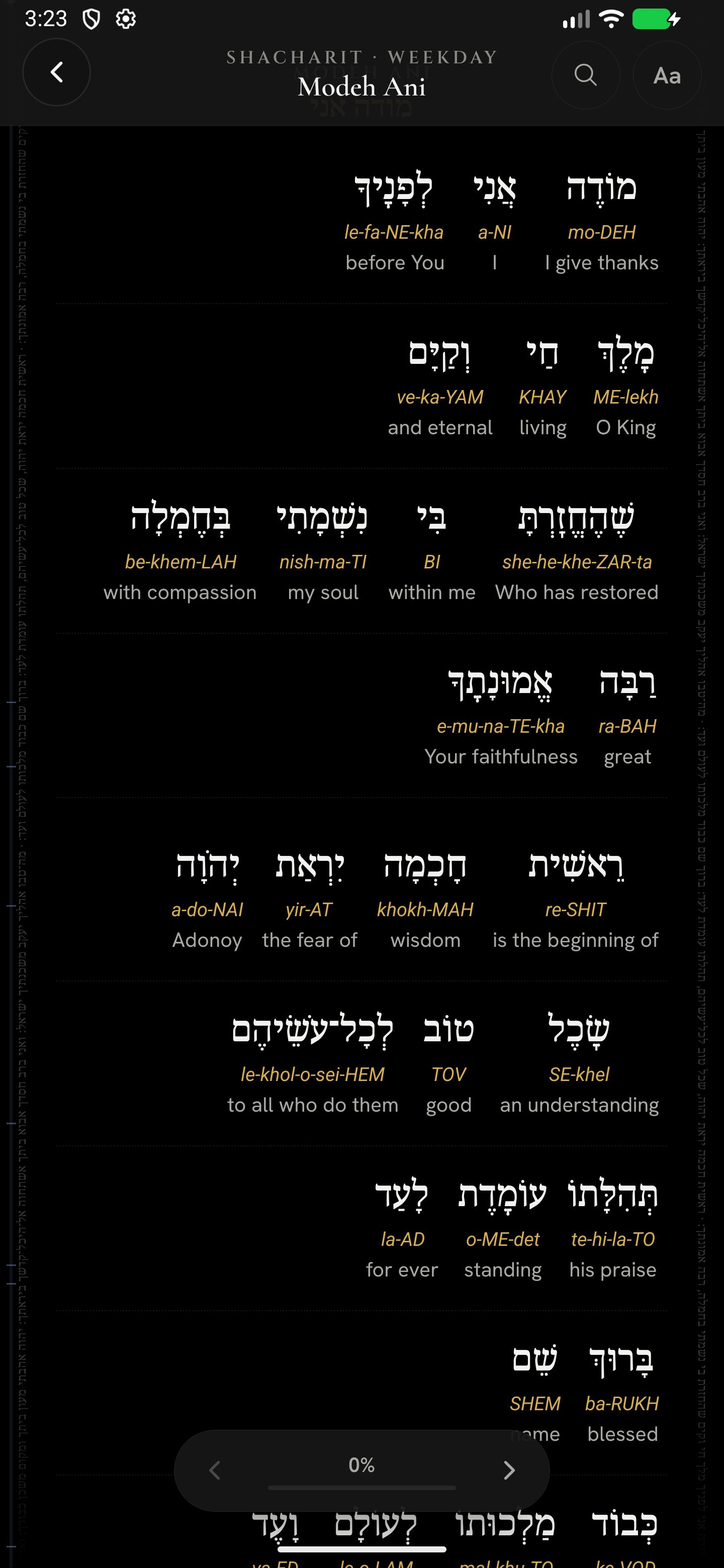
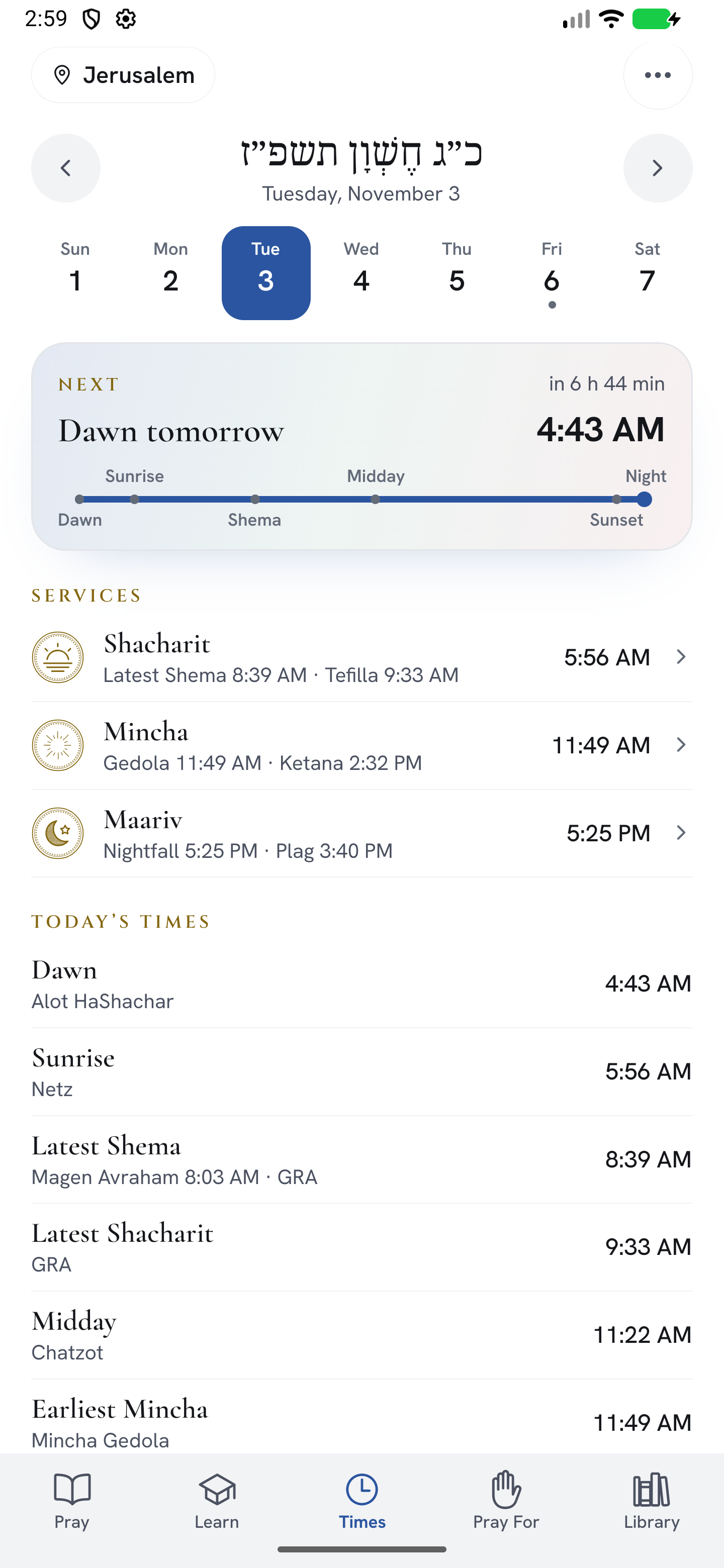
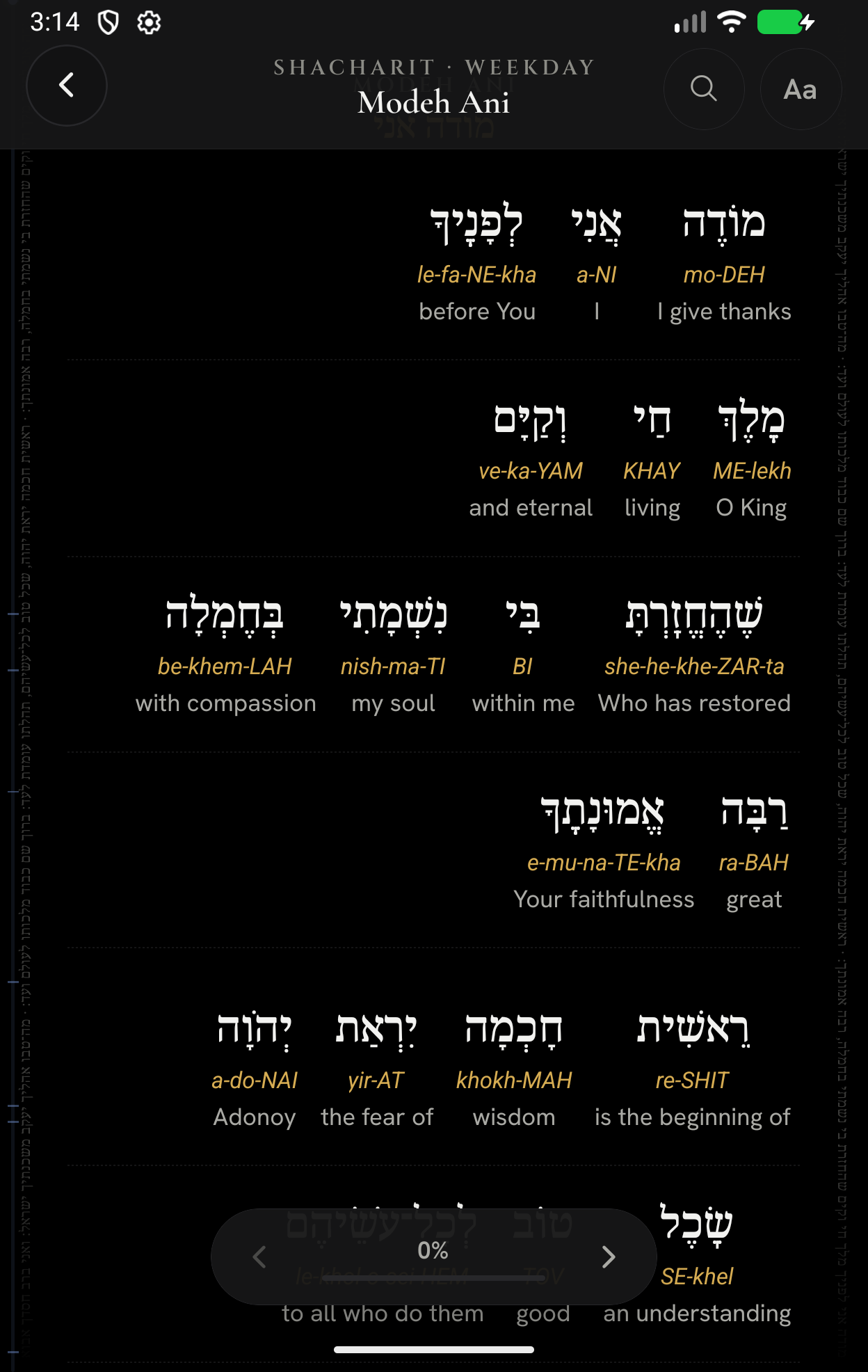
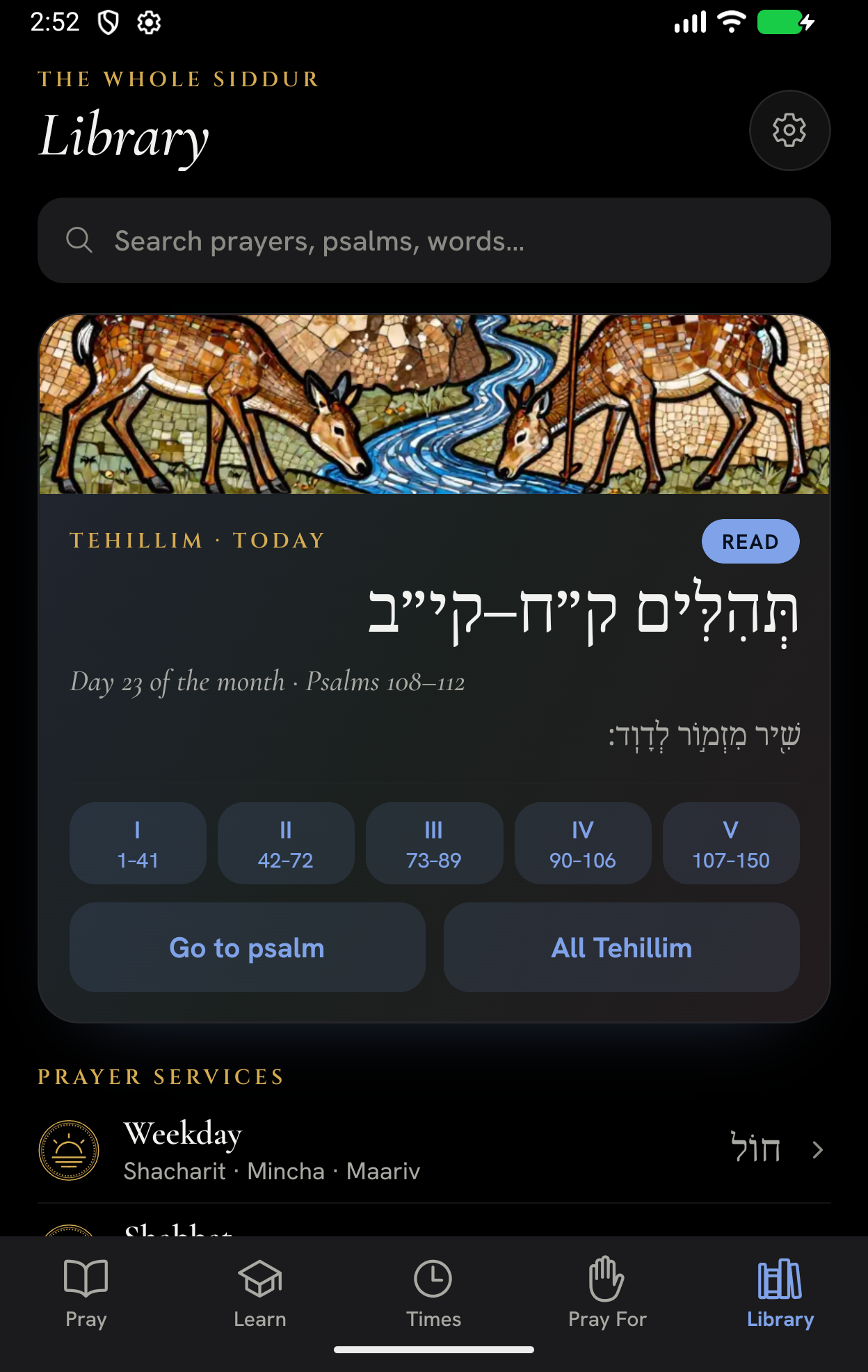
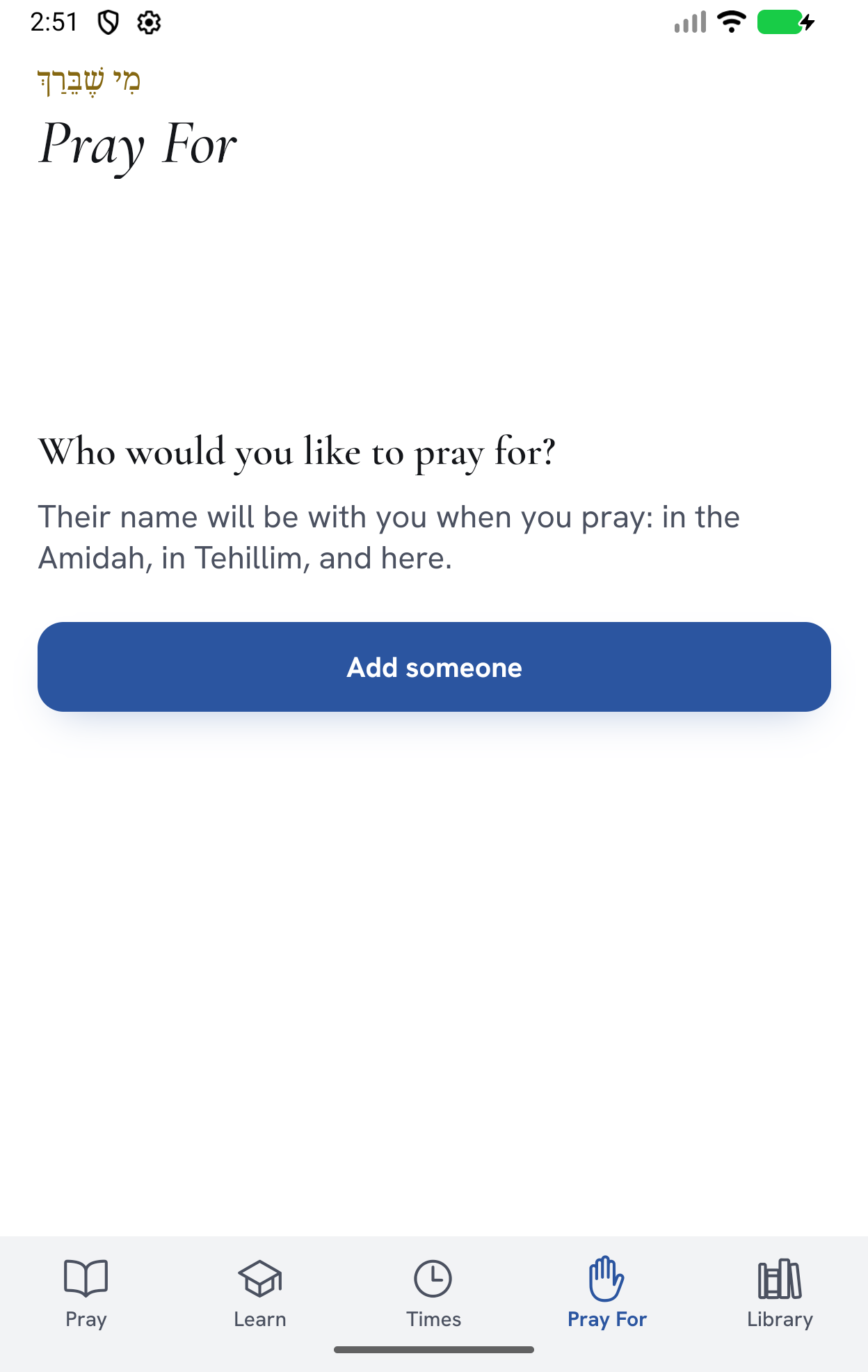
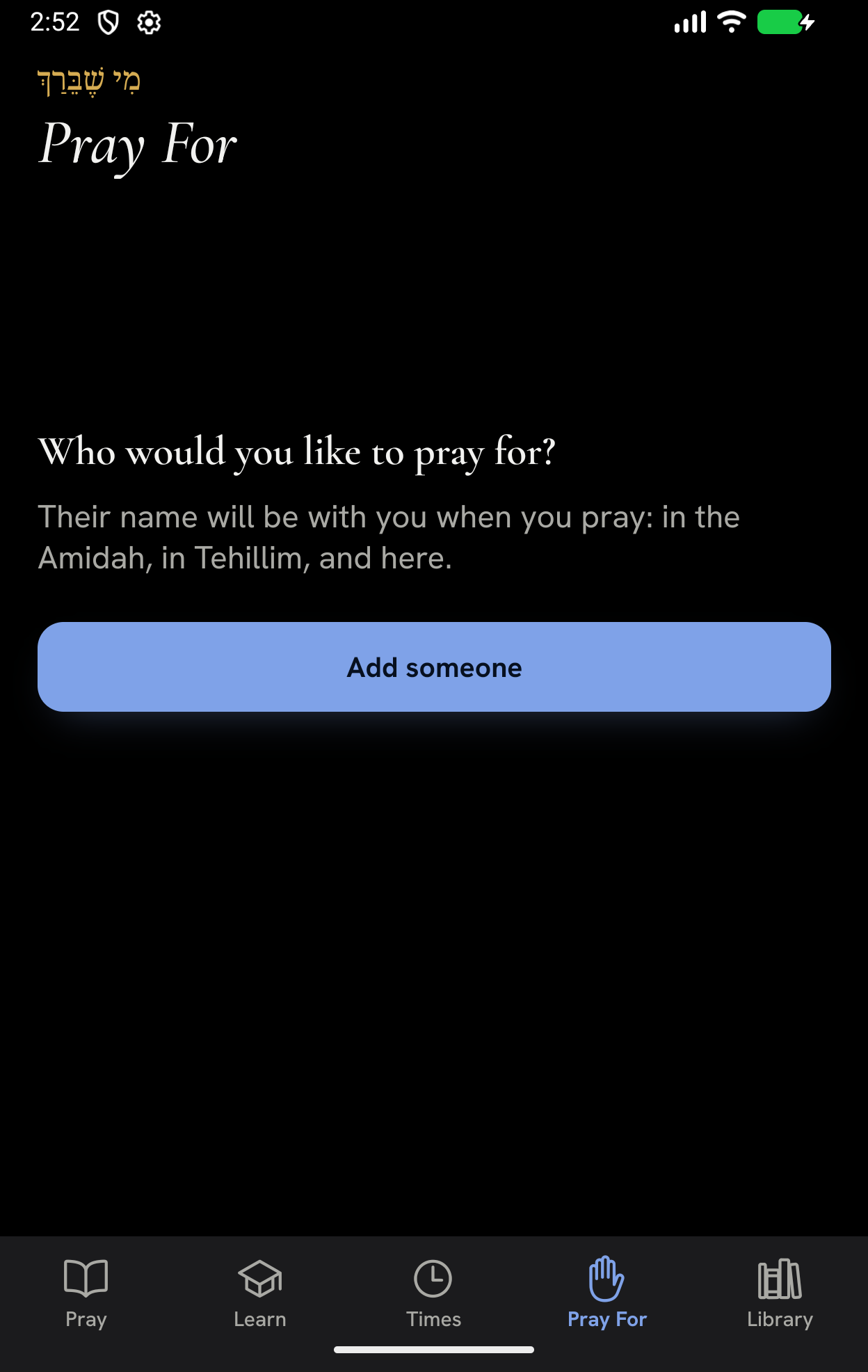
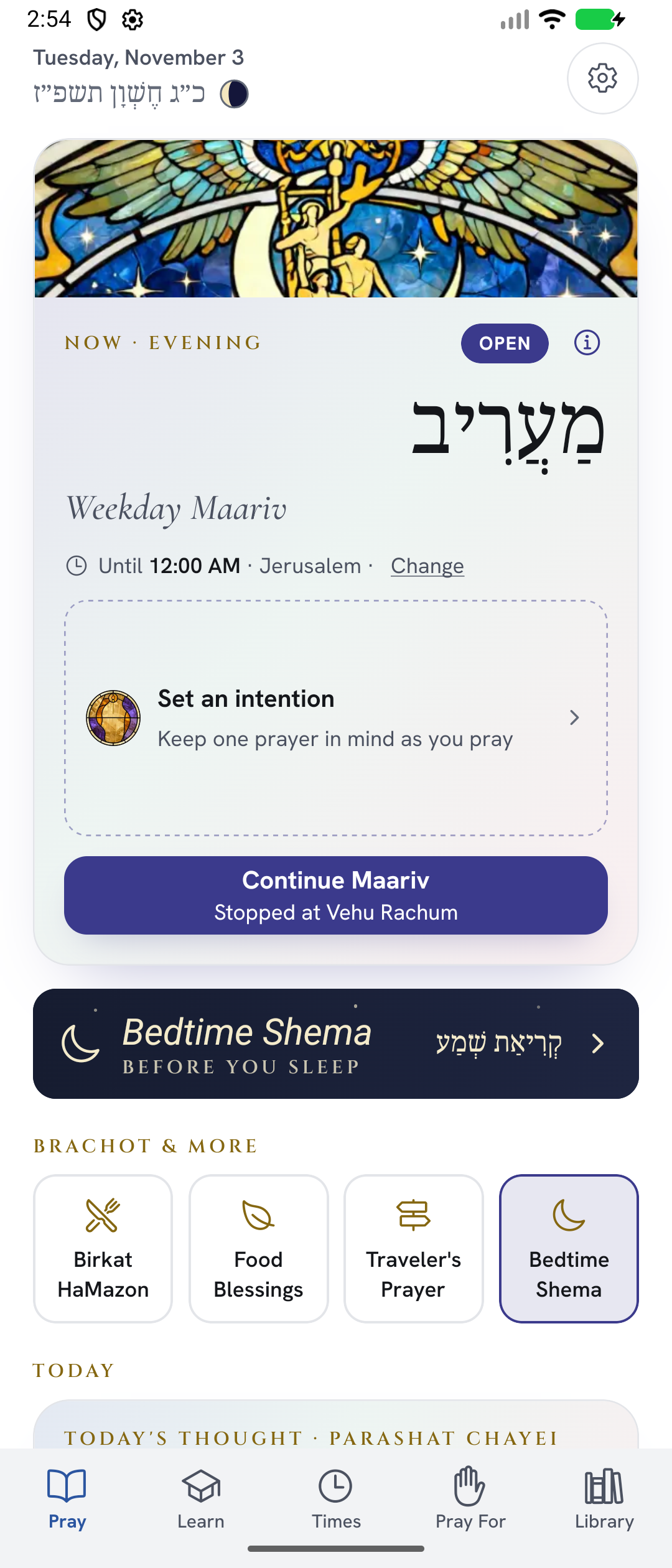
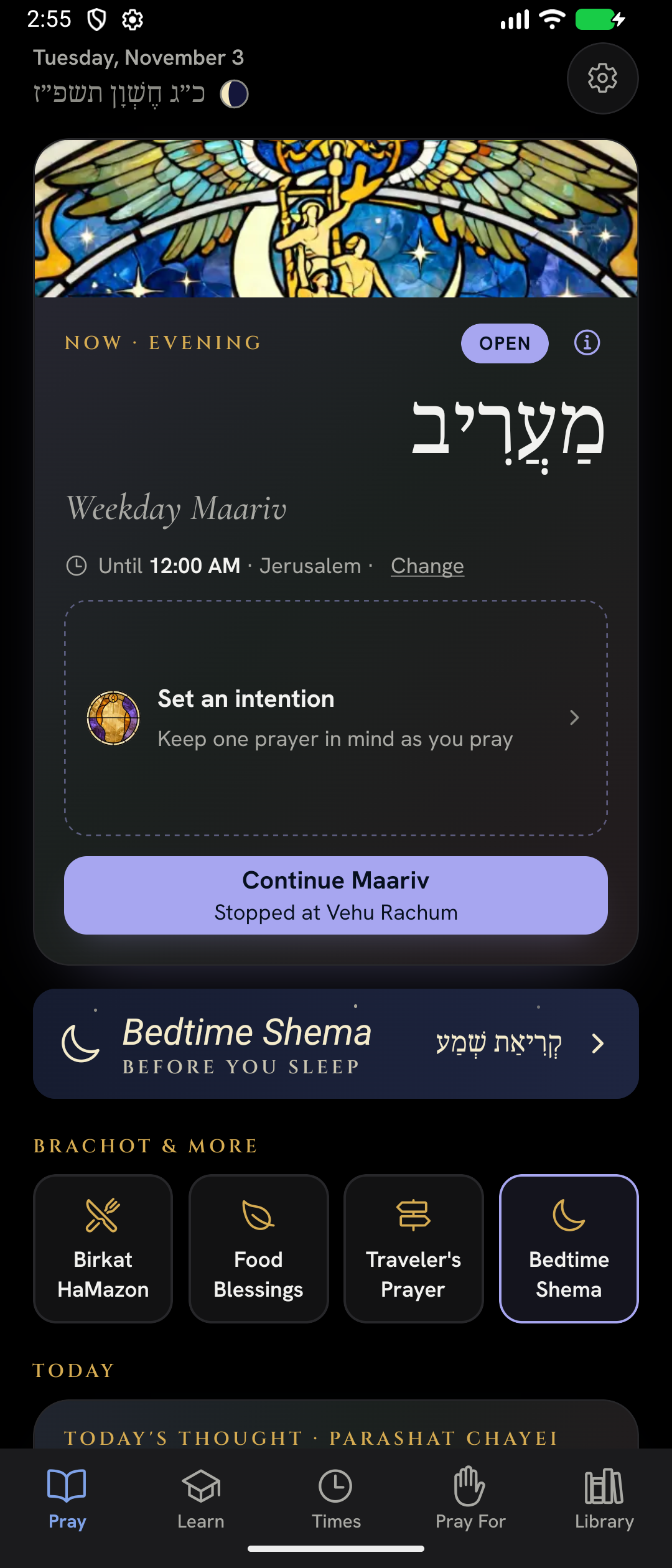
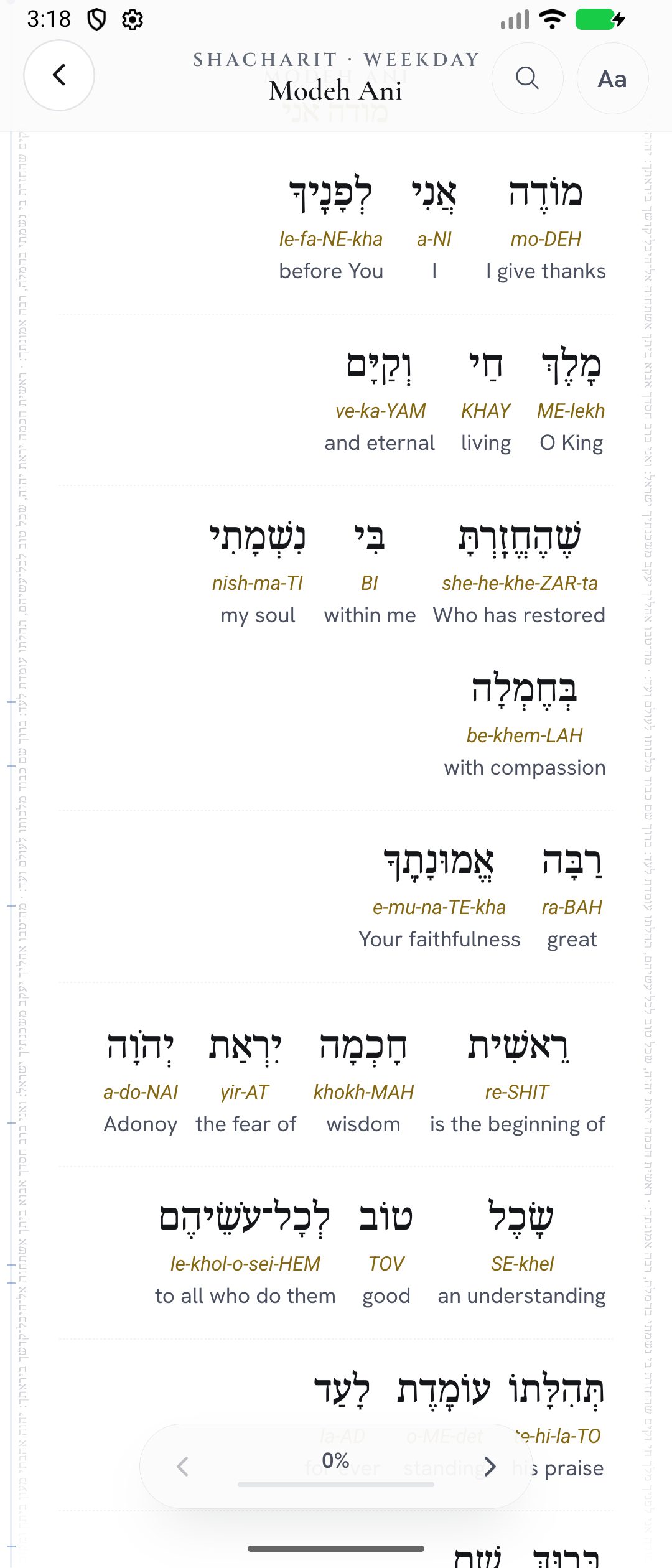
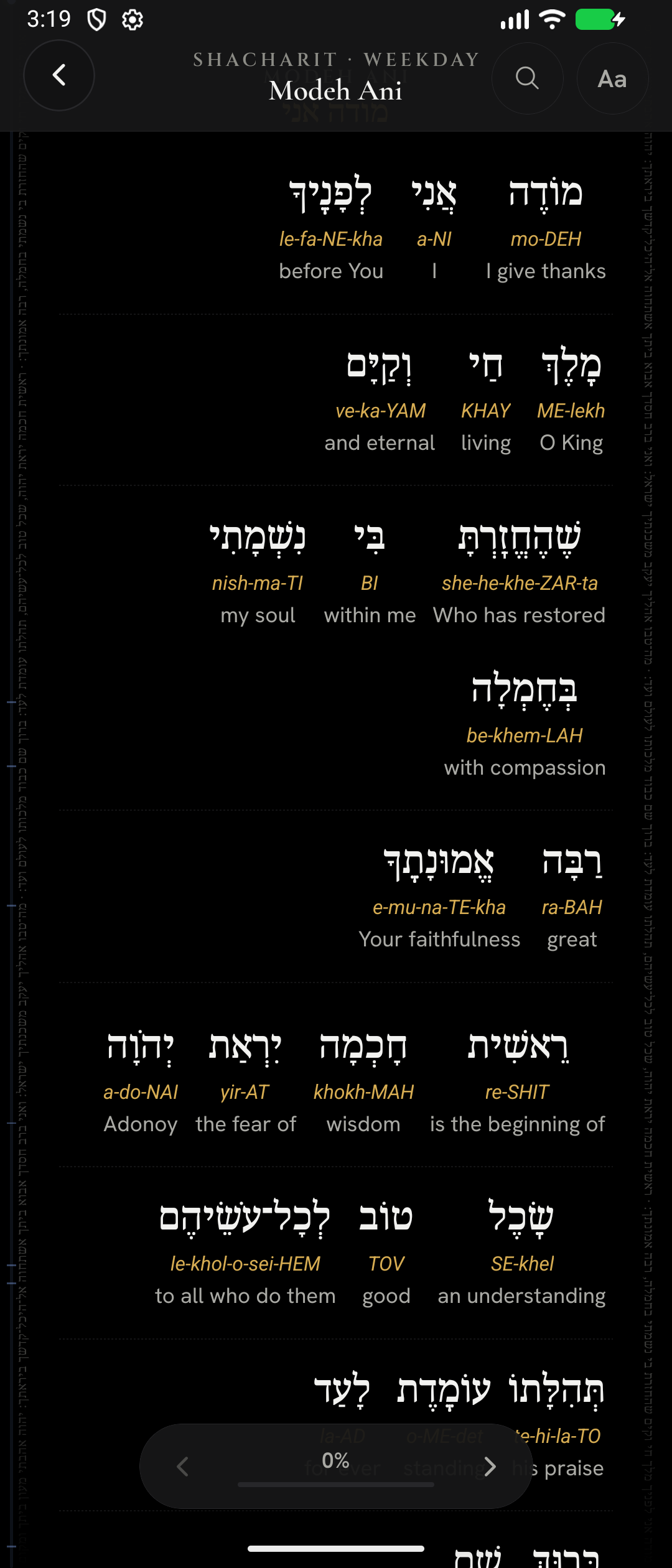
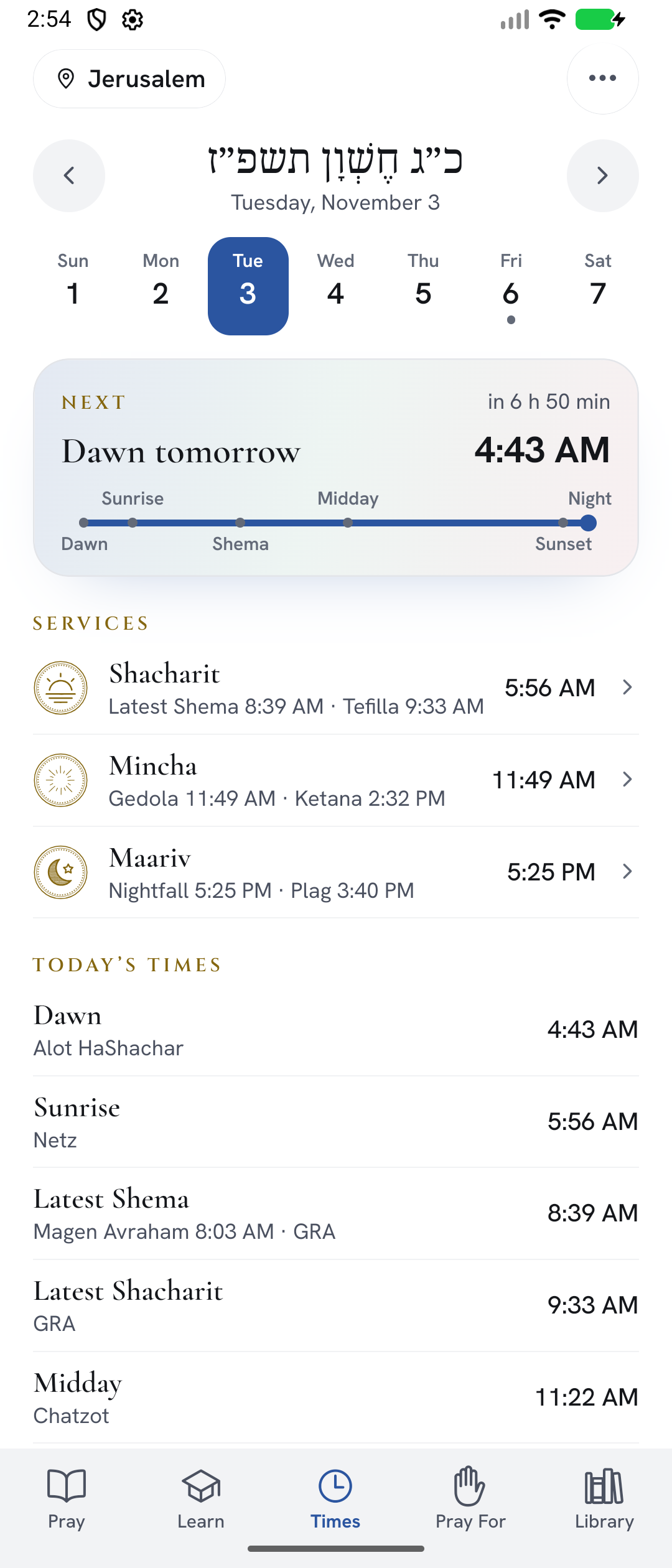
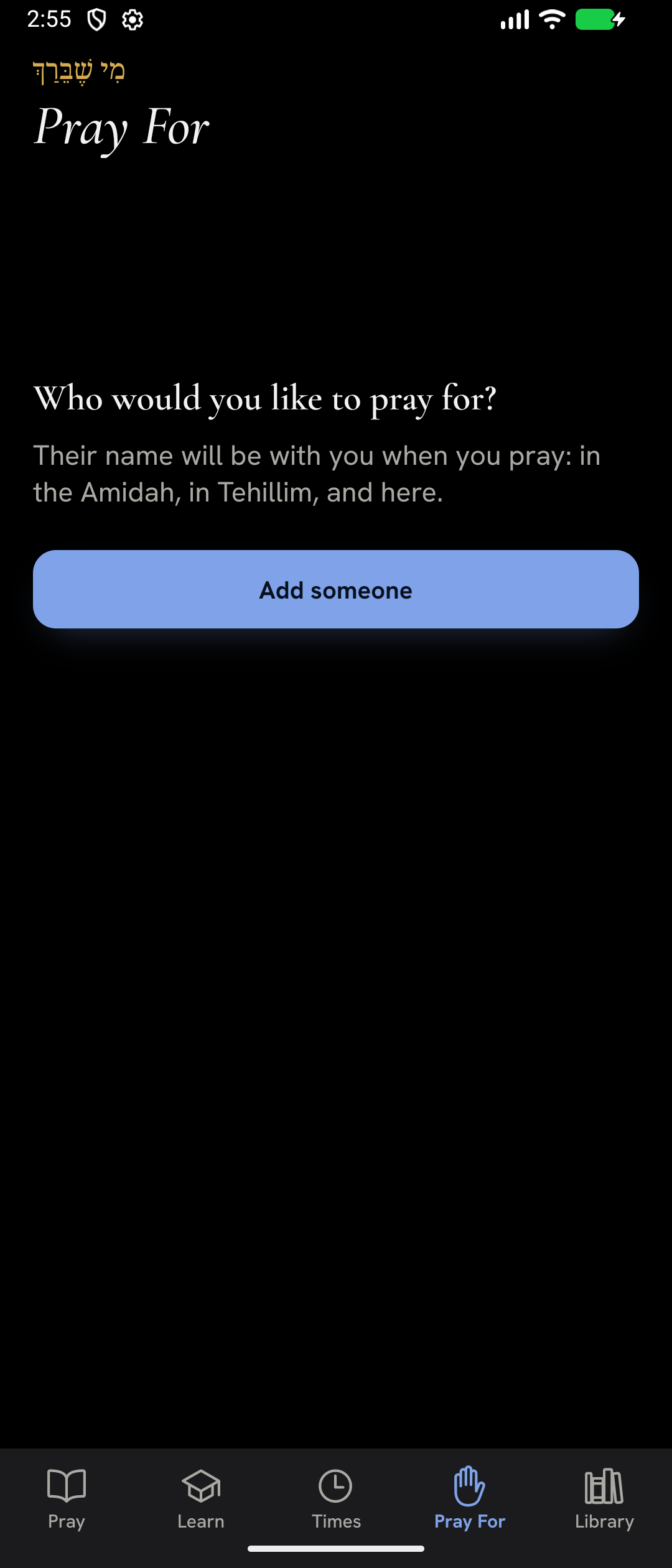
Kav means “line” in Hebrew: a line to God, a line to your community, and a line-by-line guide to every word you pray.
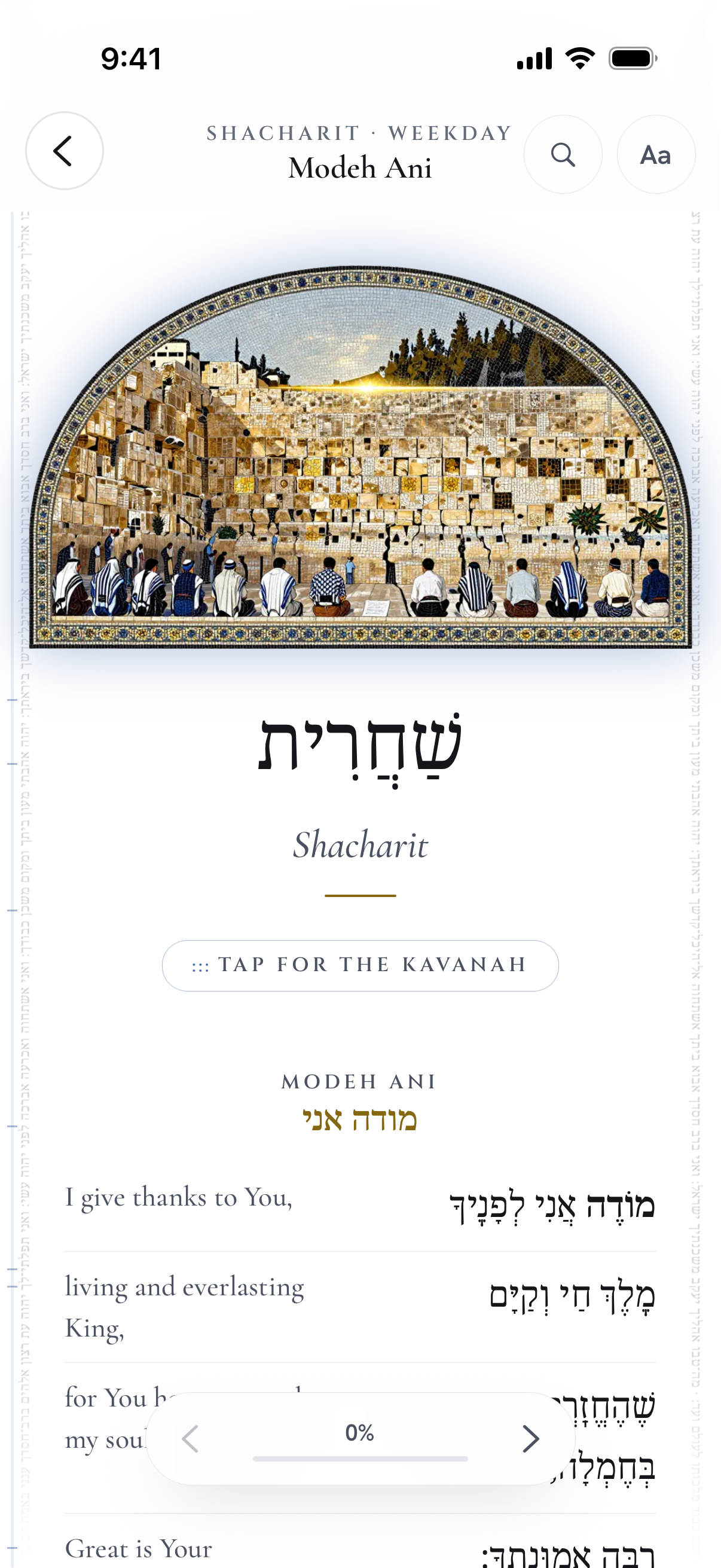
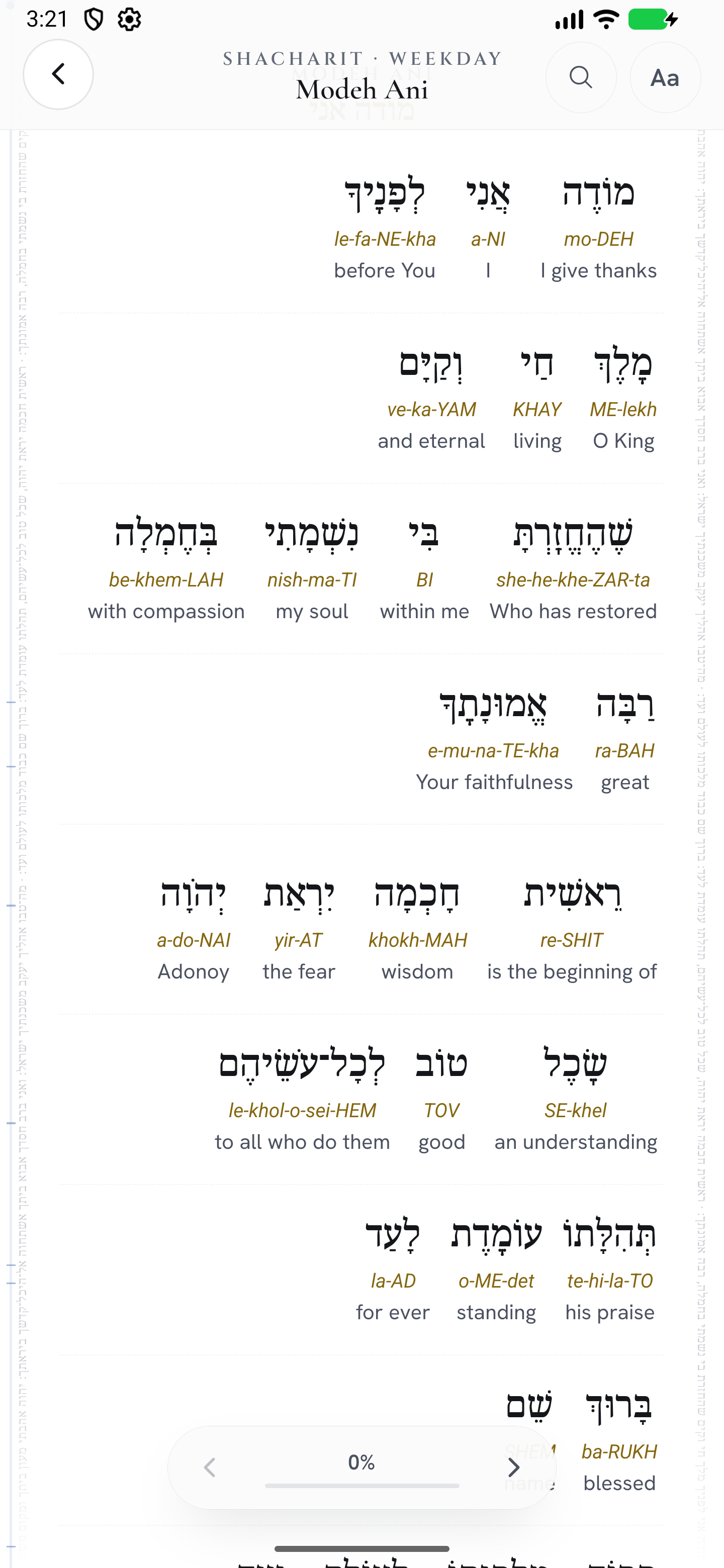
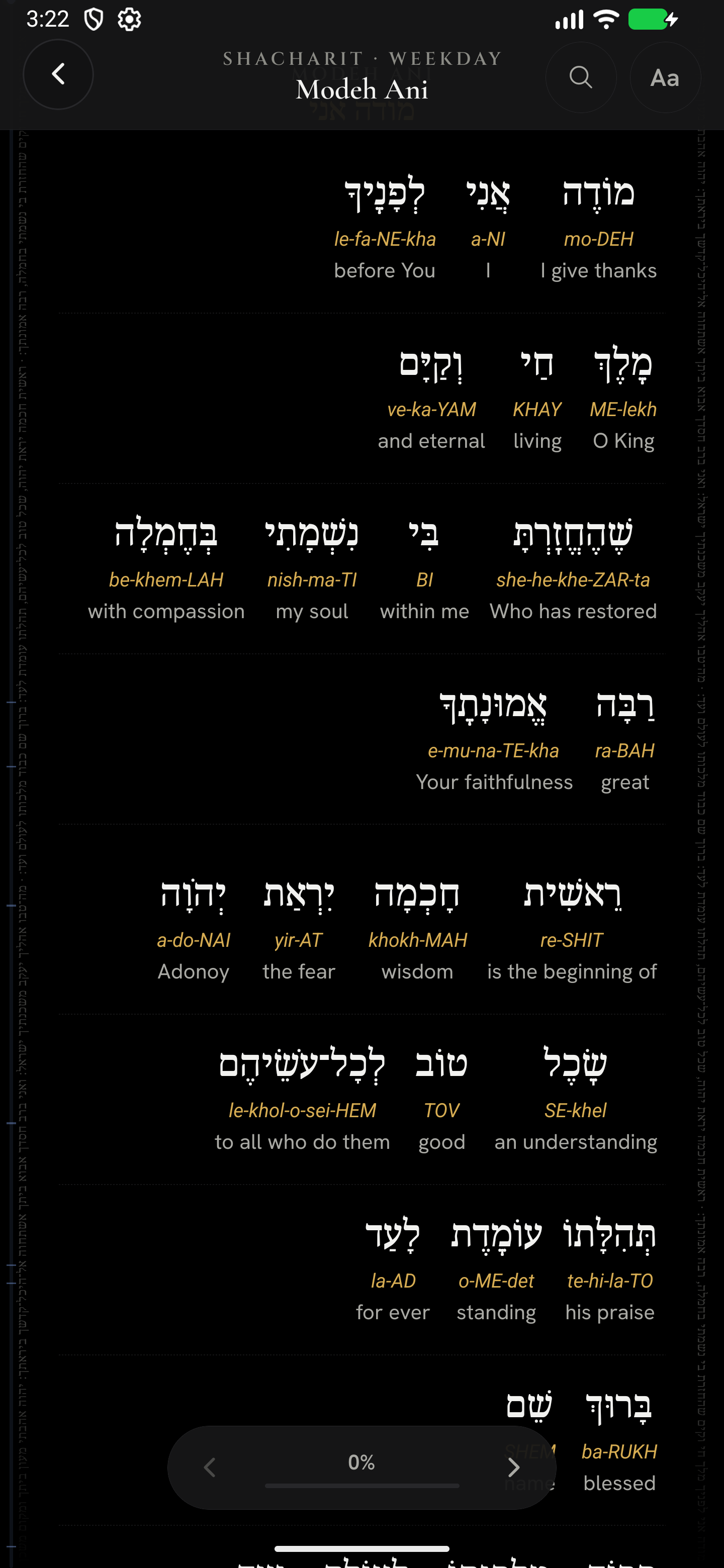
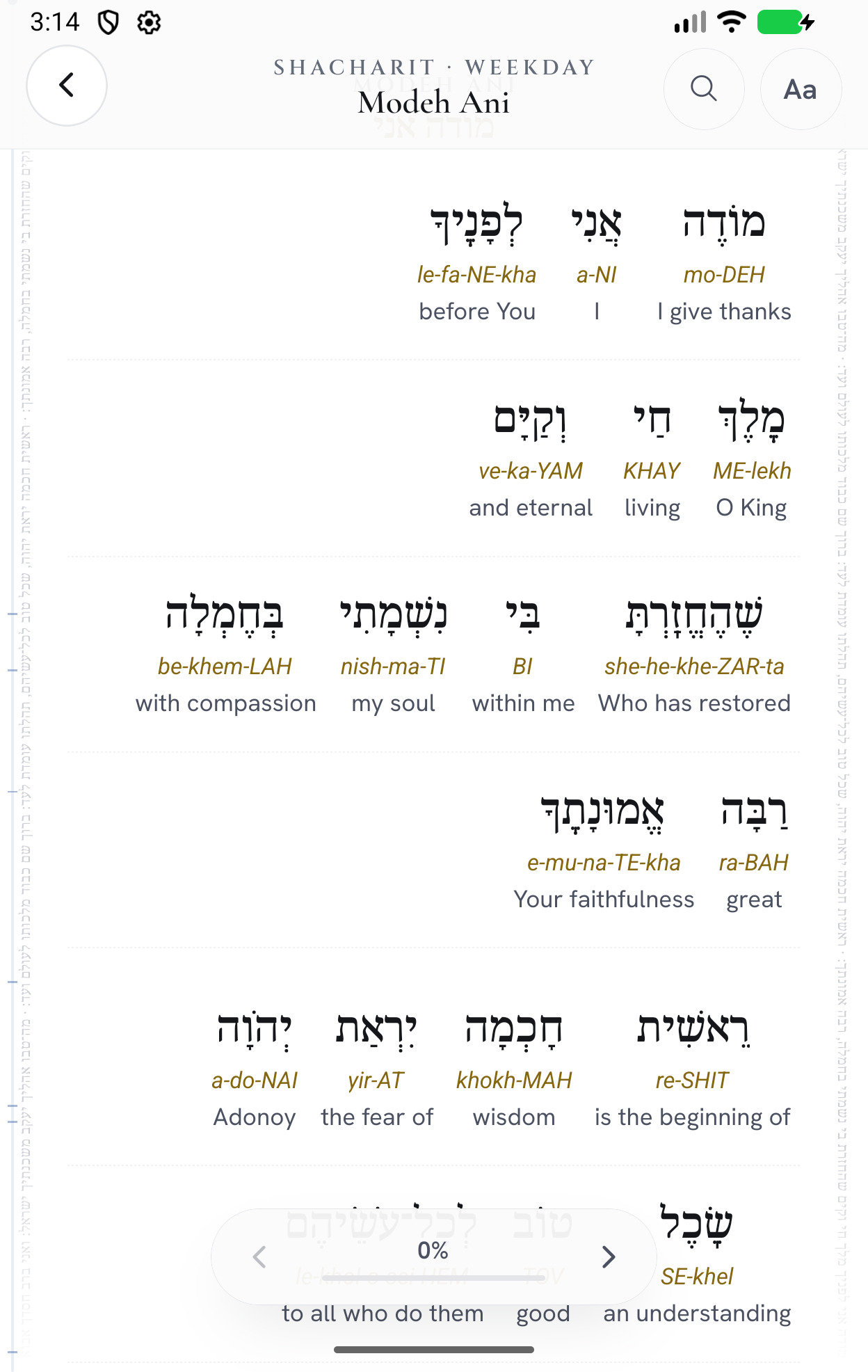
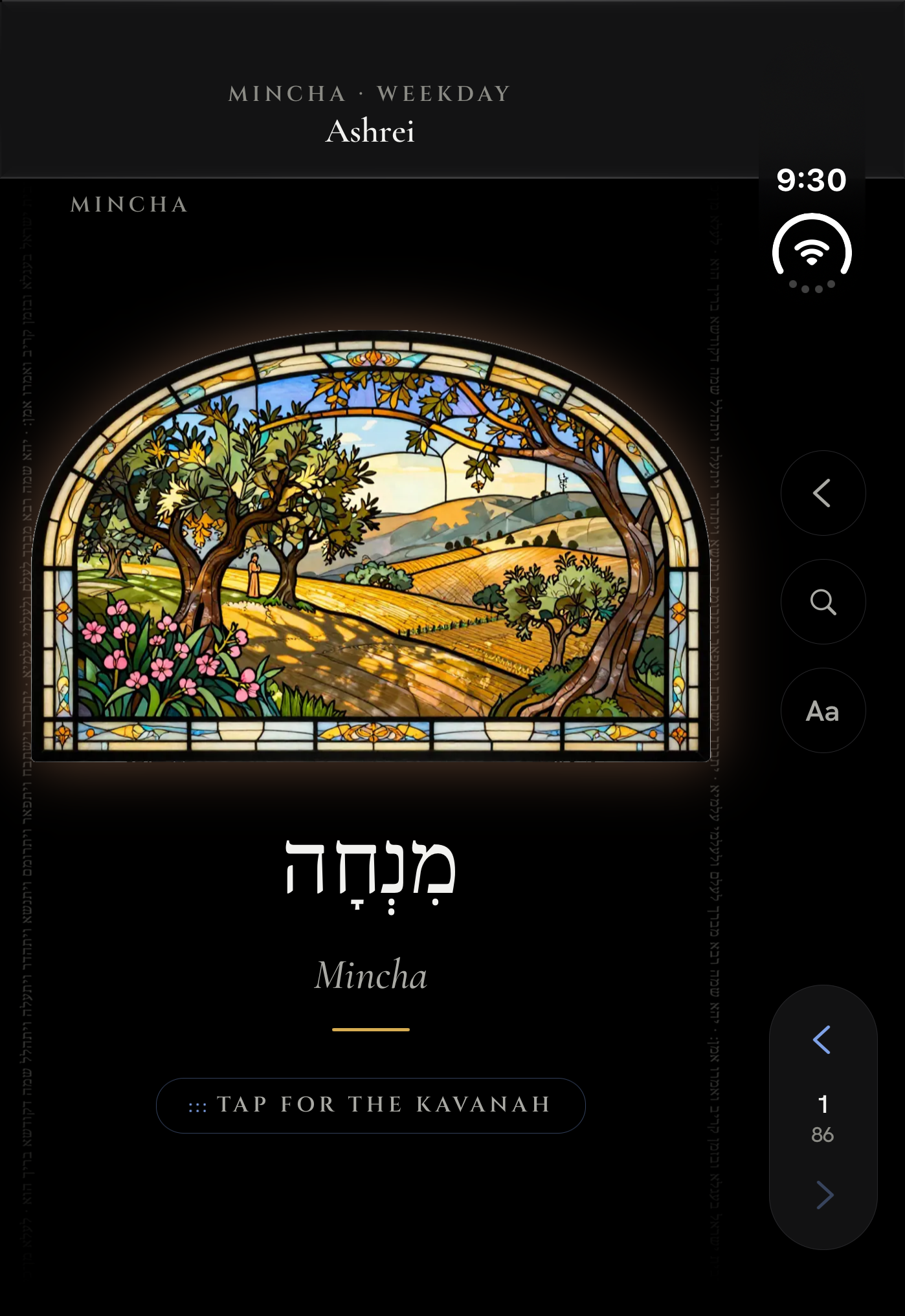
Follow the Hebrew with English and pronunciation. Tap a word to see its meaning without leaving the page.
In supported texts, hold a word to open its full entry.
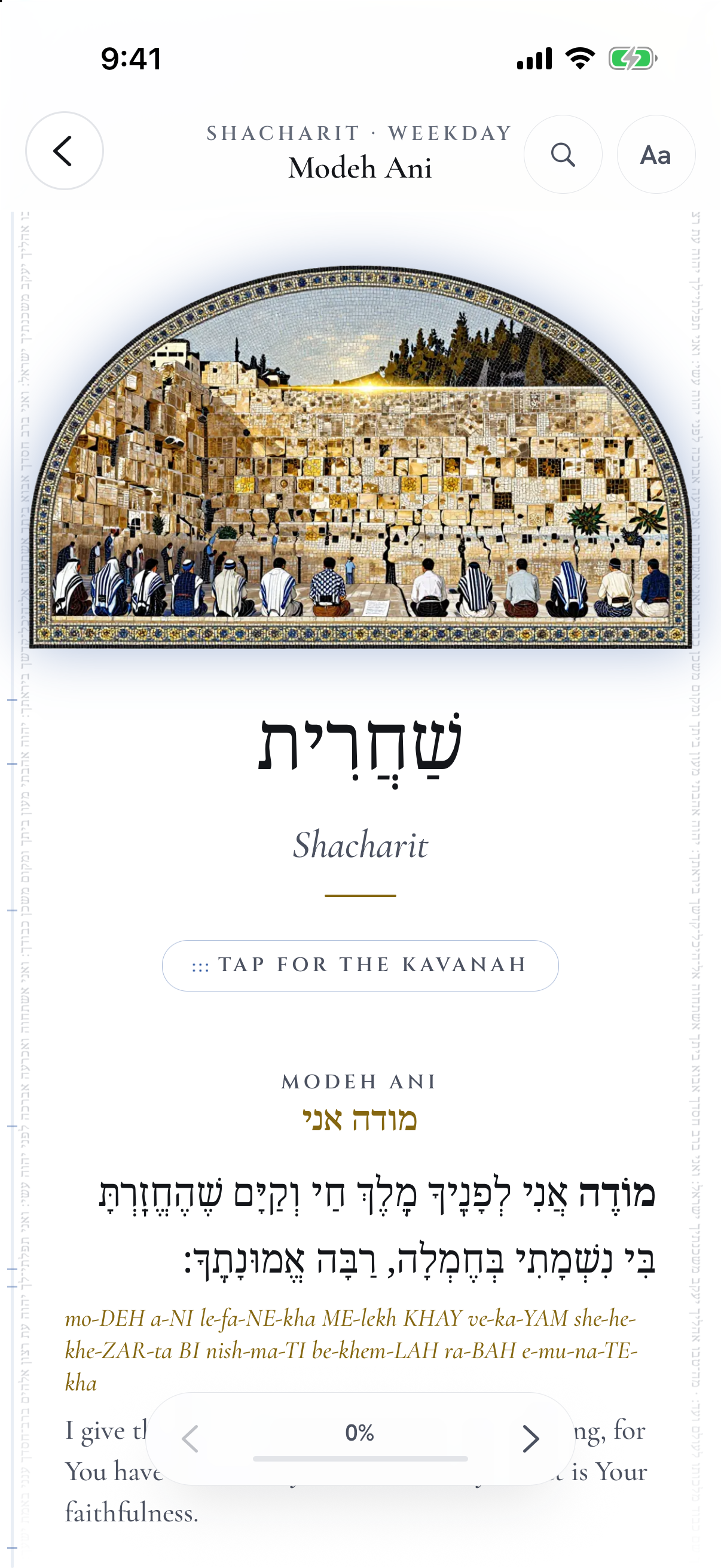
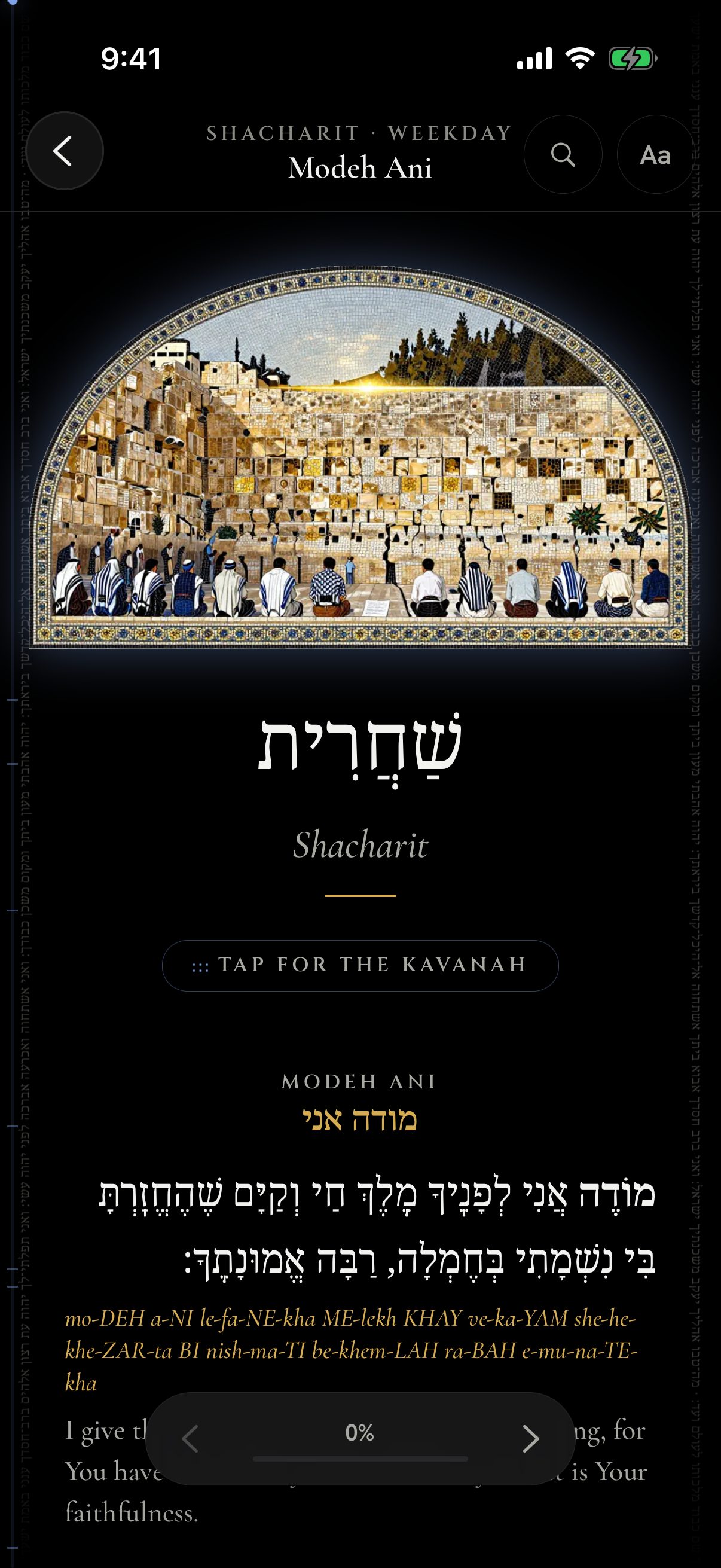
Shacharit is the morning prayer, the first of the day’s three prayers. The Ashkenaz siddur in this app gives it in 106 parts, and the Edot HaMizrach siddur in 18 longer ones. Its heart is the Shema and the Amidah, the prayer said standing. Around them come songs of praise, pleas for mercy and, on Mondays and Thursdays, the Torah reading.
Sources: Berakhot 26bBefore you begin, slow down. The Mishnah tells that the early pious ones waited an hour before they prayed, to turn their hearts to God. The Shulchan Aruch asks you to think about what each word means, as if the Divine Presence were facing you. In the Amidah, pray like Hannah: the Talmud learns from her that the heart takes part, the lips move, and the voice stays quiet. Try this today. Before the Amidah, stop for a few seconds and think about who you are about to speak to.
Sources: Mishnah Berakhot 5:1 · Shulchan Aruch Orach Chayim 98:1 · Berakhot 31a · 1 Samuel 1:13מוֹדֶה אֲנִי לְפָנֶֽיךָ
I give thanks to You,
Modeh Ani · מודה אניacknowledges
I give thanks
to acknowledge, thank, or praise
This word is built from the root י-ד-ה.
You will see this word again and again in the prayers.
It stands first in Shacharit, on weekdays and on Shabbat, before the blessing over washing the hands. Its closing words come from Lamentations, where they follow the line that God’s mercies are new every morning.
Modeh — the first word Jews say on waking, Modeh Ani, “I gratefully acknowledge” — comes from the root י-ד-ה, which fuses thanks, praise, and confession into one. The very same root gives todah (“thanks”) and l’hitvadot (“to confess”): to acknowledge God’s gift and to admit one’s wrong are, at root, a single act of owning the truth.
מוֹדֶה is the Hiphil participle of ידה.
הודה · תודה
Recurring liturgical form across the siddur corpus.
יהודה · אודך · נודה · ונודה
Found 4 times in the prayers.
Shacharit Shabbat Ashkenaz · Shacharit Weekday Ashkenaz
Elokai Neshama
Elokai Neshama
… כָּל זְמַן שֶׁהַנְּשָׁמָה בְּקִרְבִּי מודֶה אֲנִי לְפָנֶיךָ …
My God, the soul You placed within me is pure. You created it, You formed it, You breathed it into me, and You preserve it within me. You will eventually take it from me and restore it to me in the time to come. As long as the soul is within me, I thank You, Adonoy my God and God of my fathers, Master of all works, Lord of all souls.
SEE IT IN PRAYER · IN APPModeh Ani
Modeh Ani
מוֹדֶה אֲנִי לְפָנֶיךָ, מֶלֶךְ חַי וְקַיָּם, שֶׁהֶחֱזַרְתָּ בִּי נִשְׁמָתִי בְּחֶמְלָה, רַבָּה אֱמוּנָתֶךָ
I give thanks to You, living and everlasting King, for You have restored my soul with mercy. Great is Your faithfulness.
SEE IT IN PRAYER · IN APPElokai Neshama
Elokai Neshama
… כָּל זְמַן שֶׁהַנְּ֒שָׁמָה בְקִרְבִּי מוֹדֶה אֲנִי לְפָנֶֽיךָ …
My God! the soul which You bestowed in me is pure; You created it, You formed it, You breathed it into me and You preserve it within me.
SEE IT IN PRAYER · IN APPModeh Ani
Modeh Ani
מוֹדֶה אֲנִי לְפָנֶֽיךָ מֶֽלֶךְ חַי וְקַיָּם שֶׁהֶחֱזַֽרְתָּ בִּי נִשְׁמָתִי בְּחֶמְלָה, רַבָּה אֱמוּנָתֶֽךָ:
I give thanks to You, living and everlasting King, for You have restored my soul with mercy. Great is Your faithfulness.
SEE IT IN PRAYER · IN APPFollow the prayer in Hebrew, with pronunciation and English alongside it.
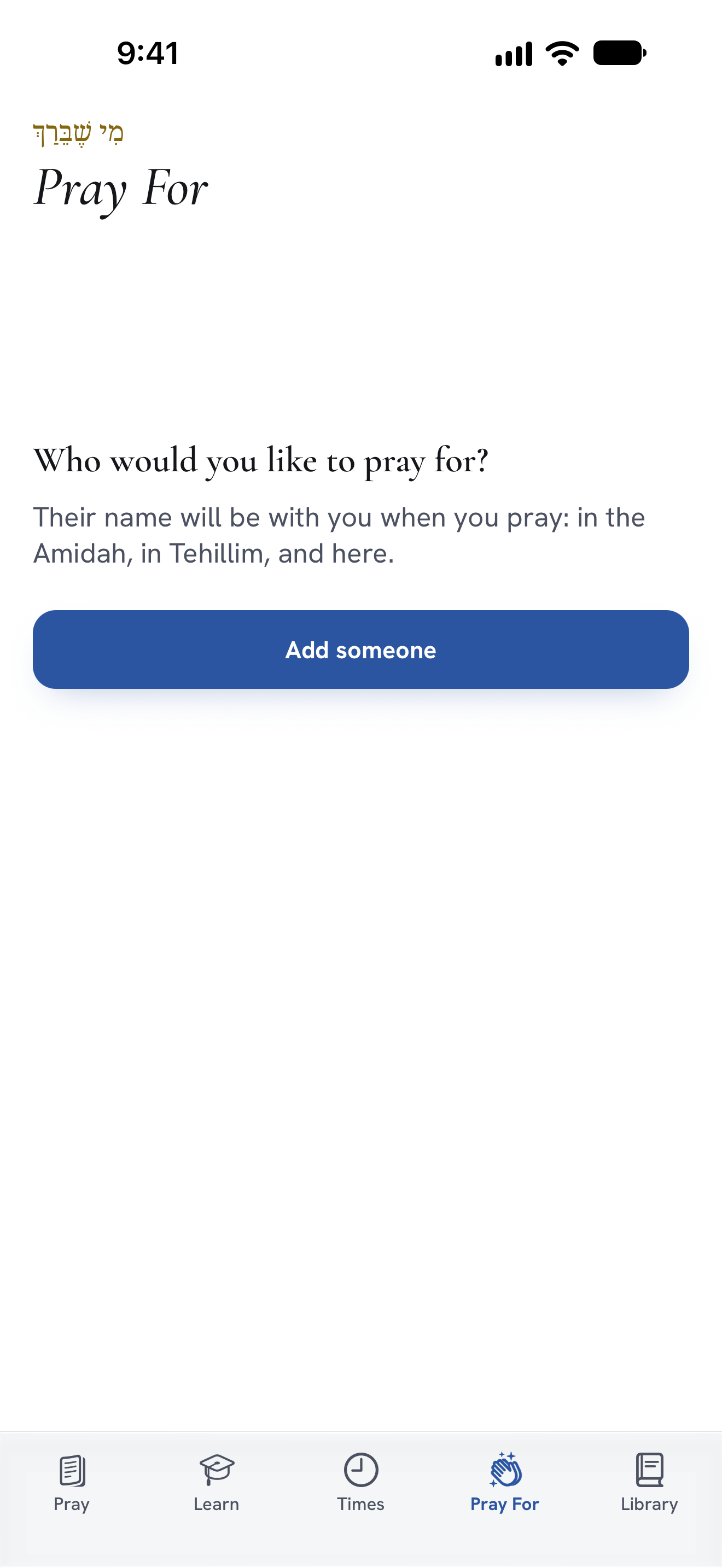
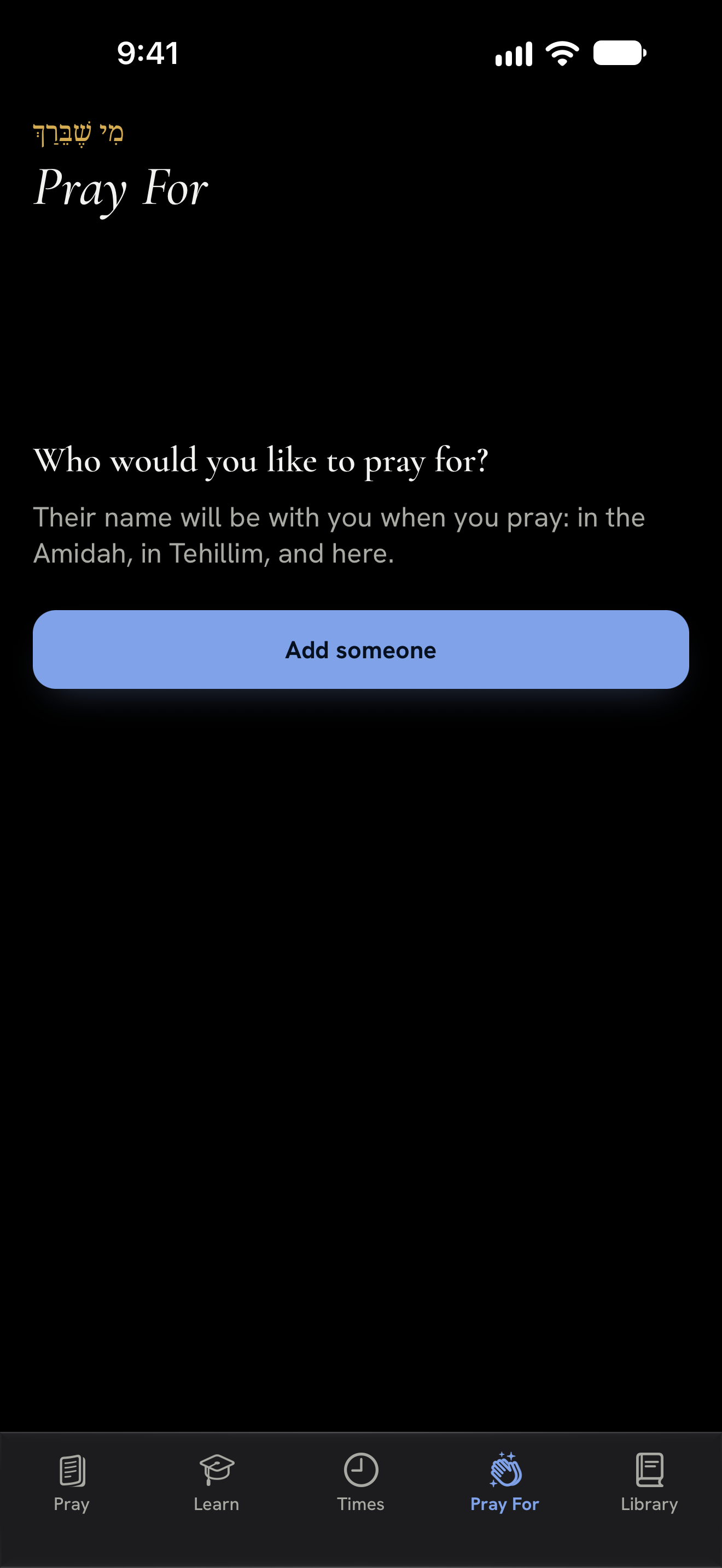
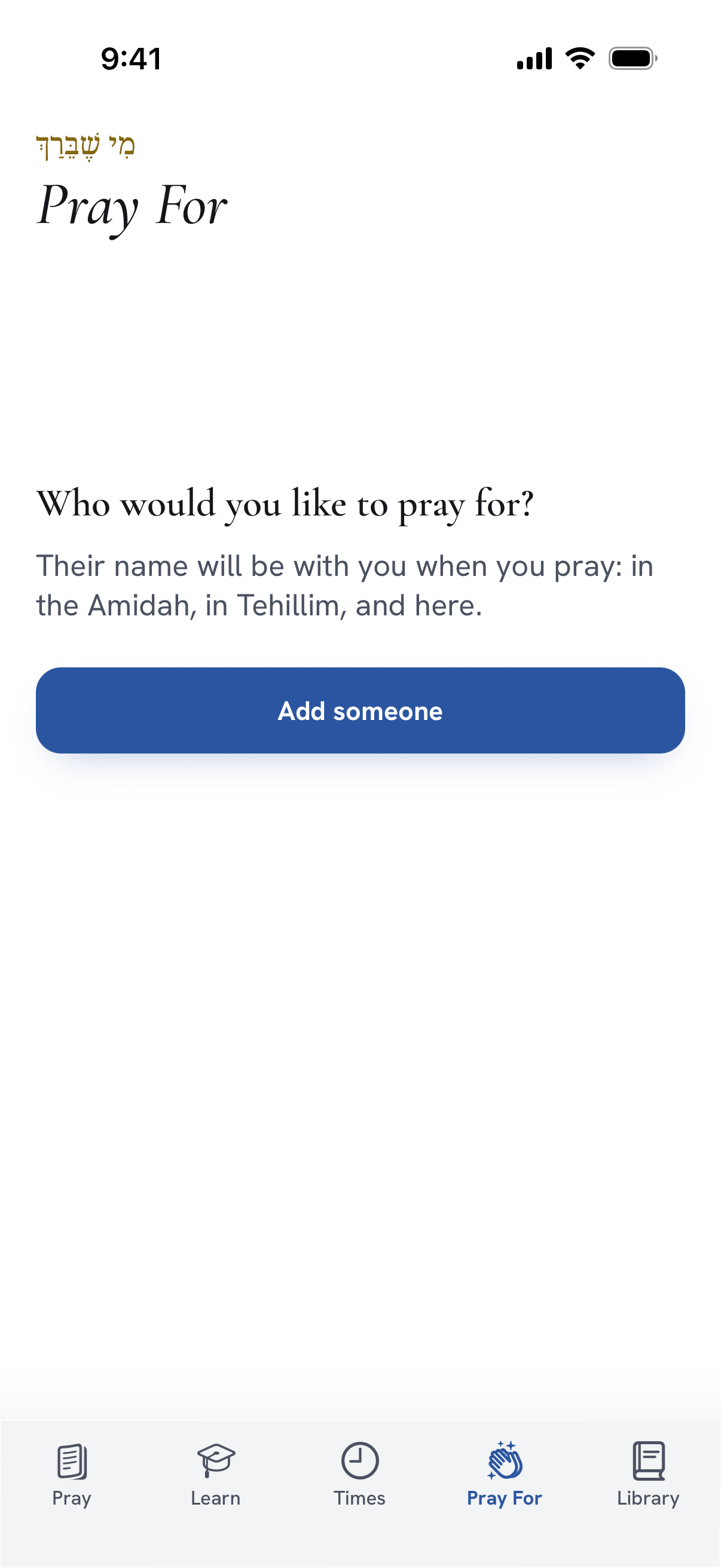
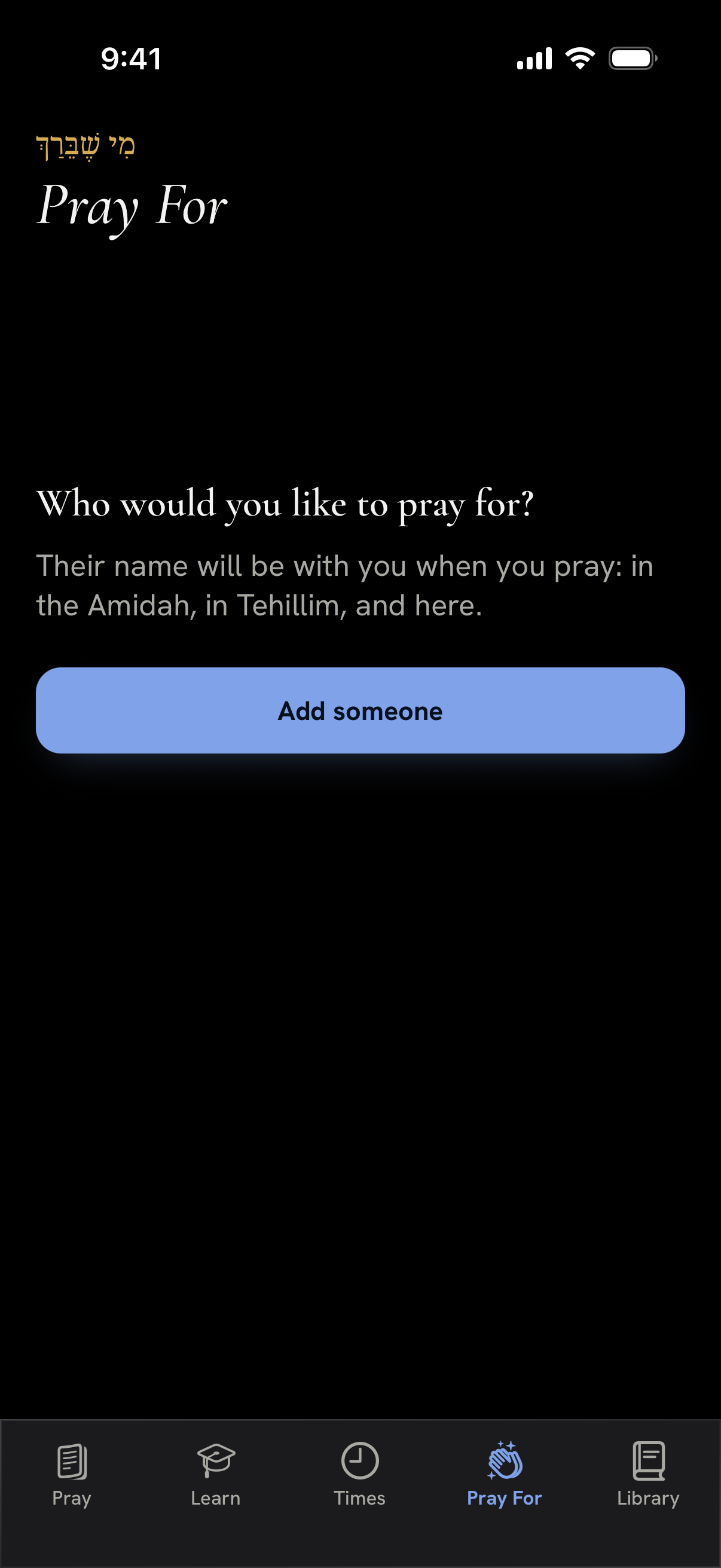
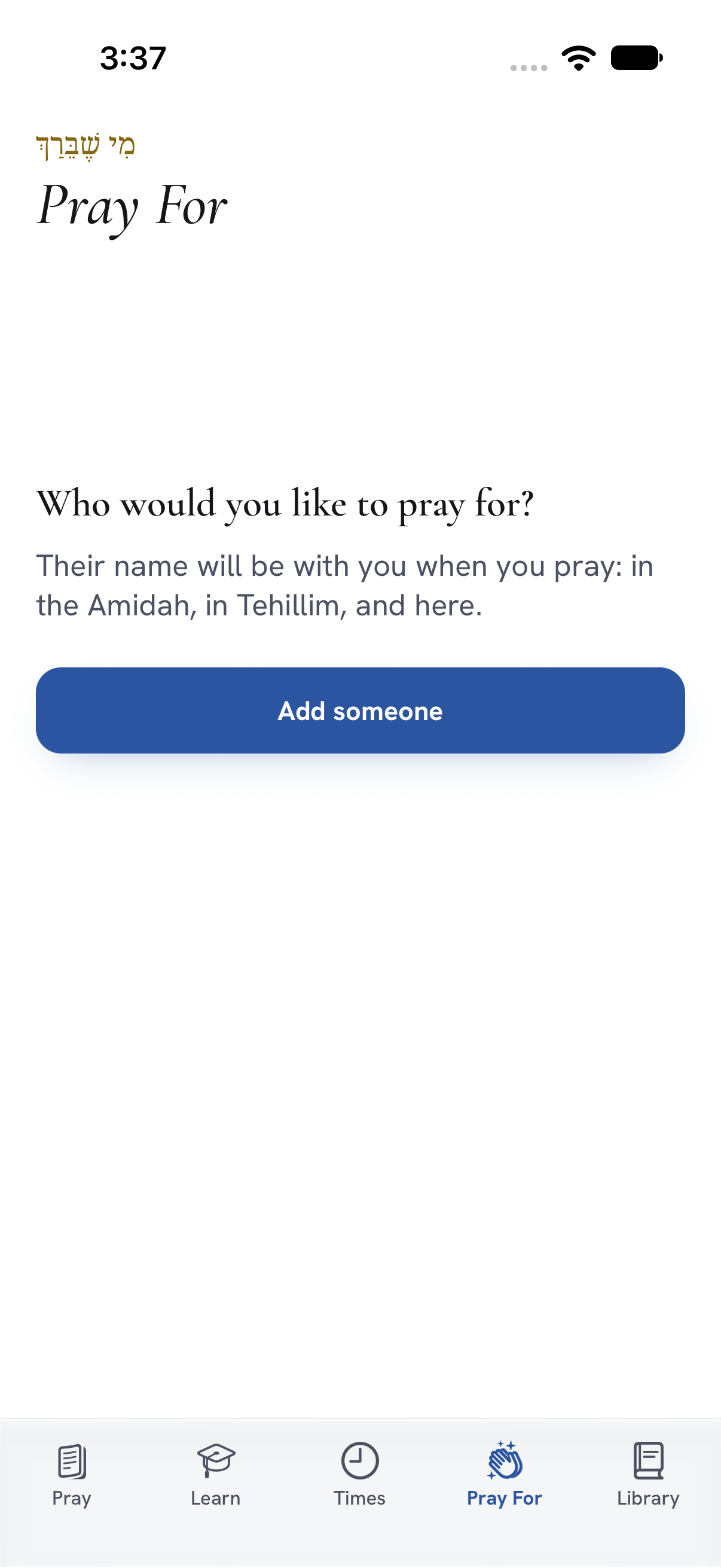
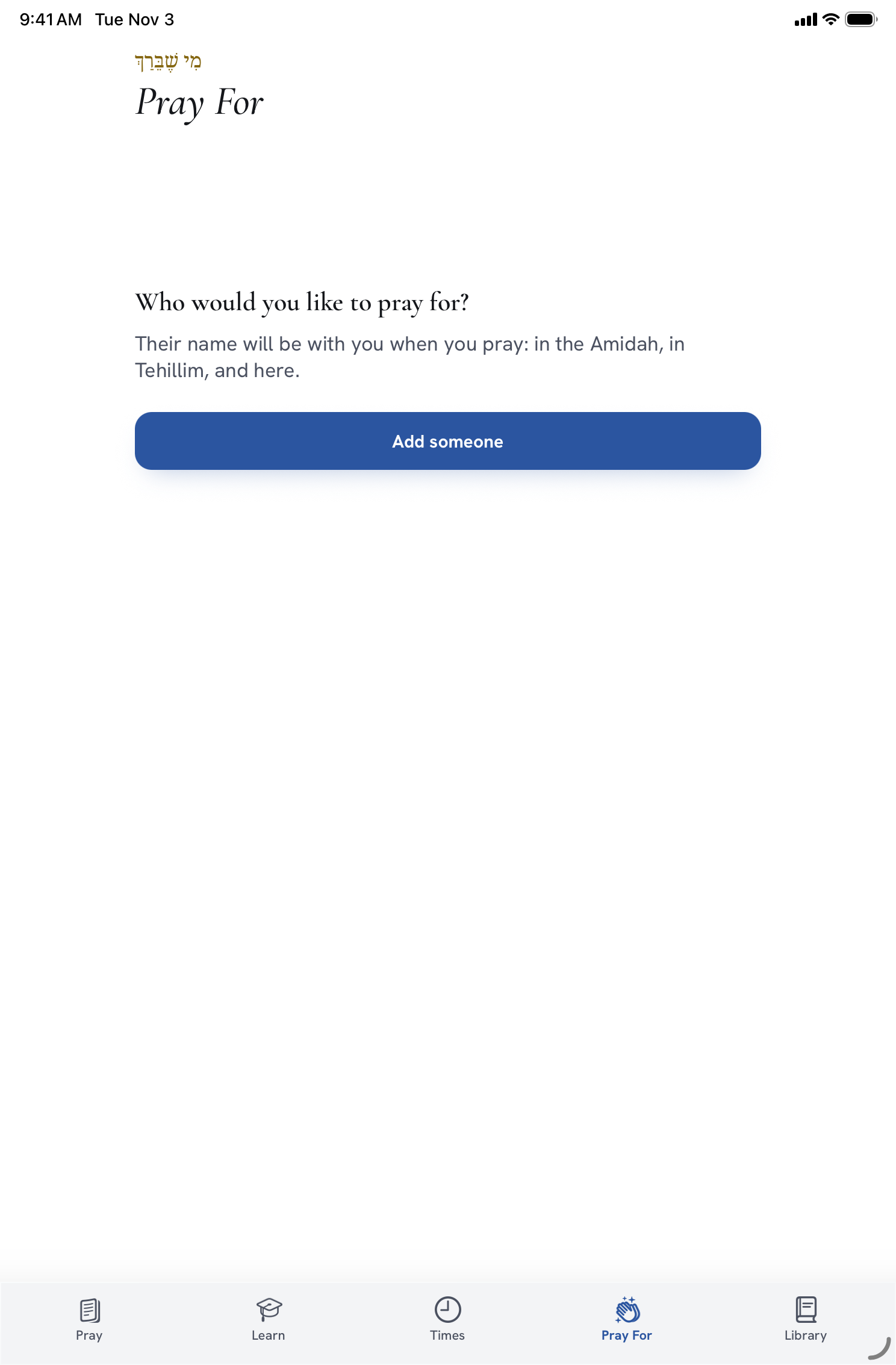
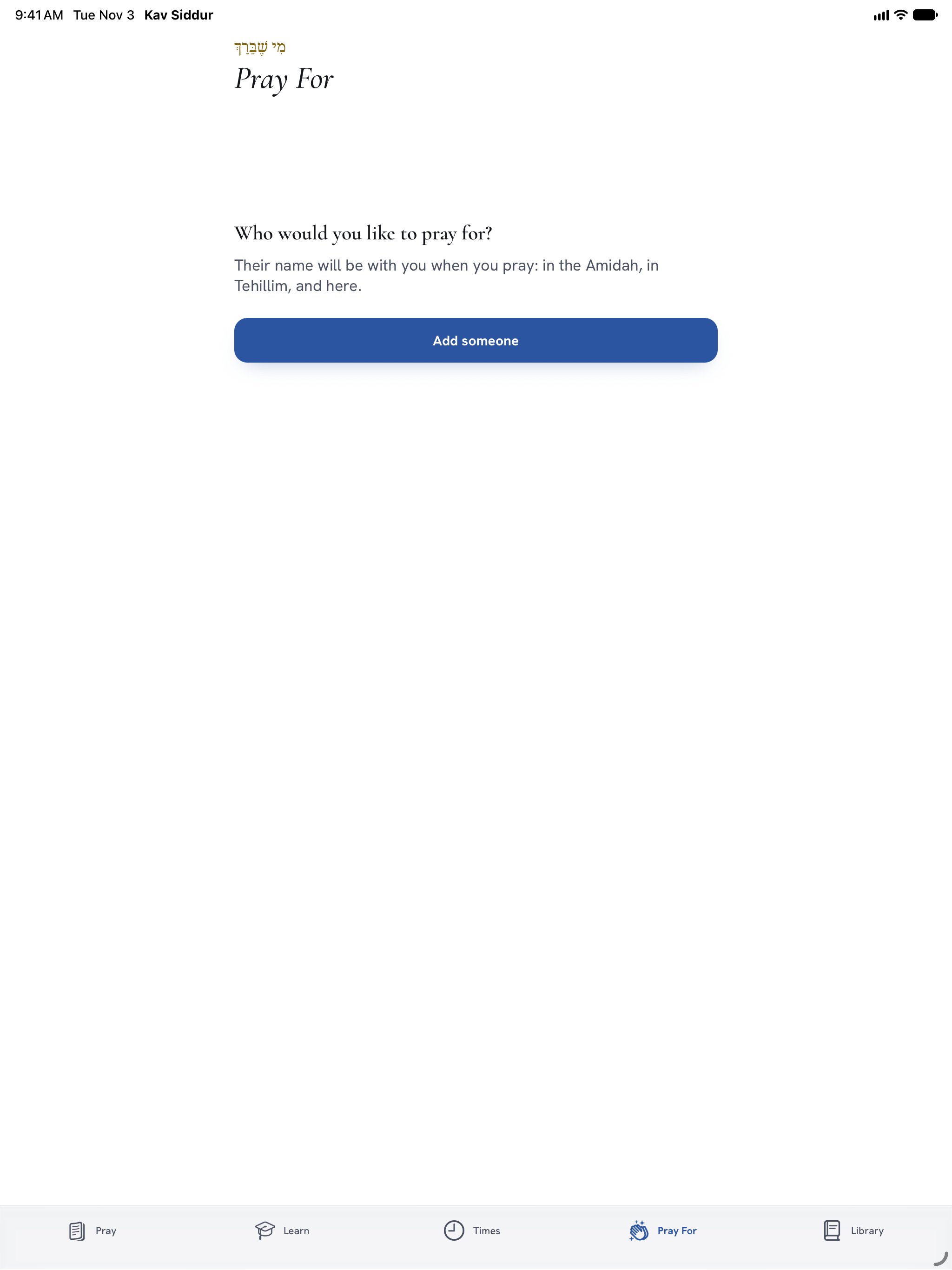
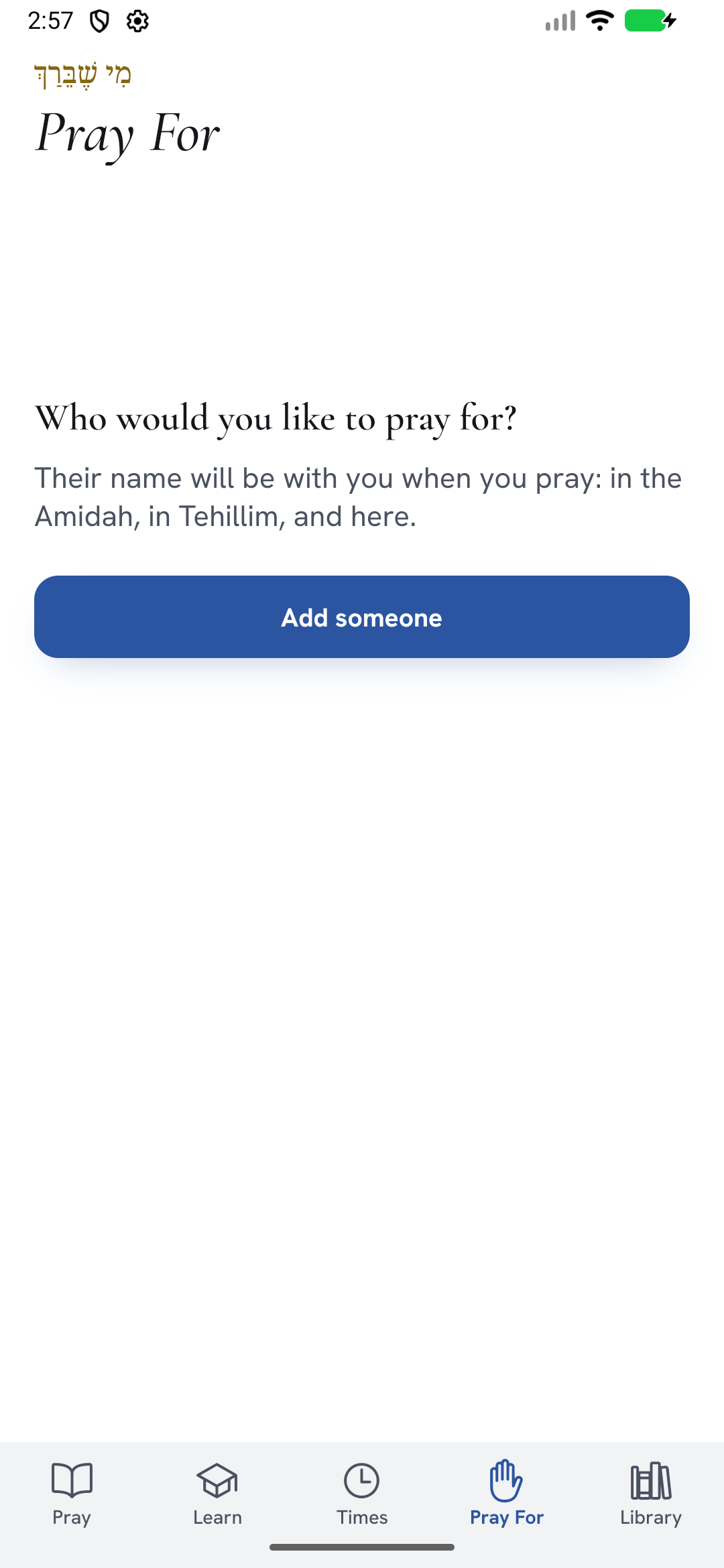
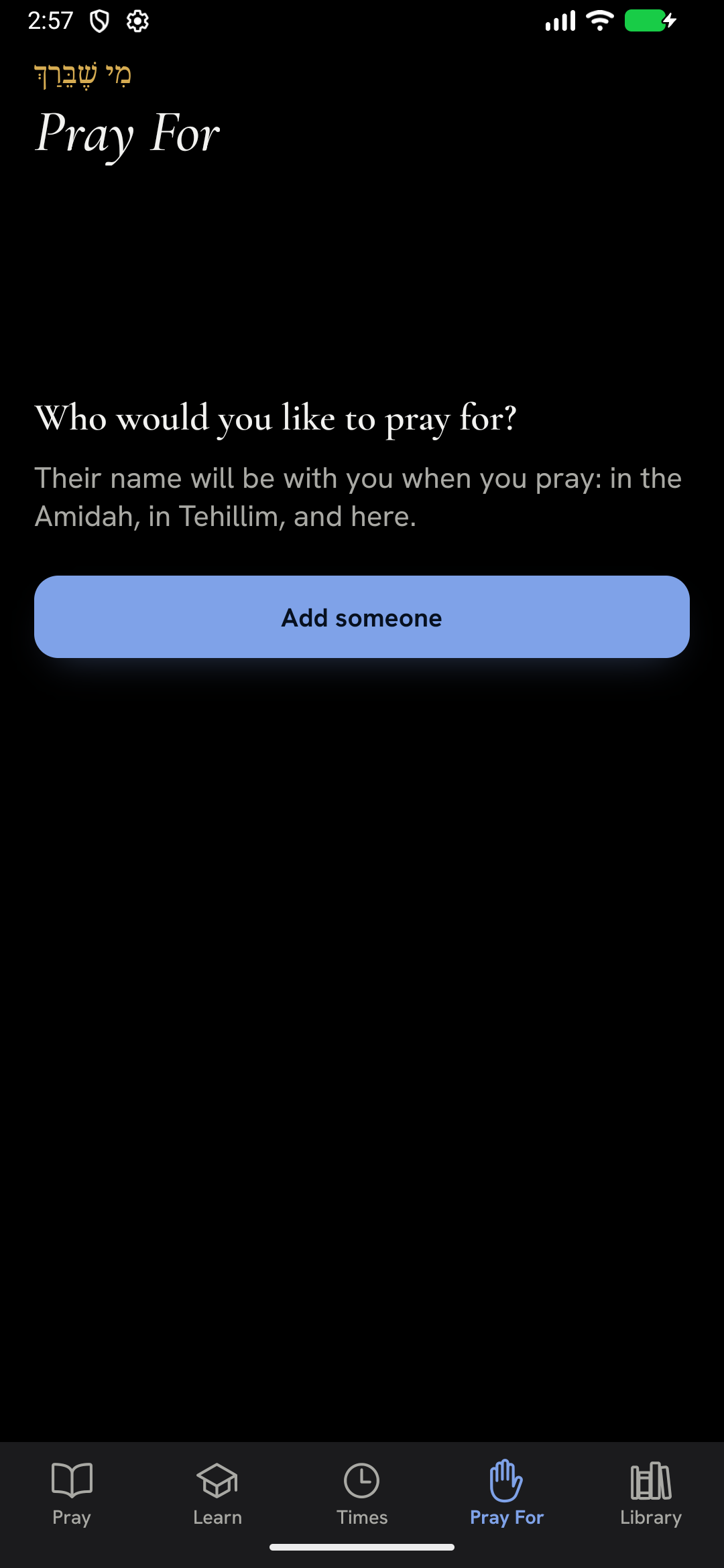
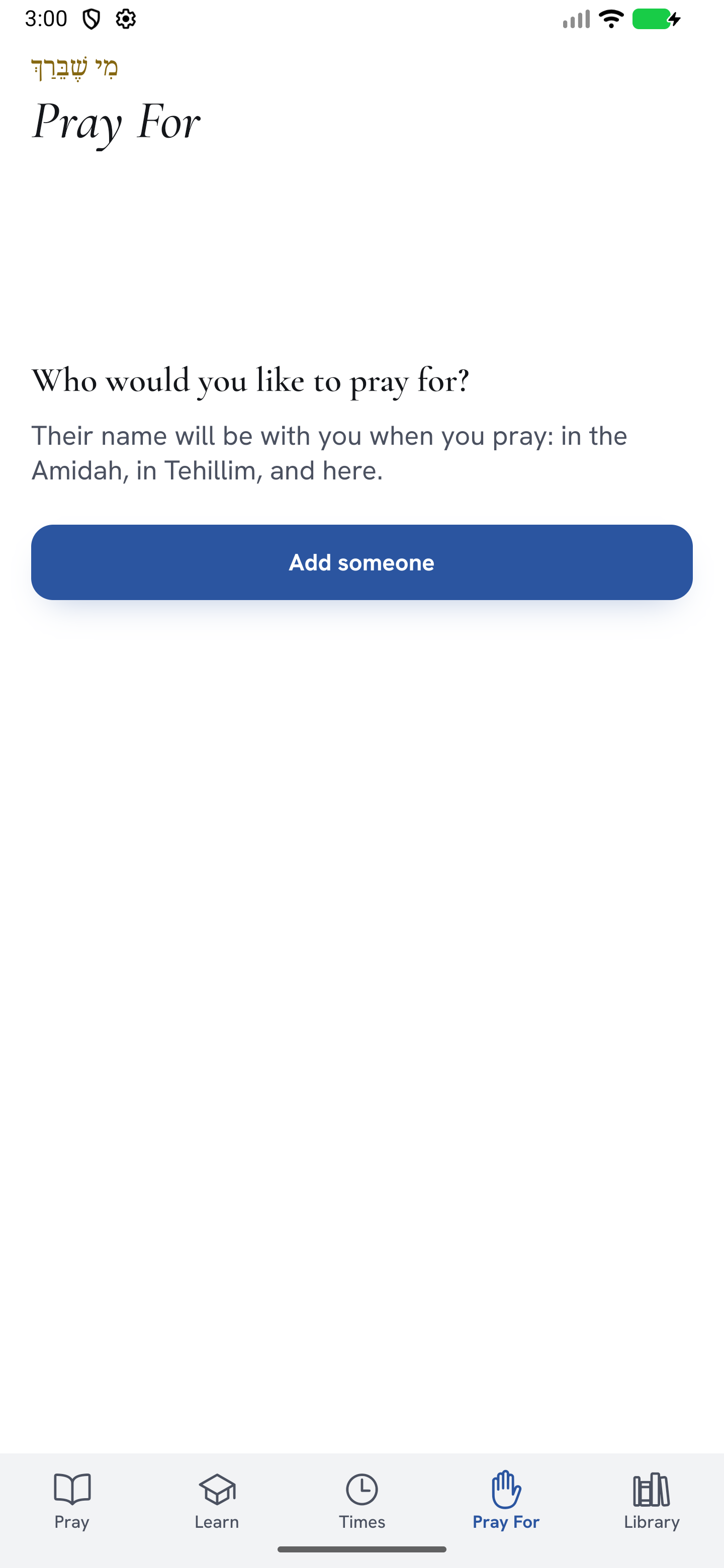
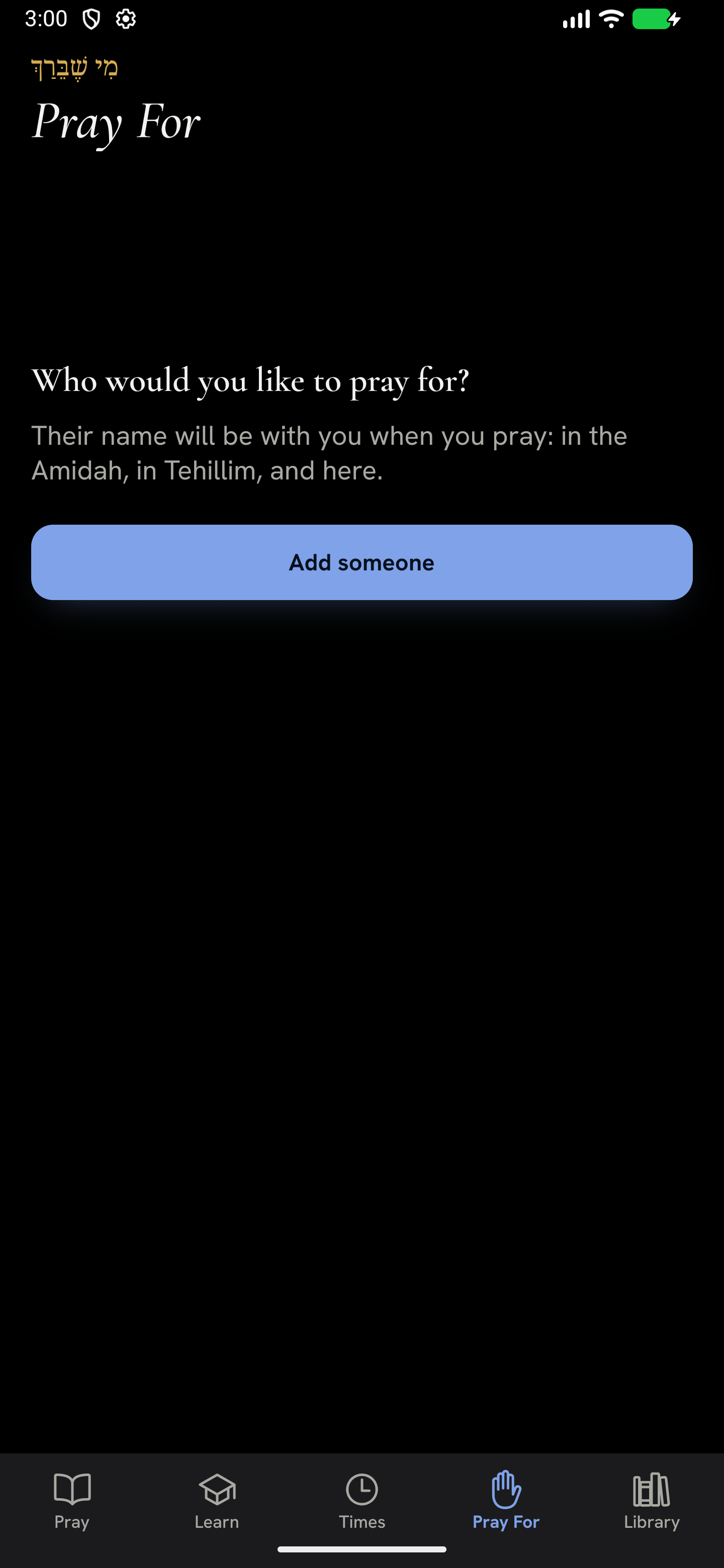
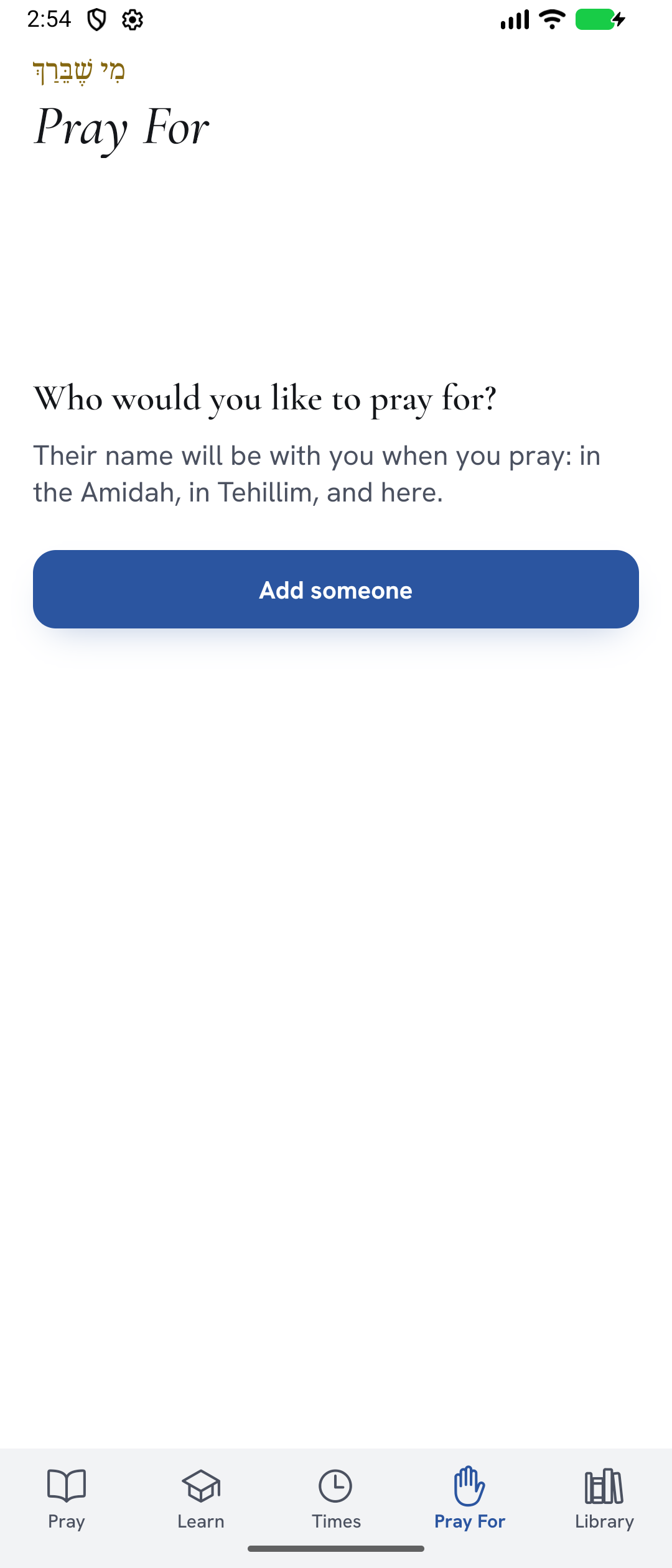
מוֹדֶה · I give thanks · mo-DEH.Save a name on Home, then open their prayer for words to say and psalms to read.
Names you save privately stay on your device. Sharing a request, when available, is optional.
Shown in the newer Kav preview.
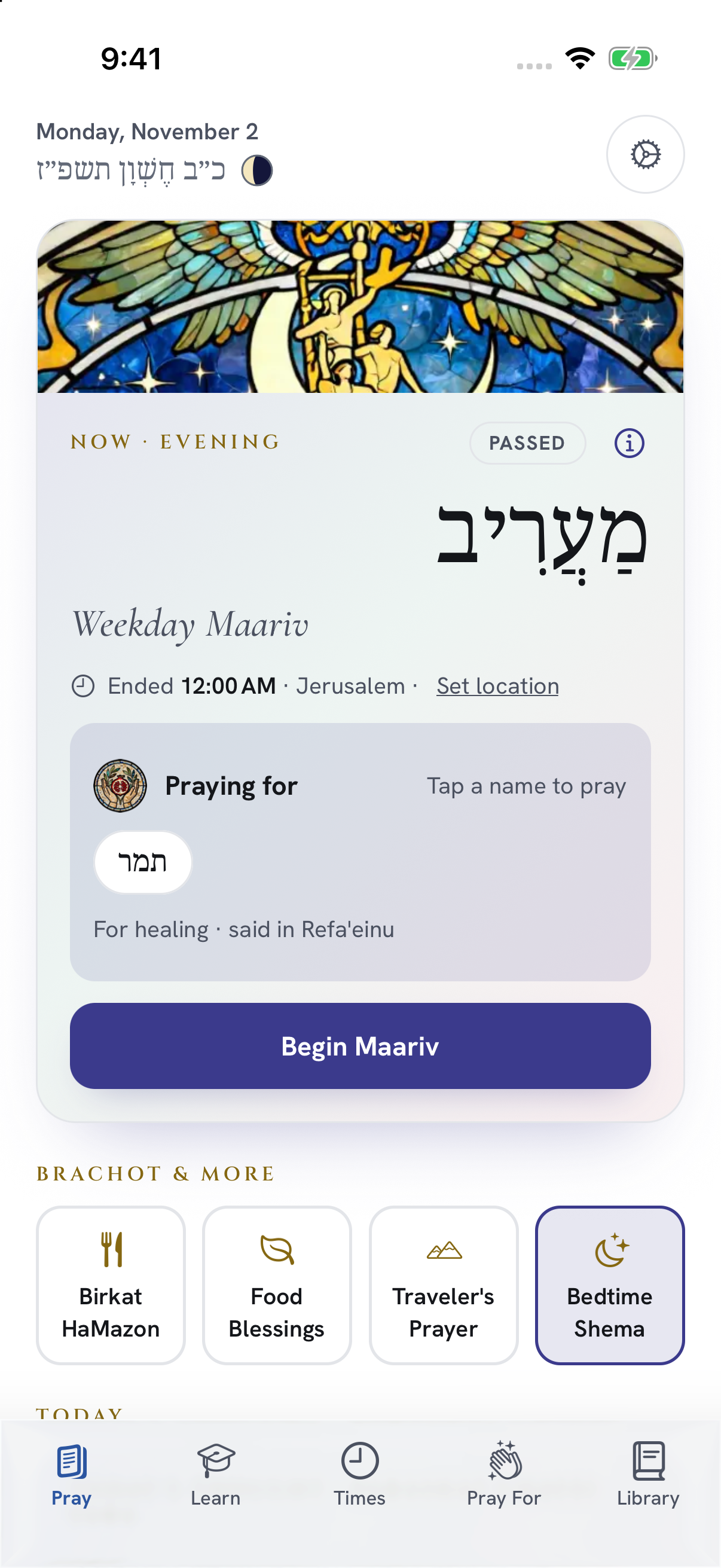
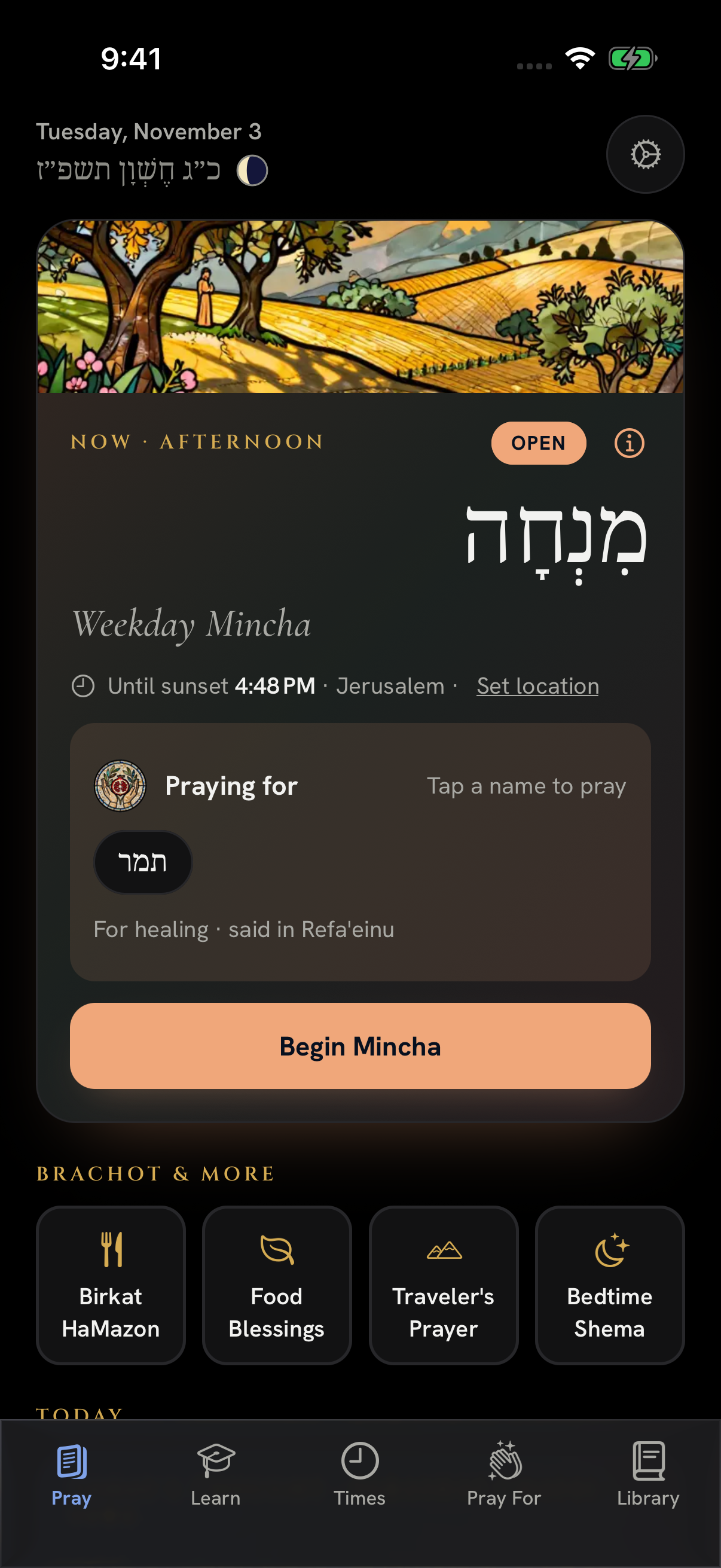
On Home, the name you saved appears beside your next prayer.
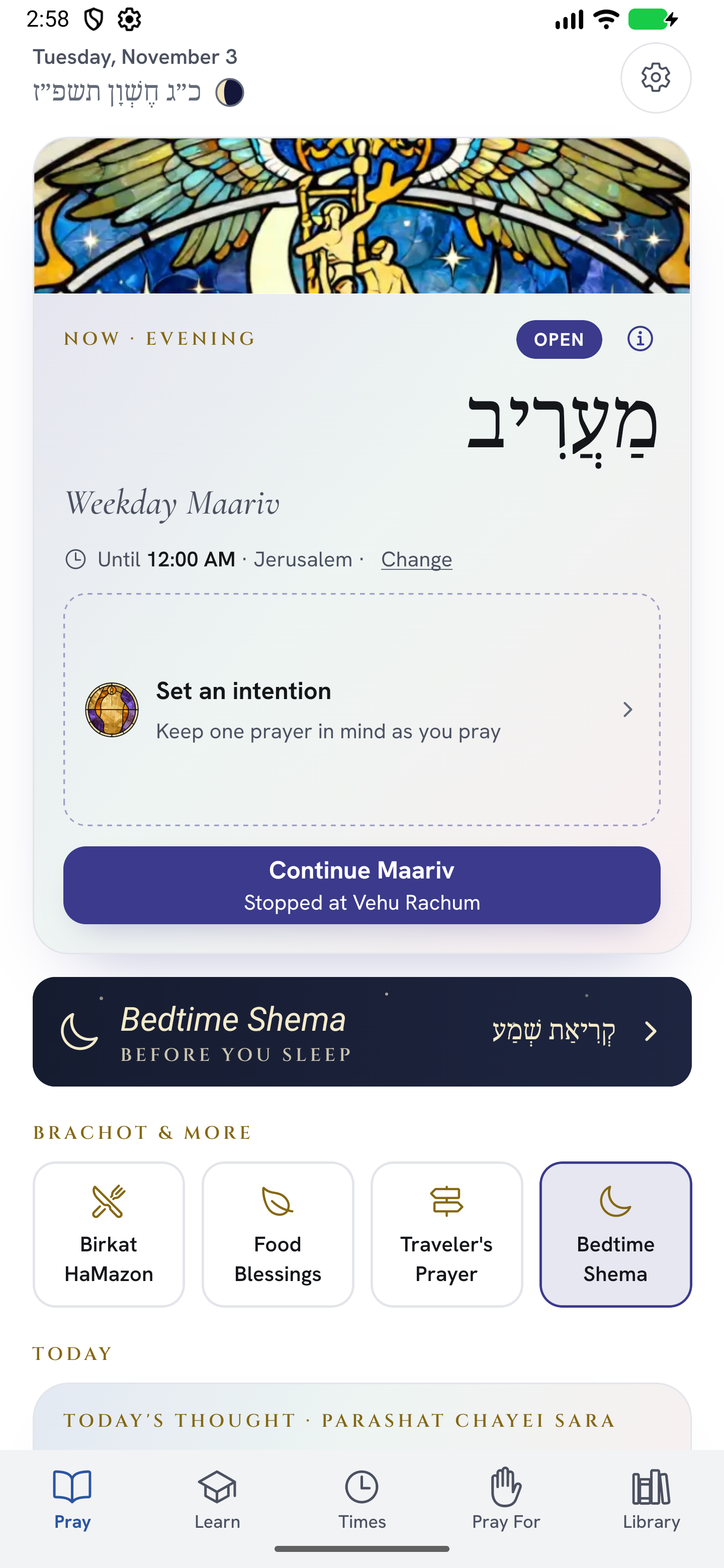
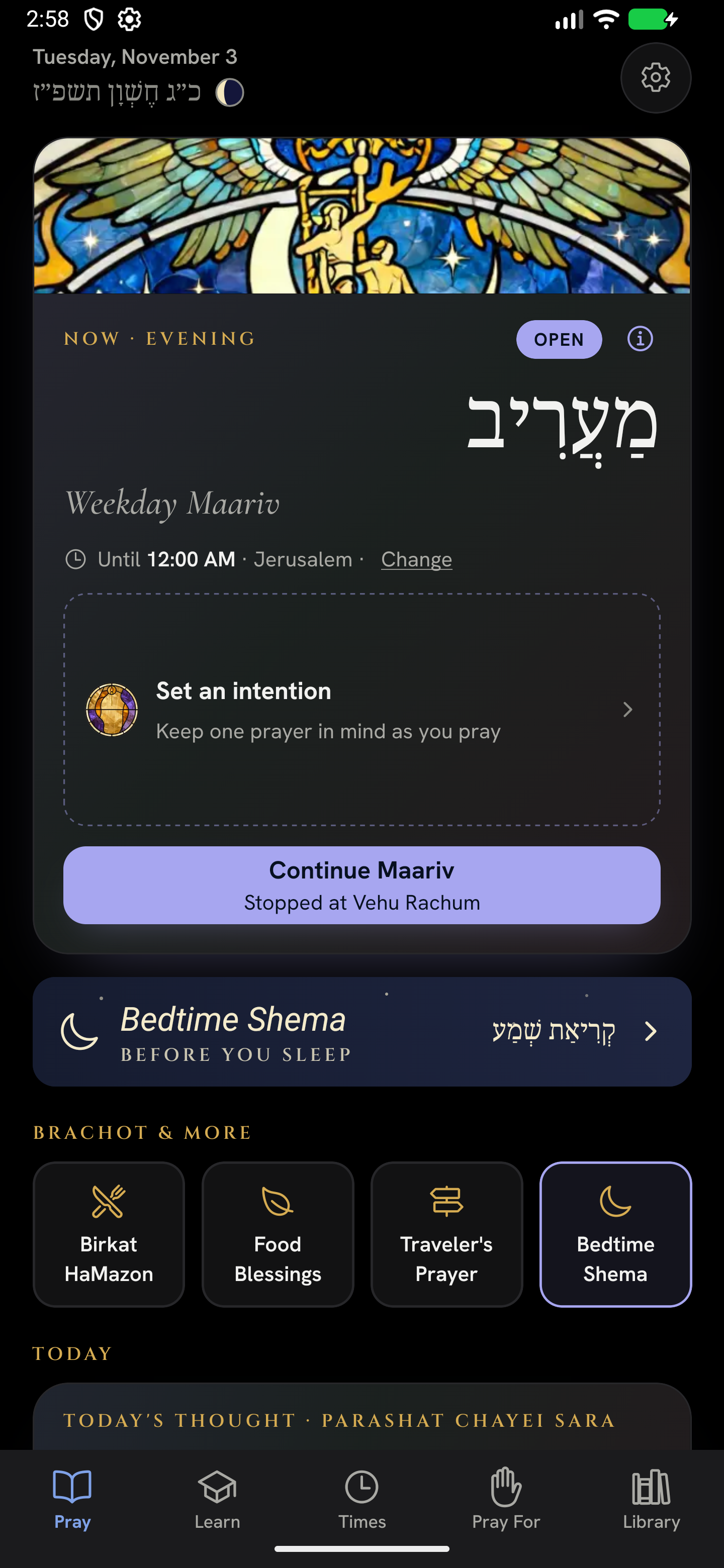
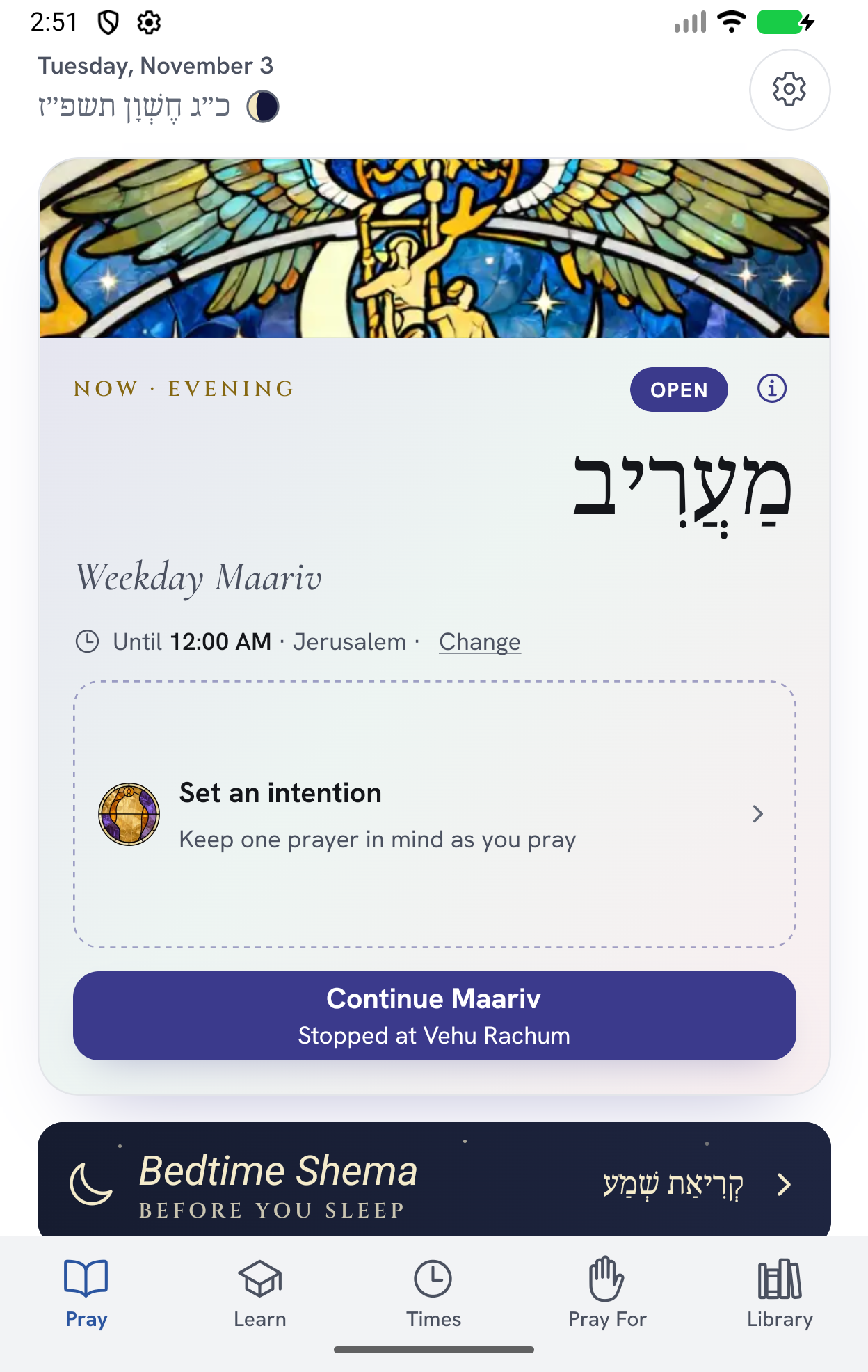
From the next prayer to the approach of Shabbat, Kav brings the rhythm of your Jewish day into view.
As Shabbat approaches or a fast comes to an end, the Home screen keeps the moment in view.
Sample days in Jerusalem. Times vary by location and custom.
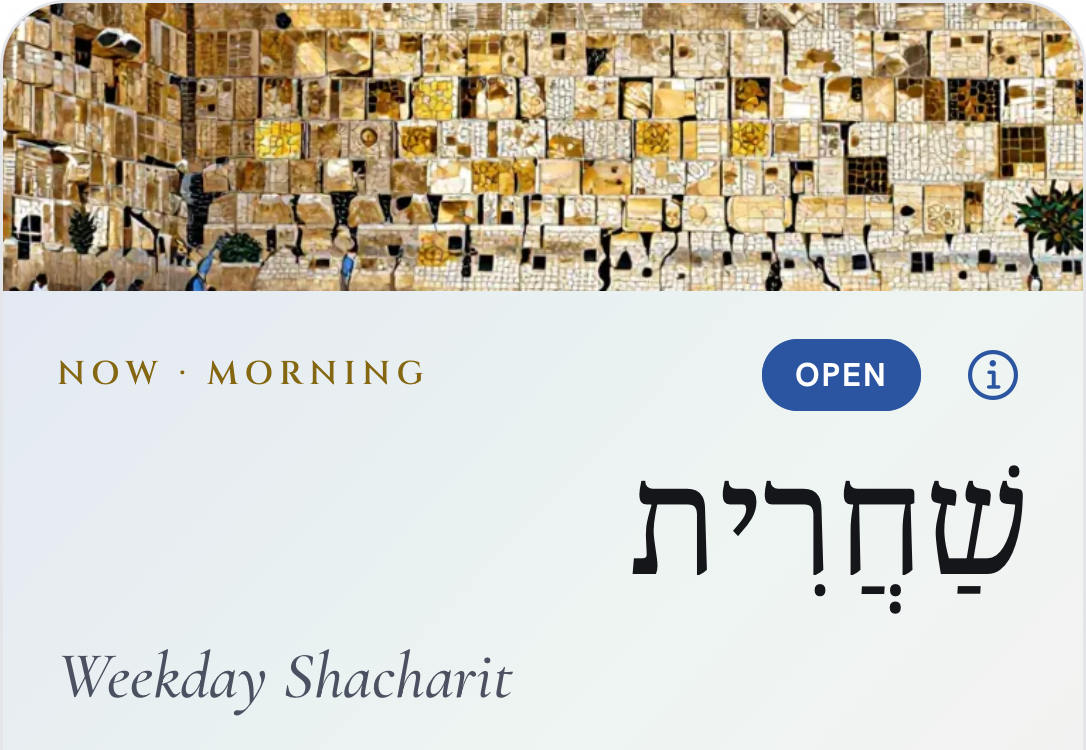
Jerusalem · November 6, 2026 · Candle lighting 4:05 PM (40 minutes before sunset). Interactive sky with sample Kav prayer cards.
Illustrative web demo using Kav’s sky calculations. These are sample times, not live religious-time guidance.
Explore Kav’s reader on a wider screen. The Duo demo shows a two-page spread.
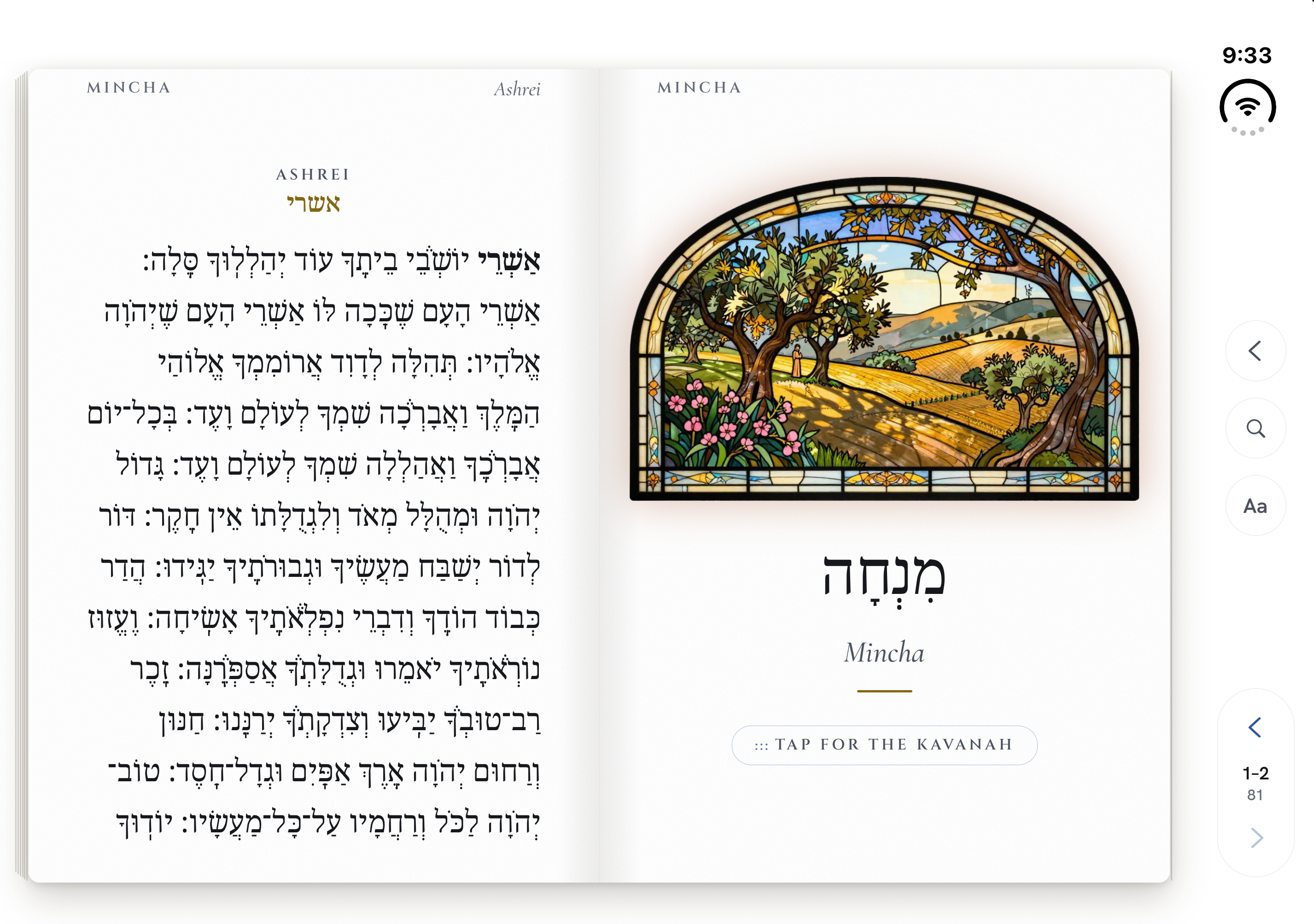
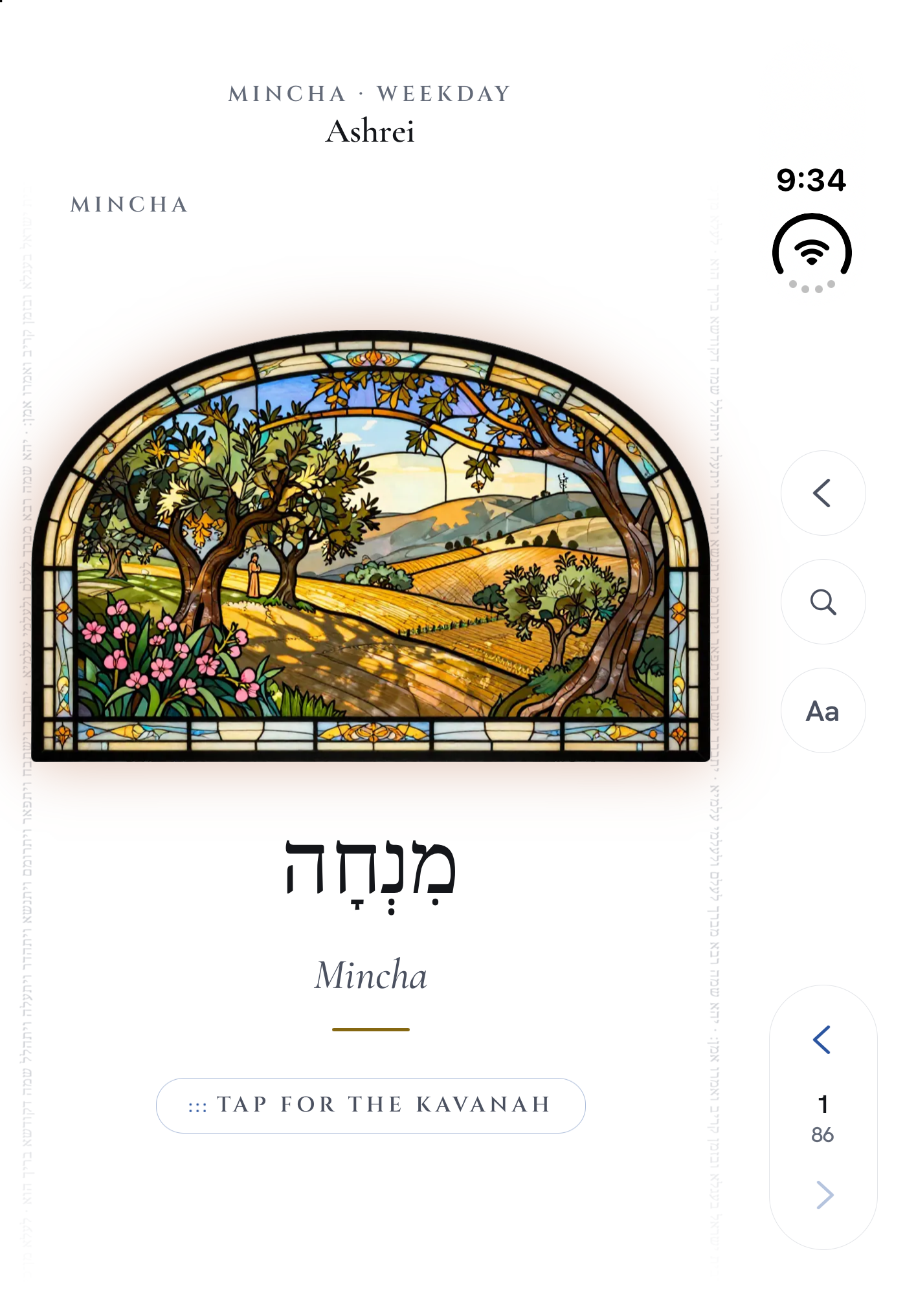
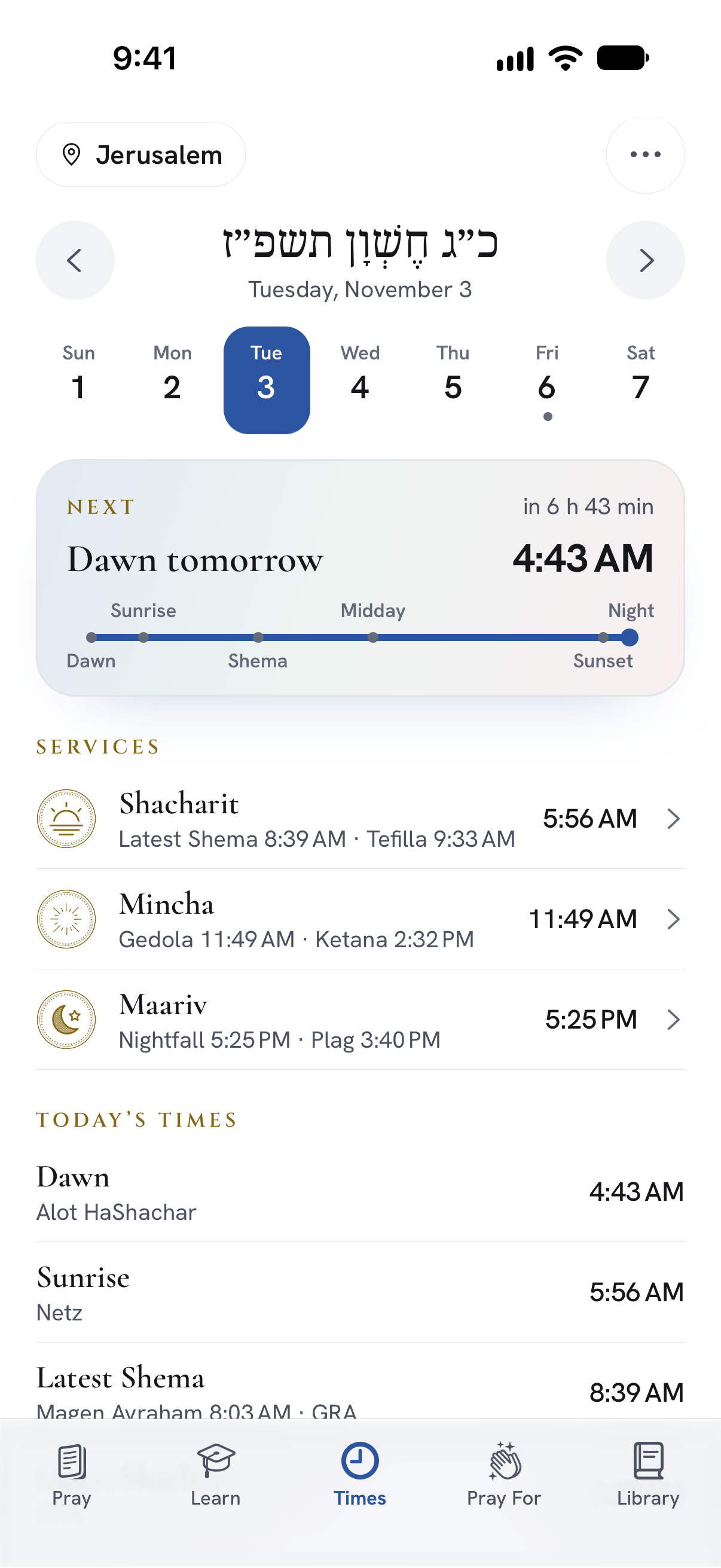
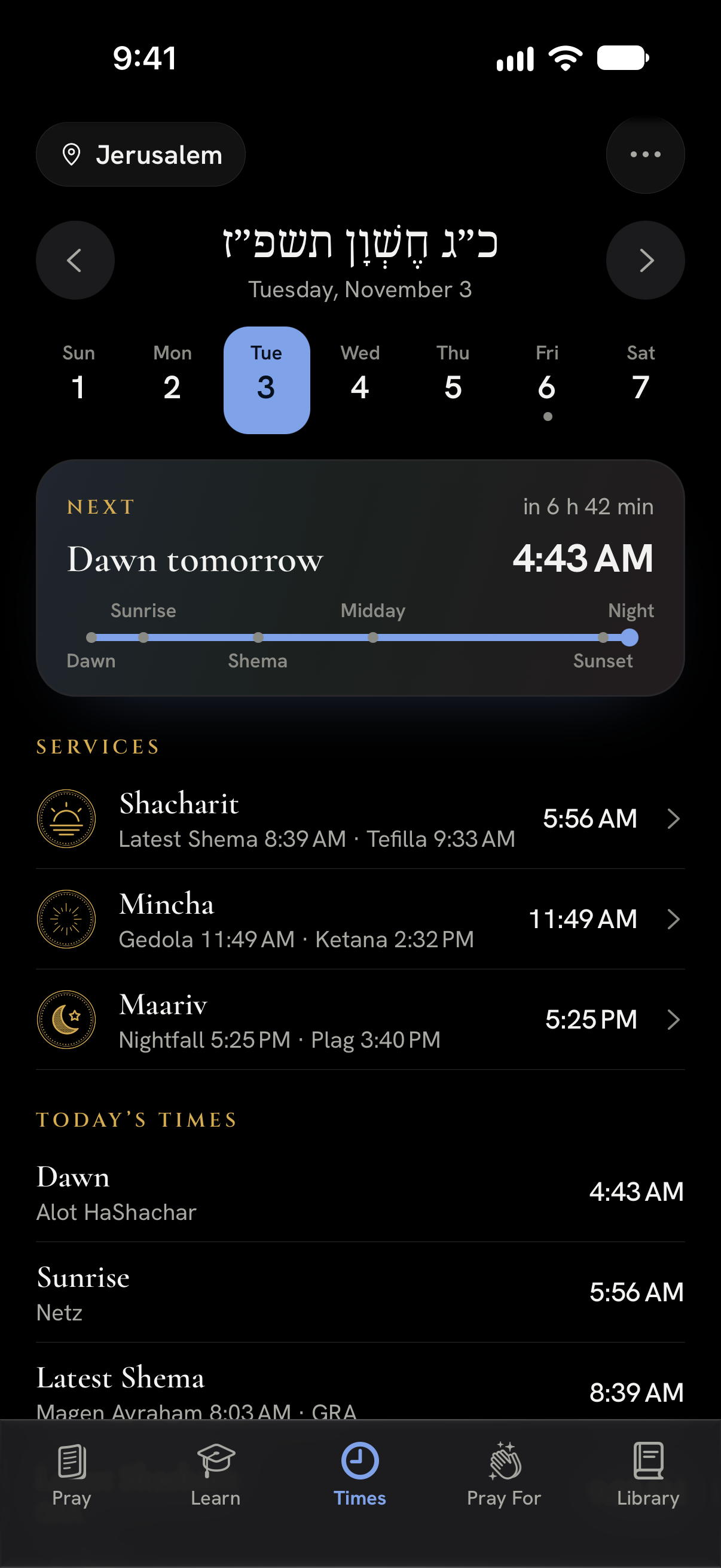
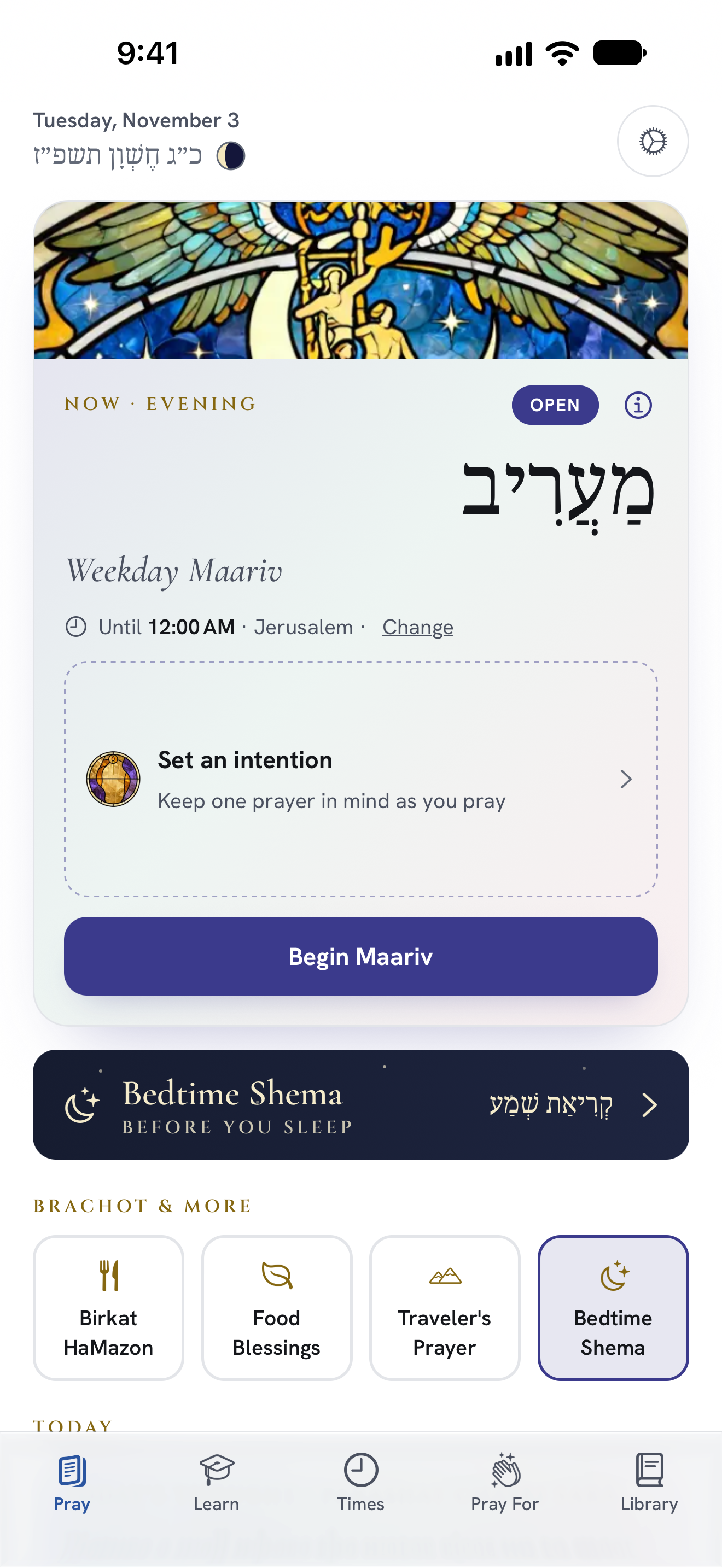
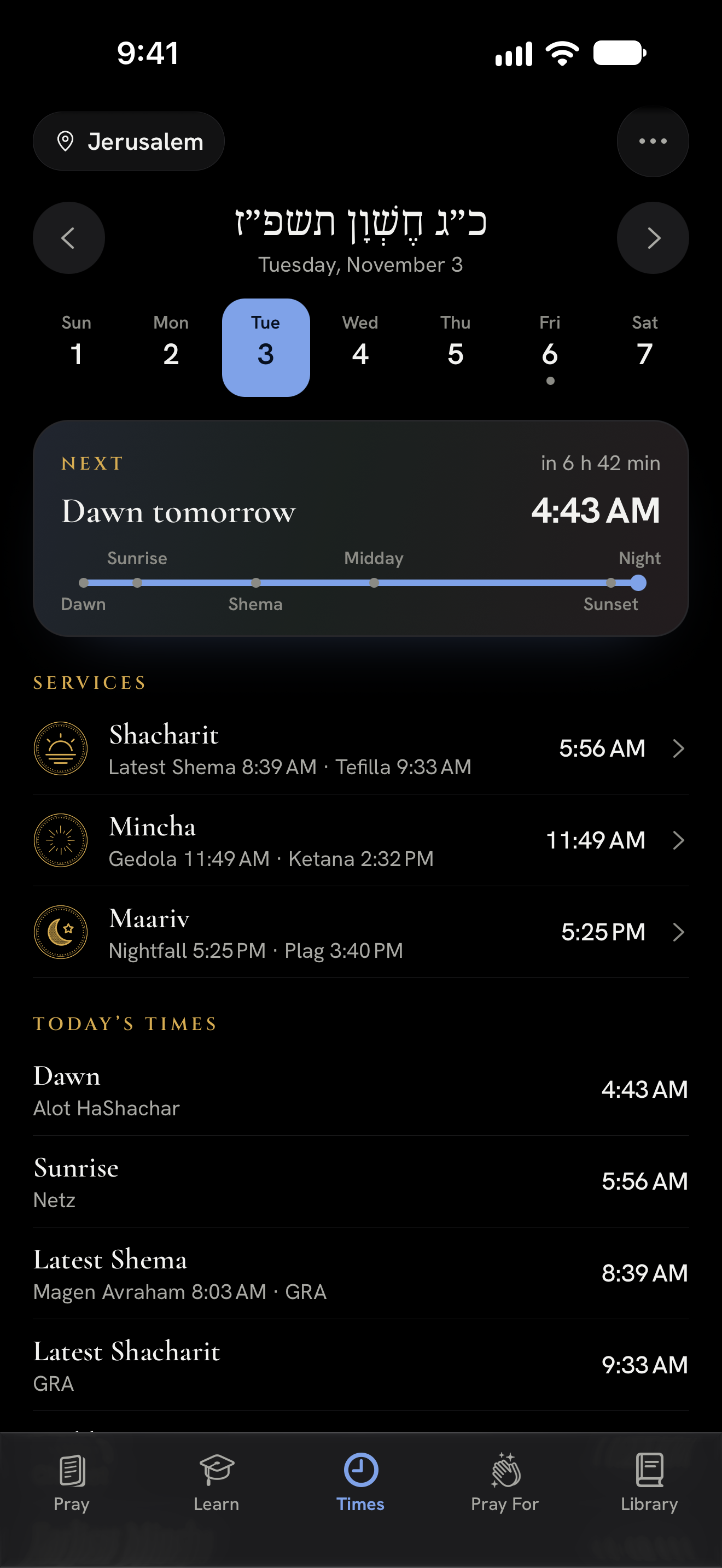
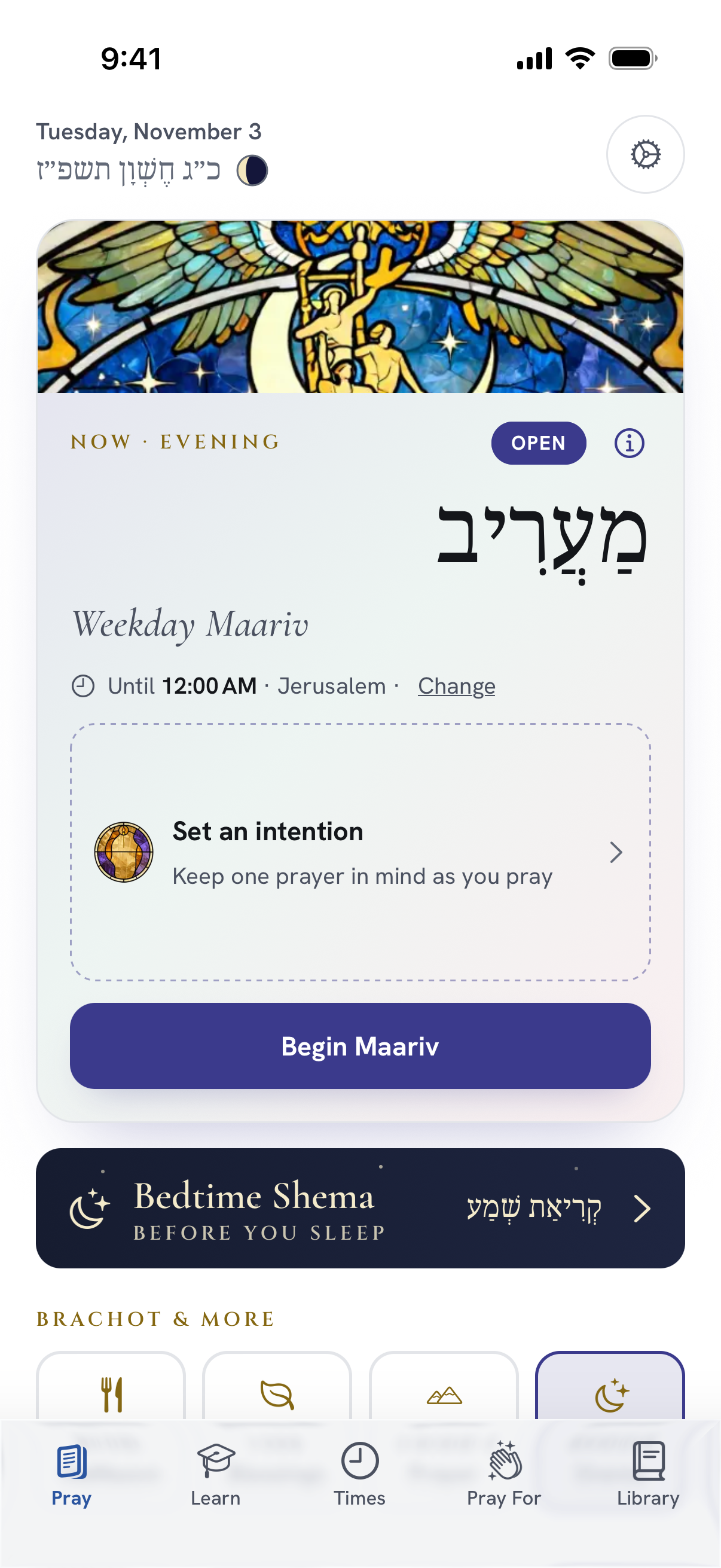
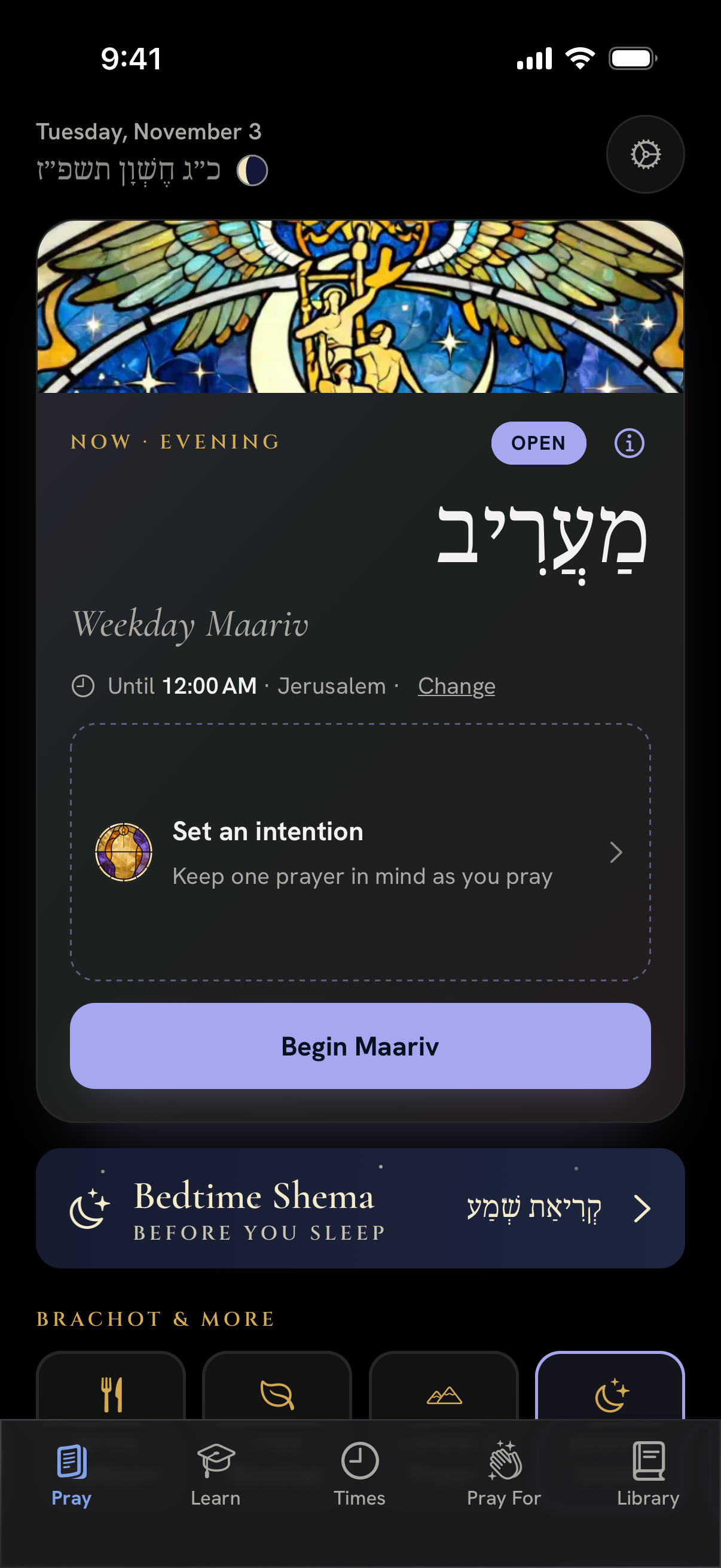
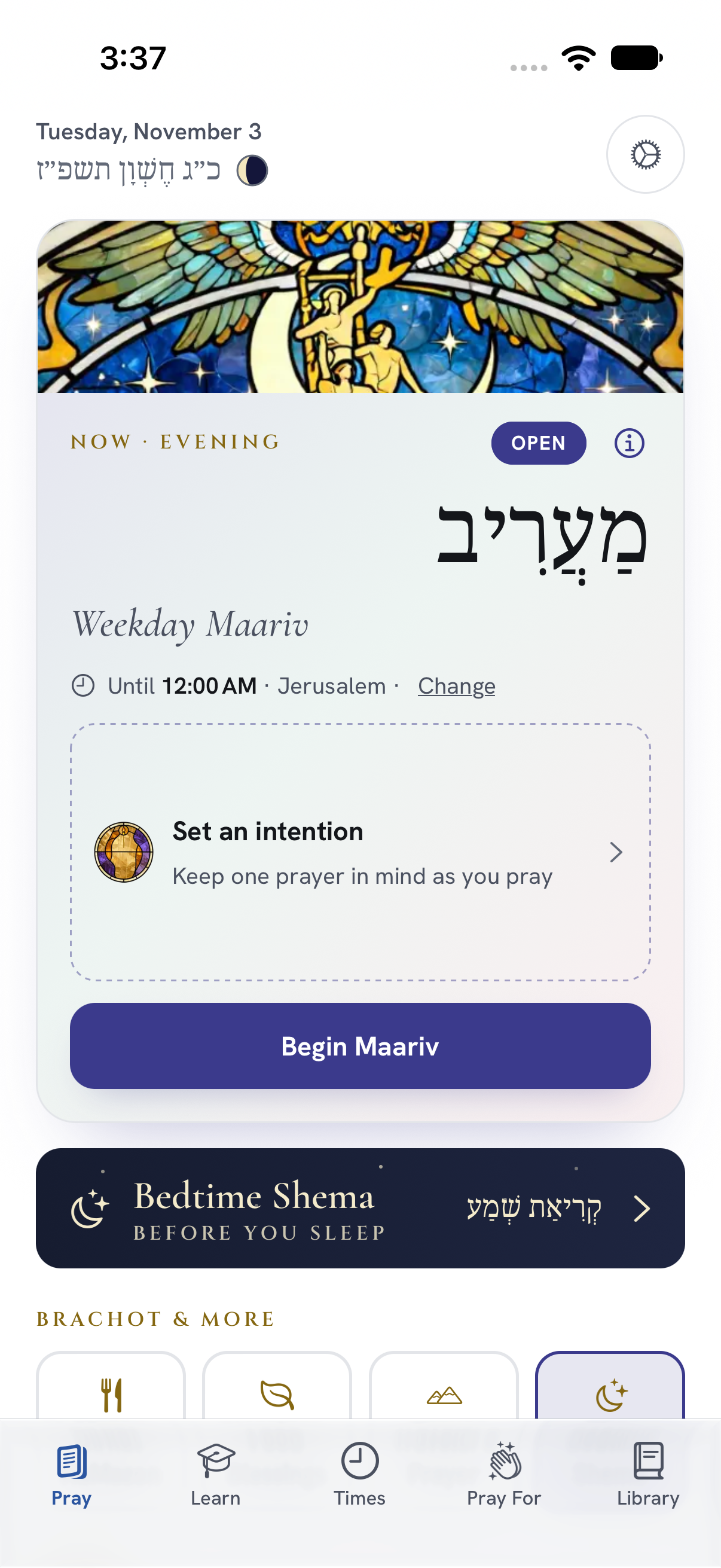
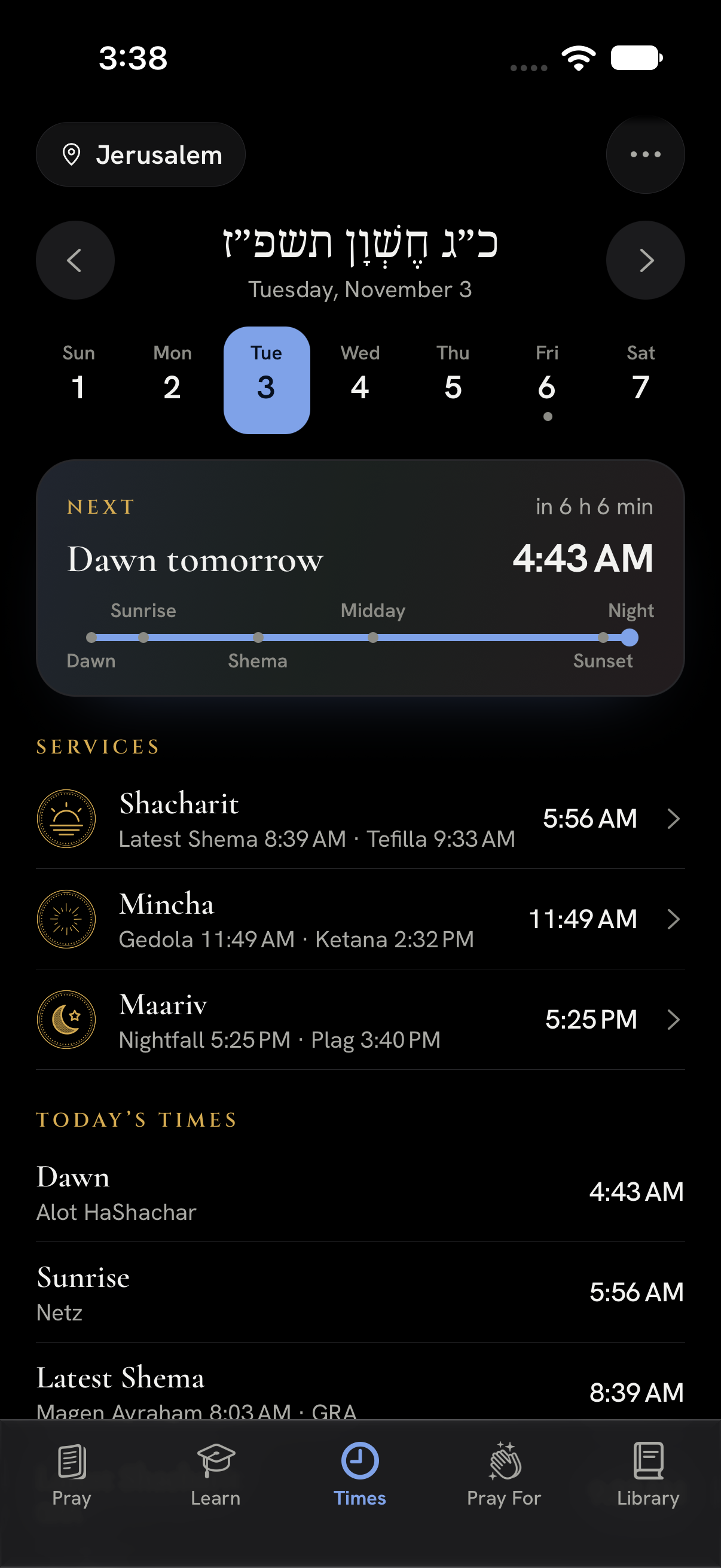
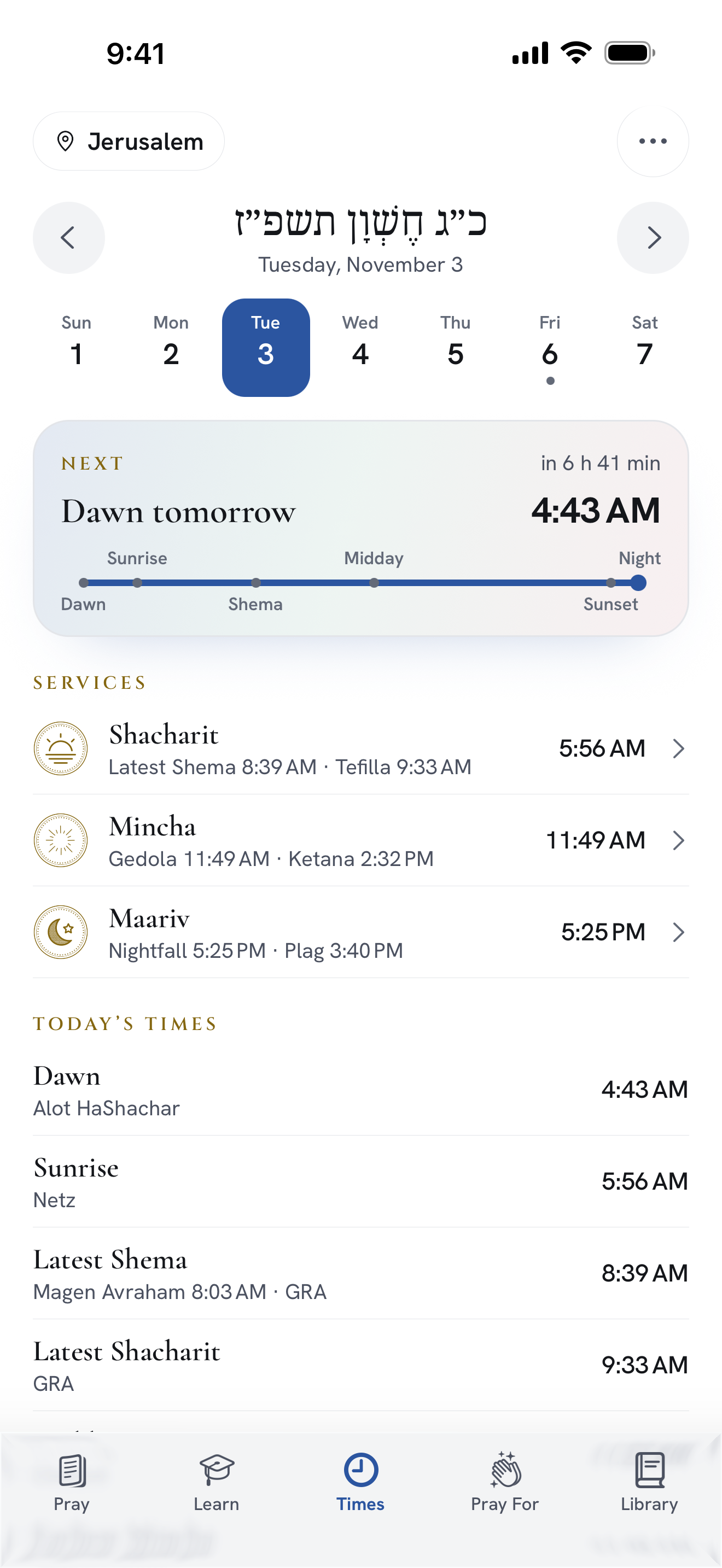
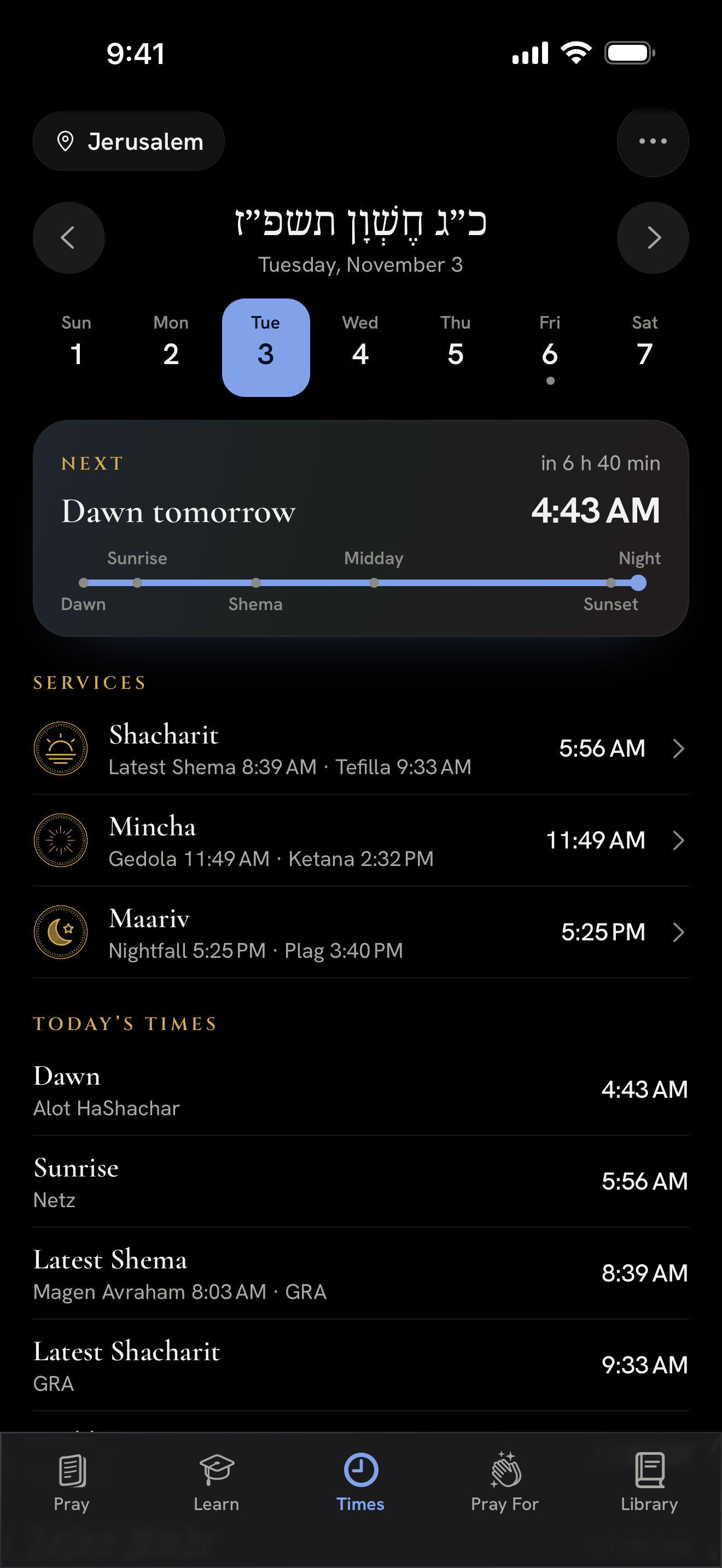
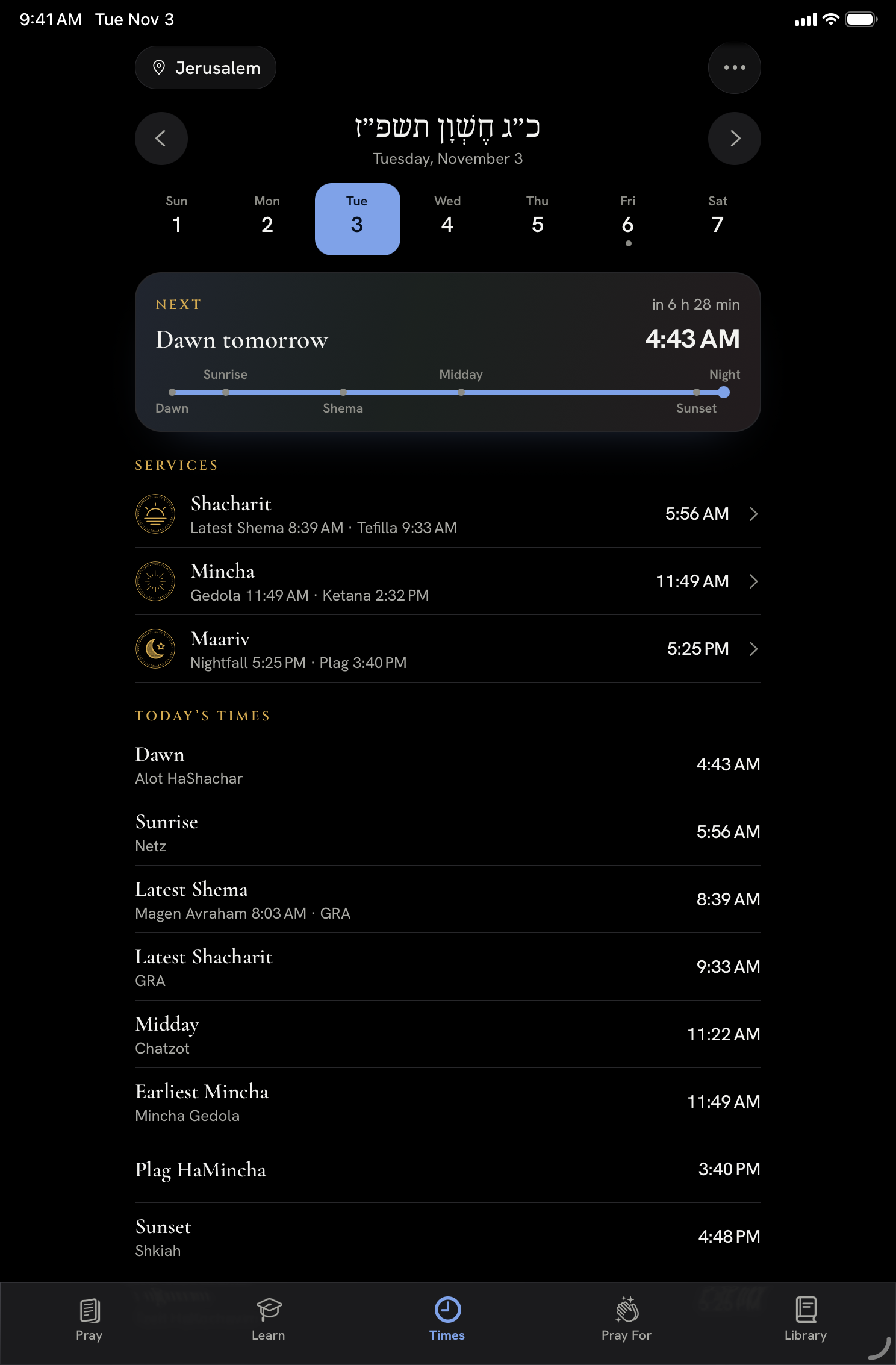
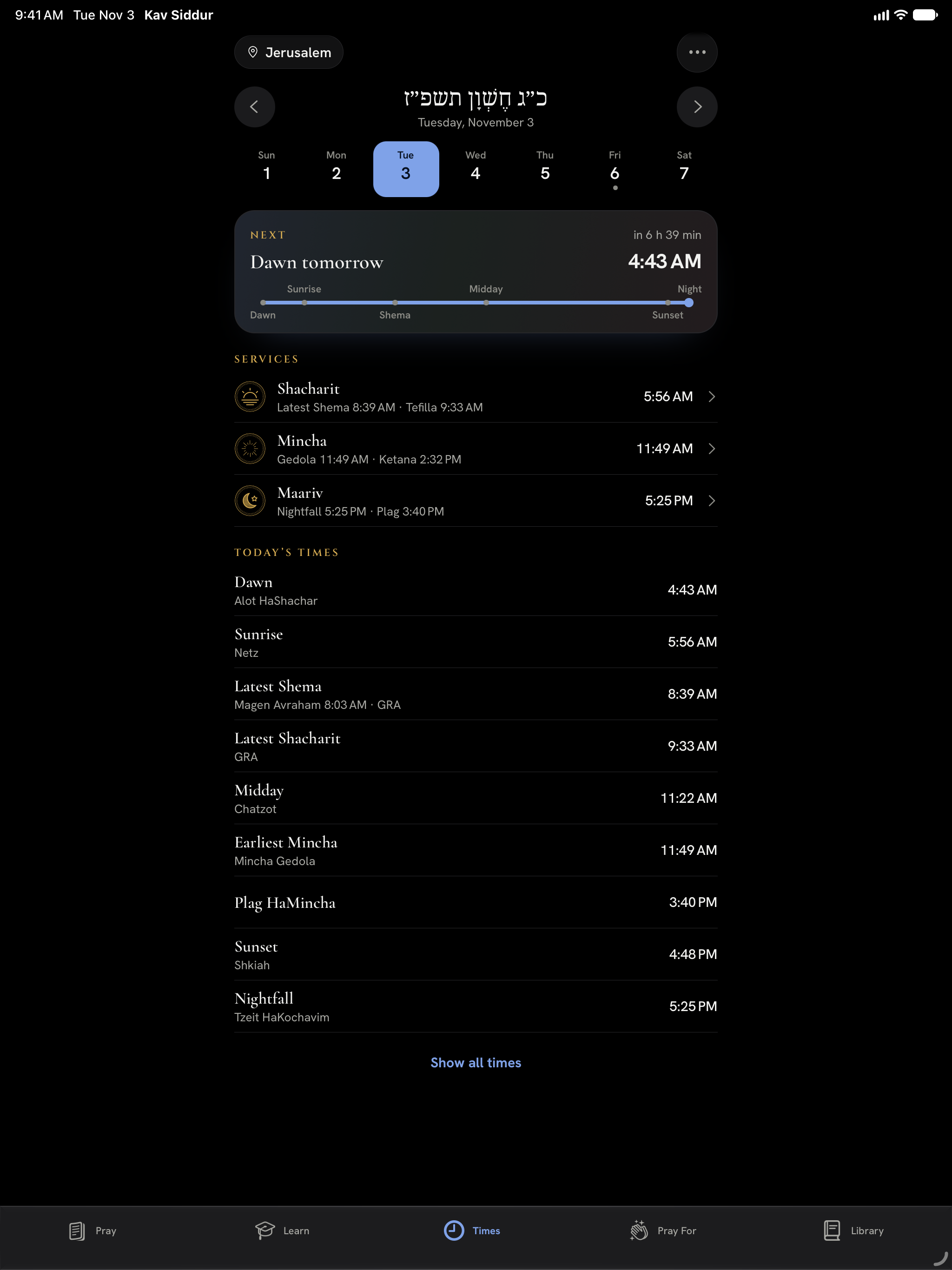
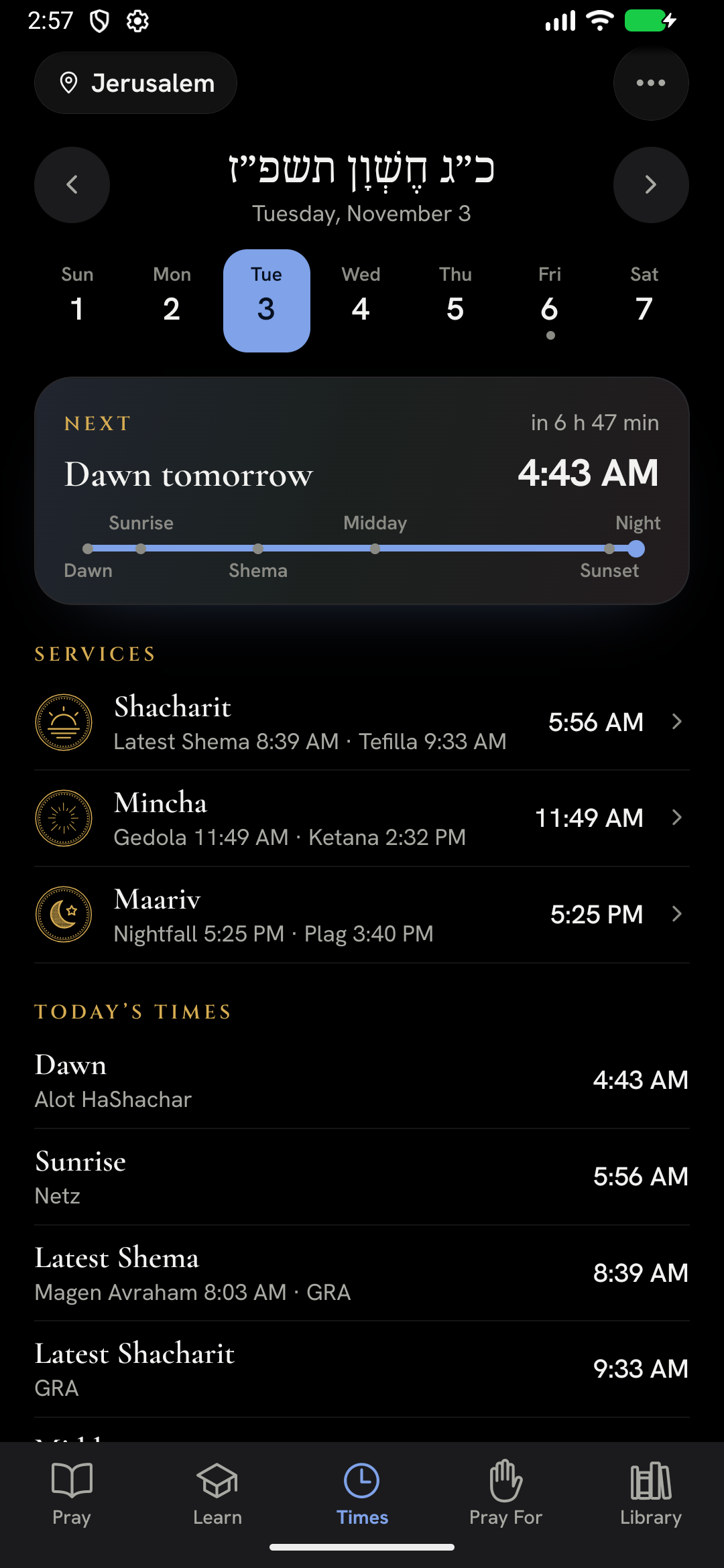
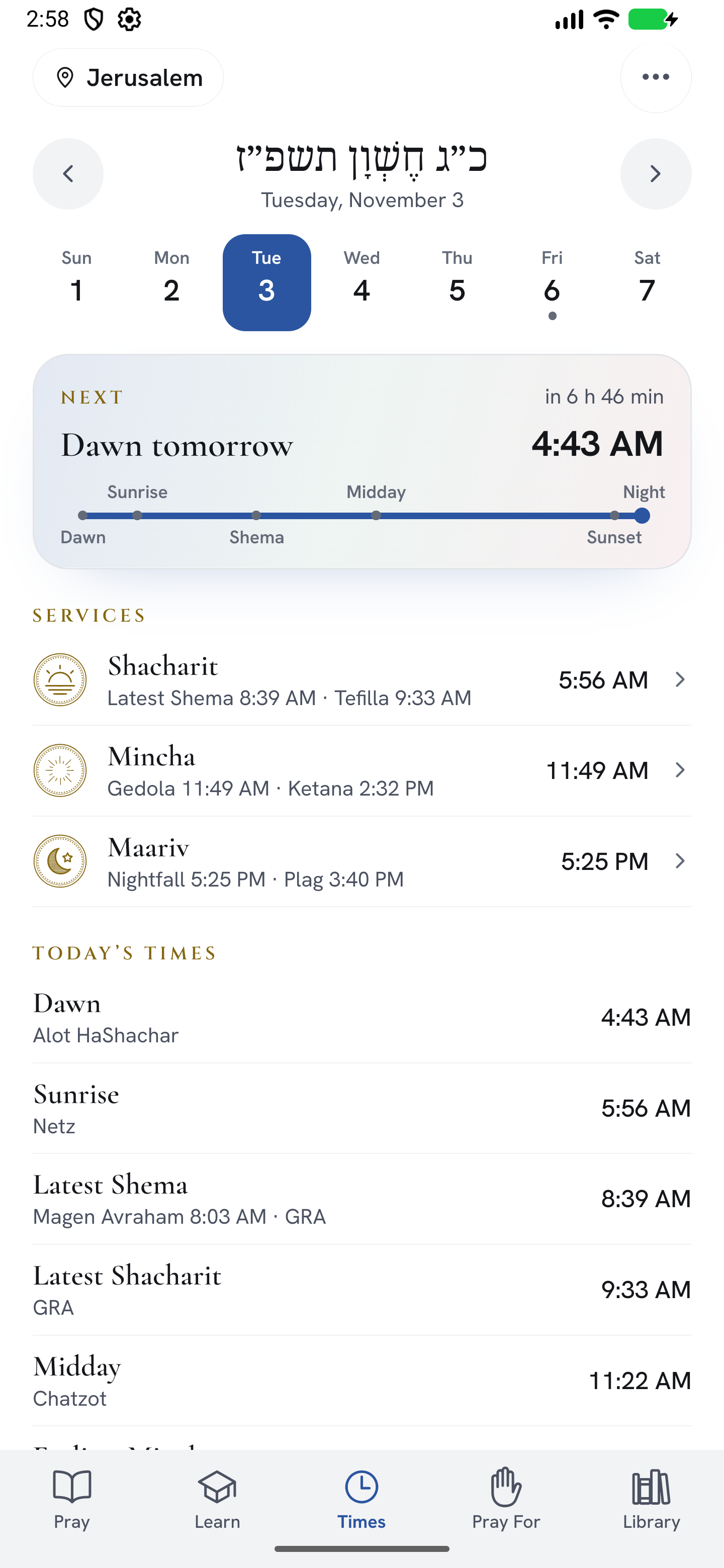
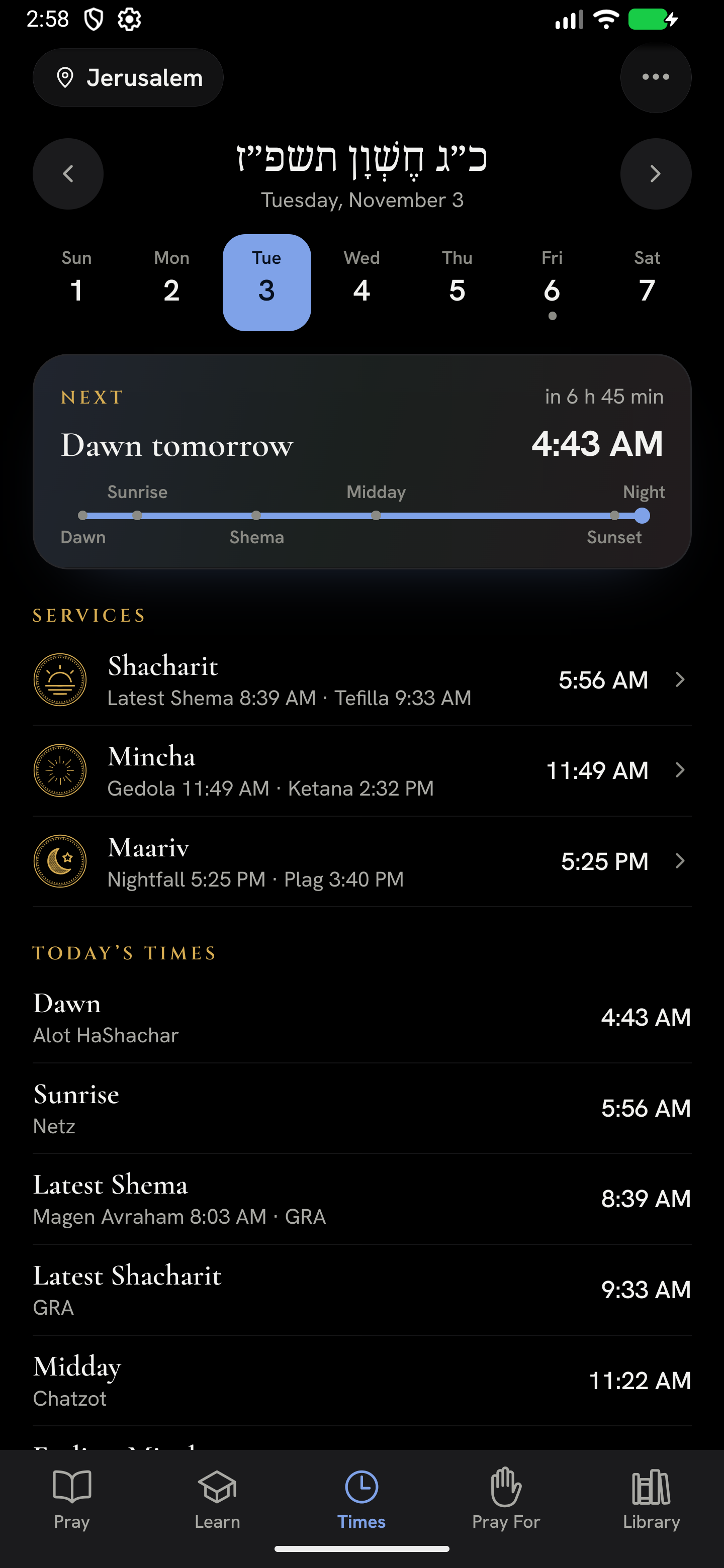
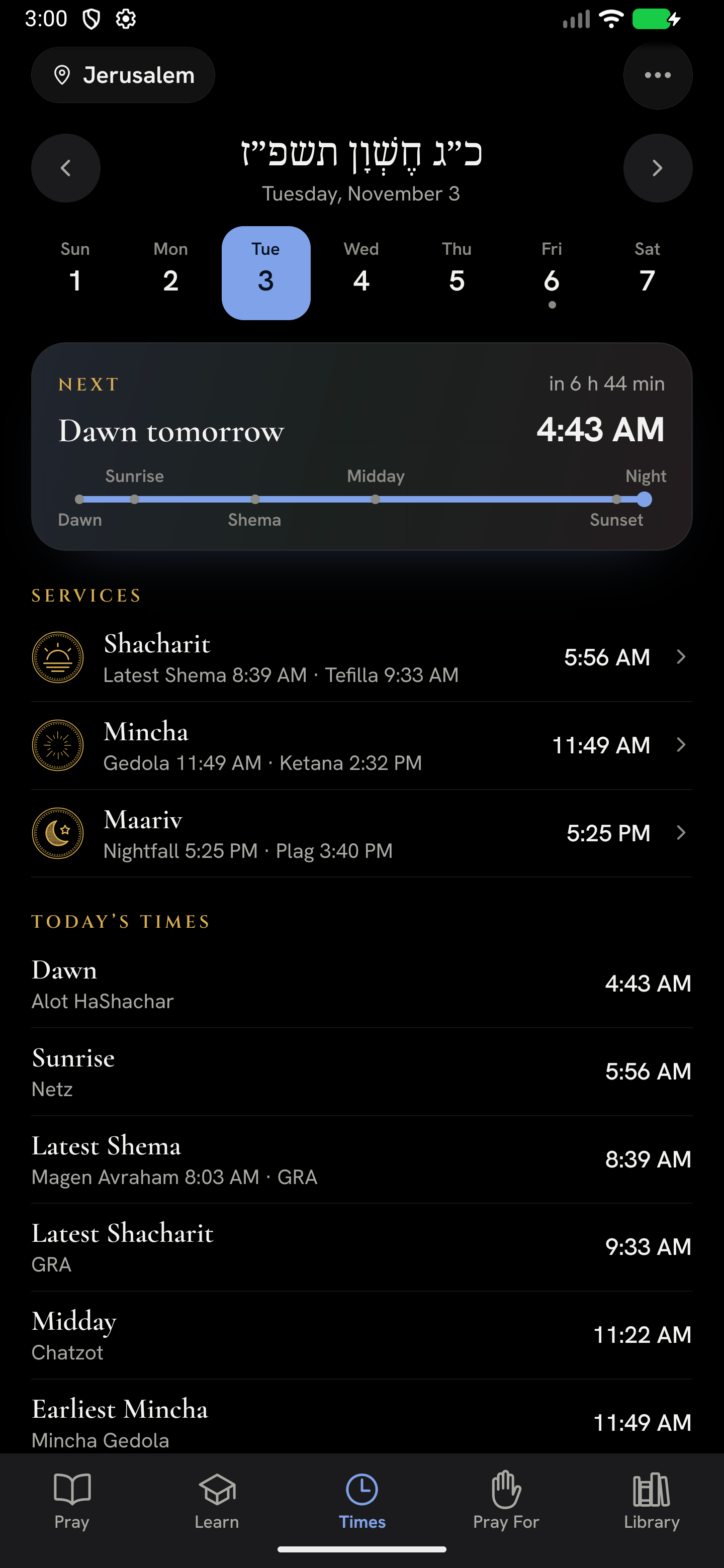
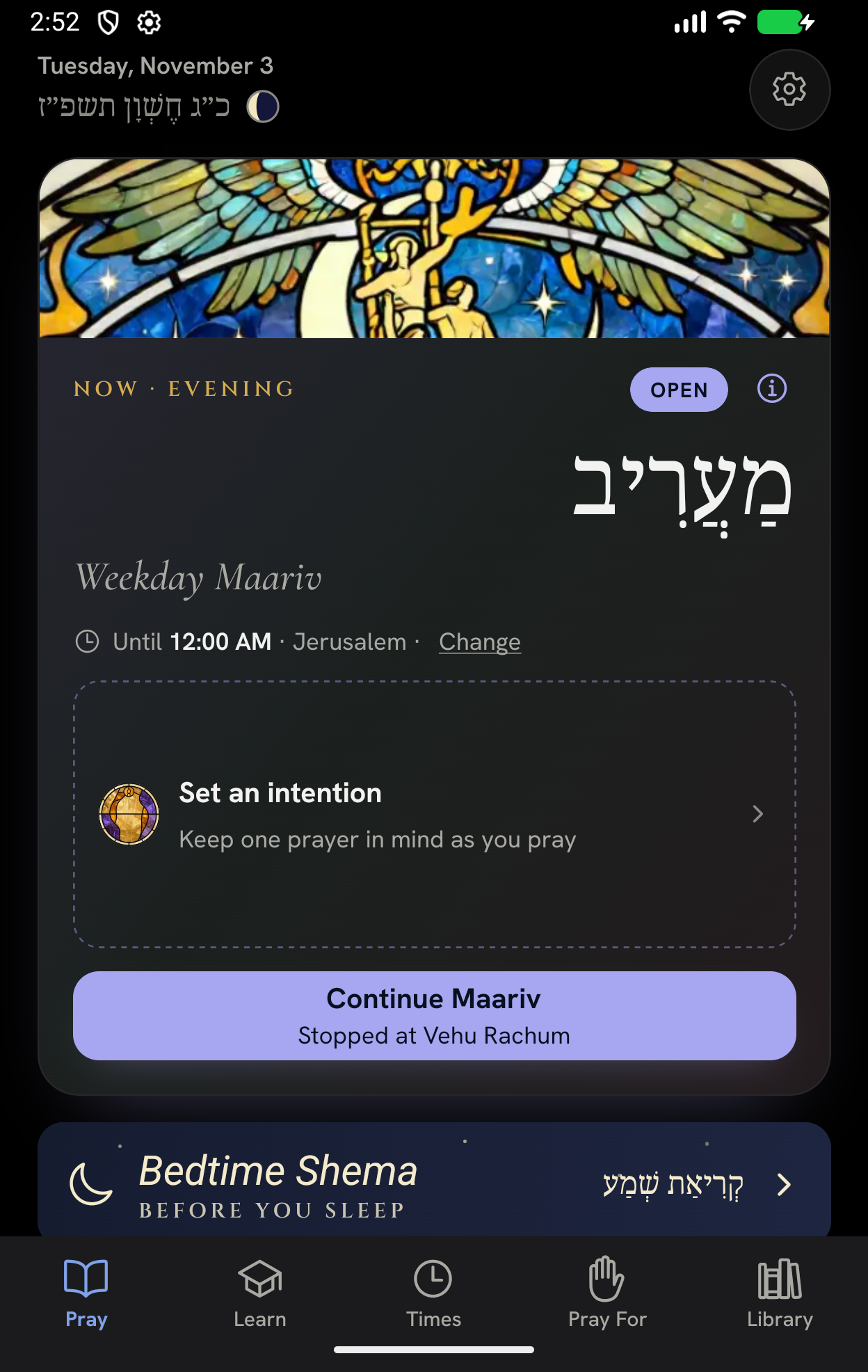
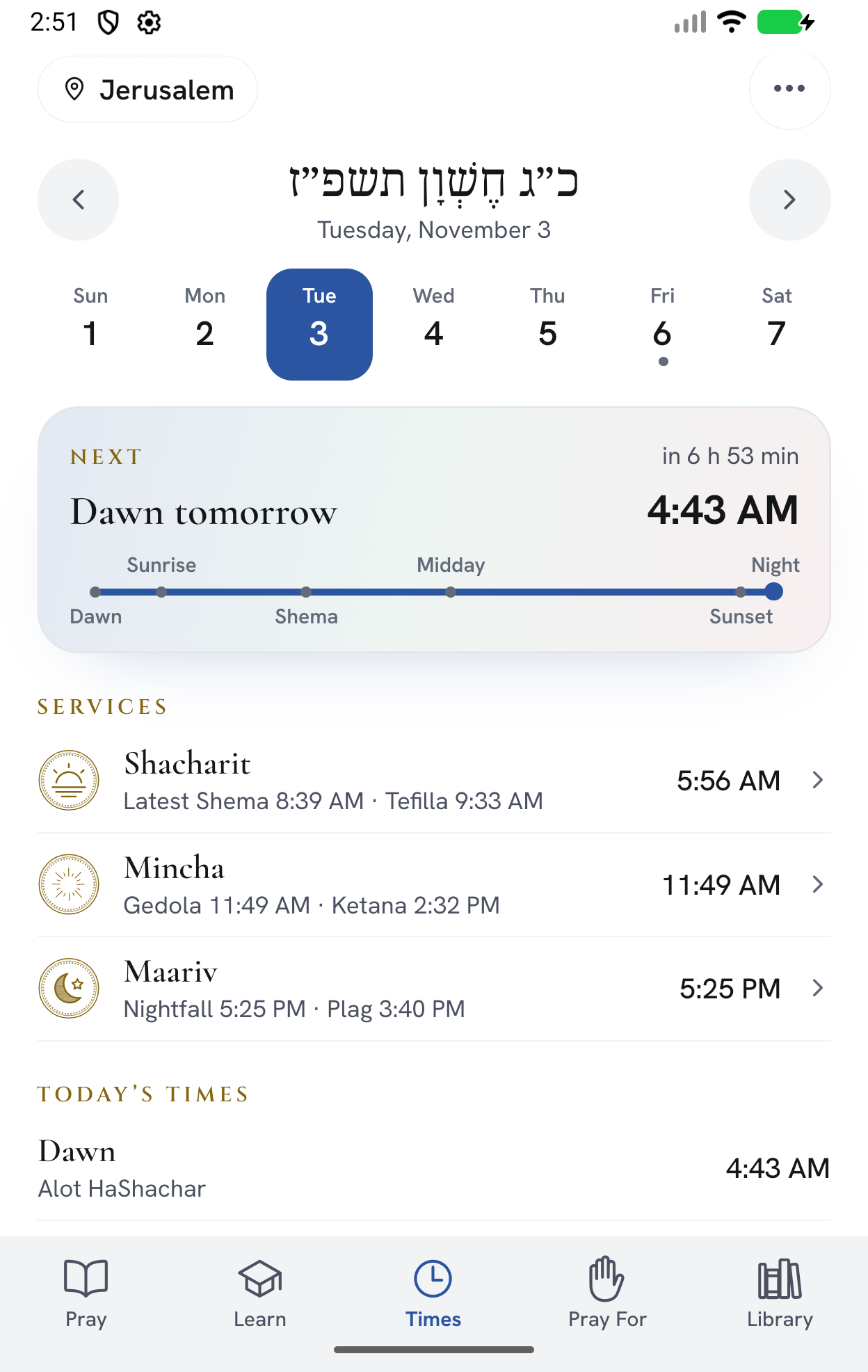
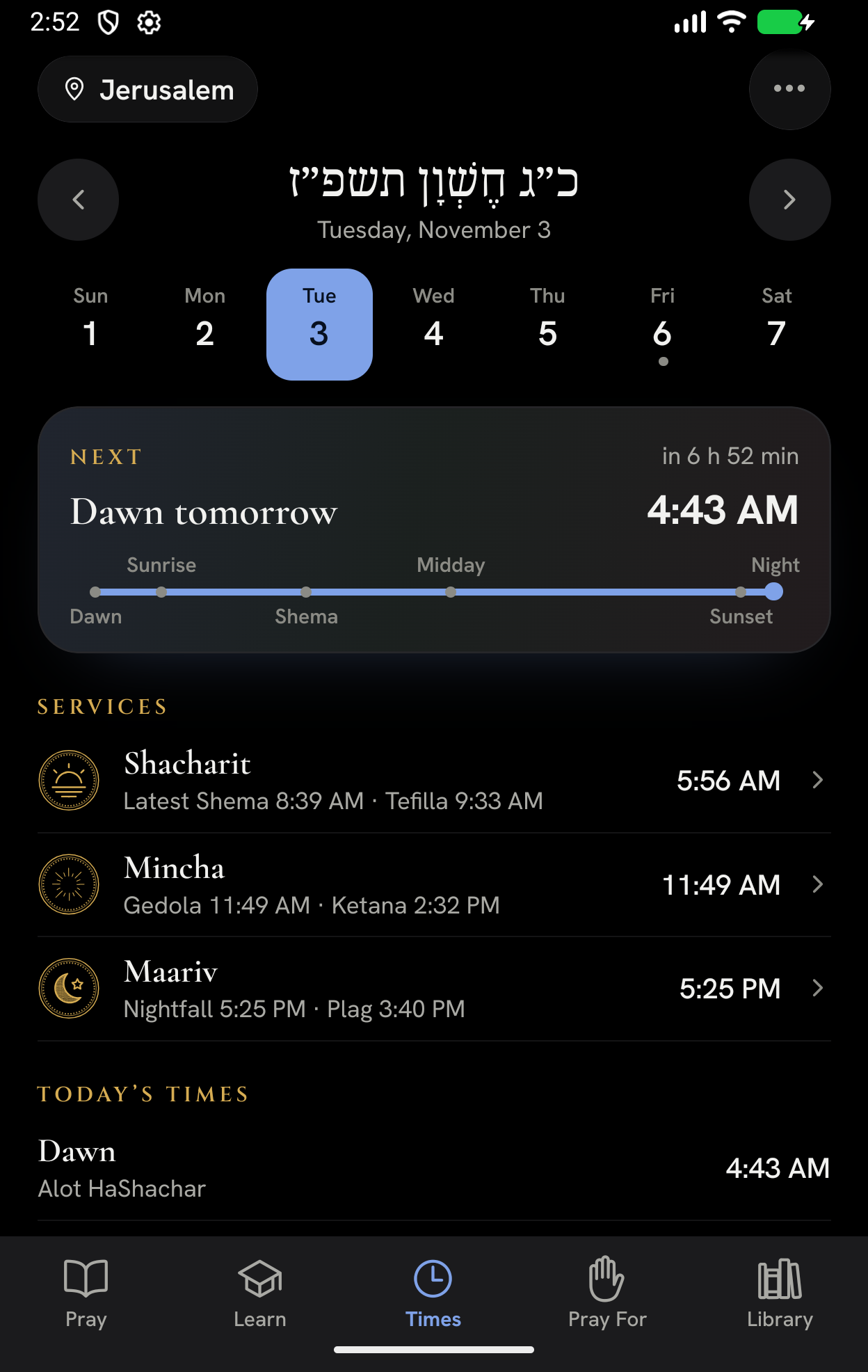
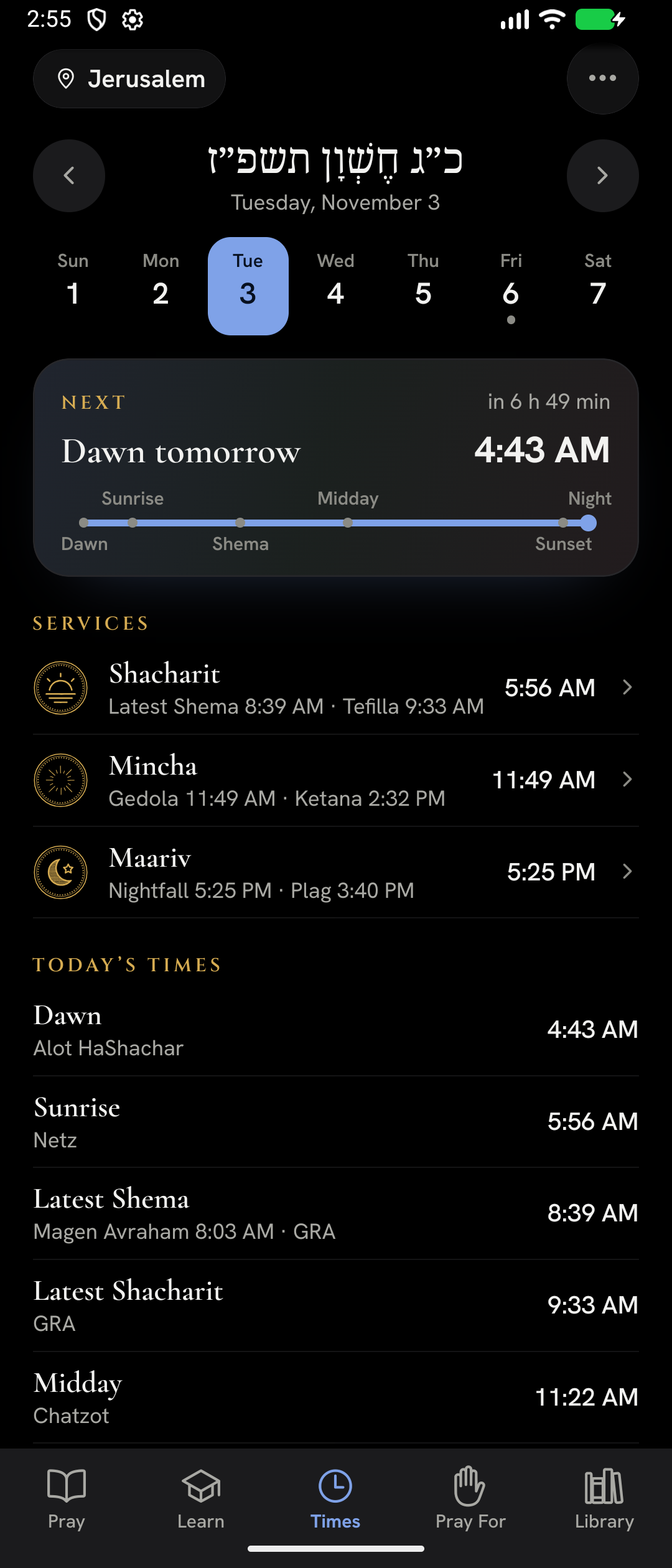
See your Jewish and civil dates, find the next prayer, and look ahead through the calendar.
Example shown: Jerusalem, November 3, 2026.
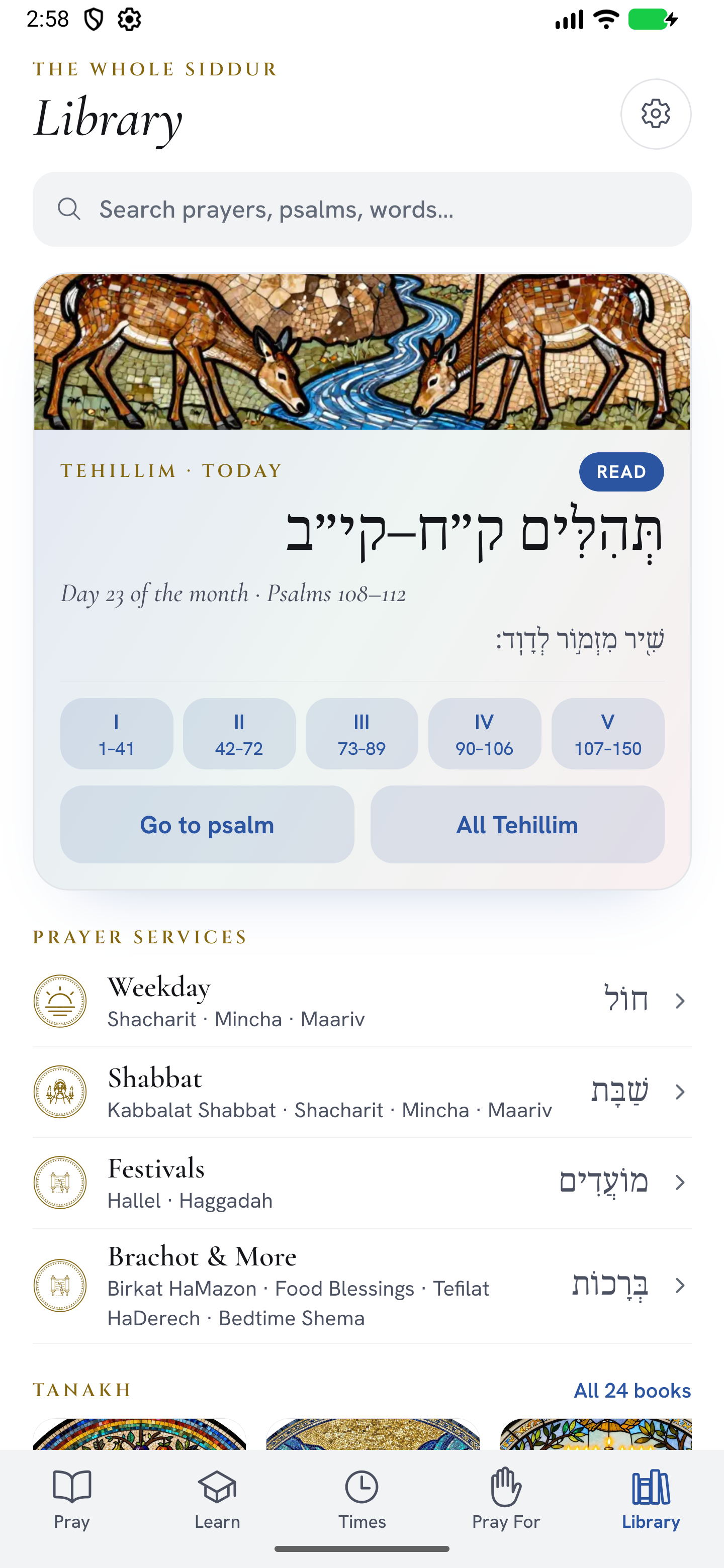
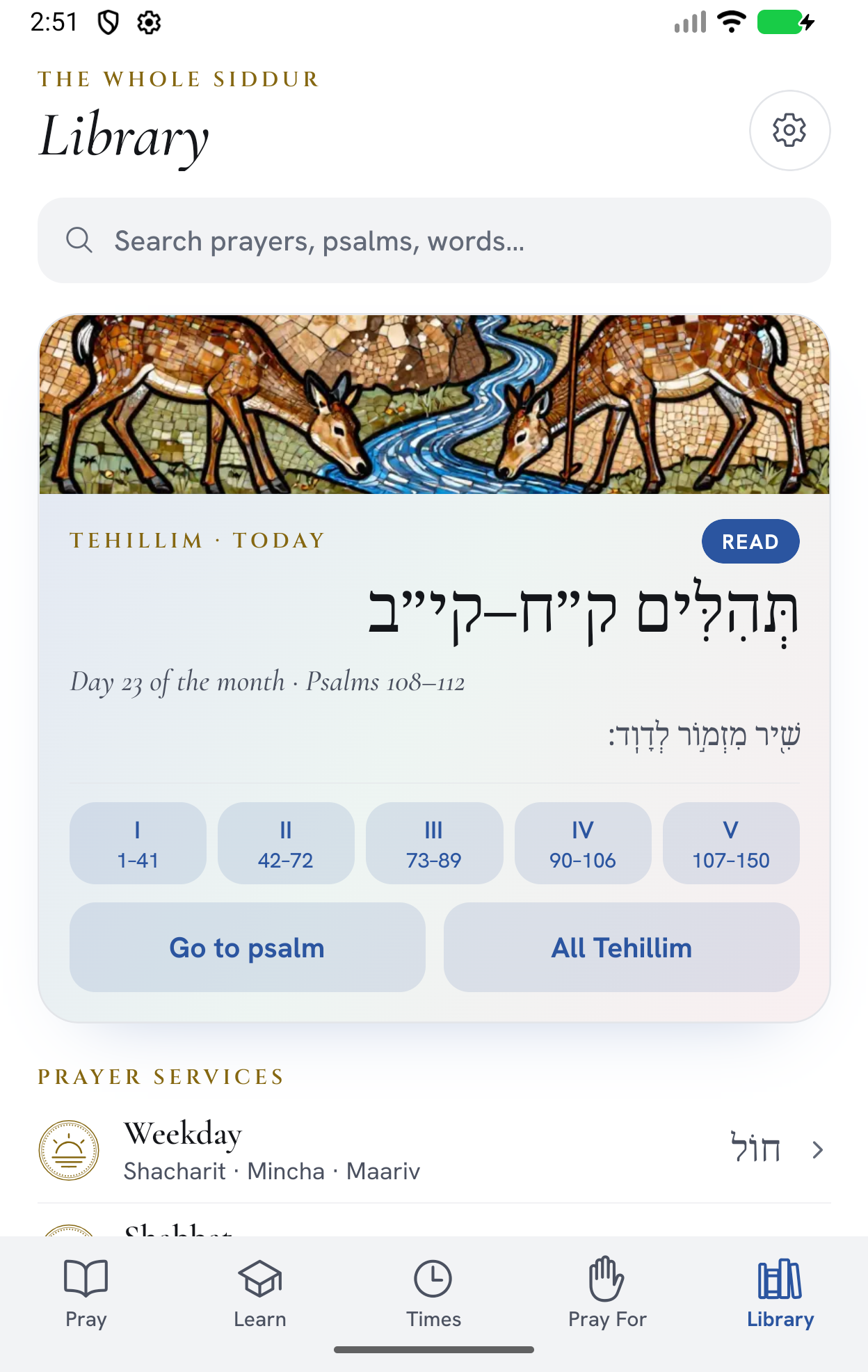
Find a prayer, practice at your pace, or set up the reader the way you like it.
Weekday and Shabbat prayer for Ashkenaz and Edot HaMizrach.
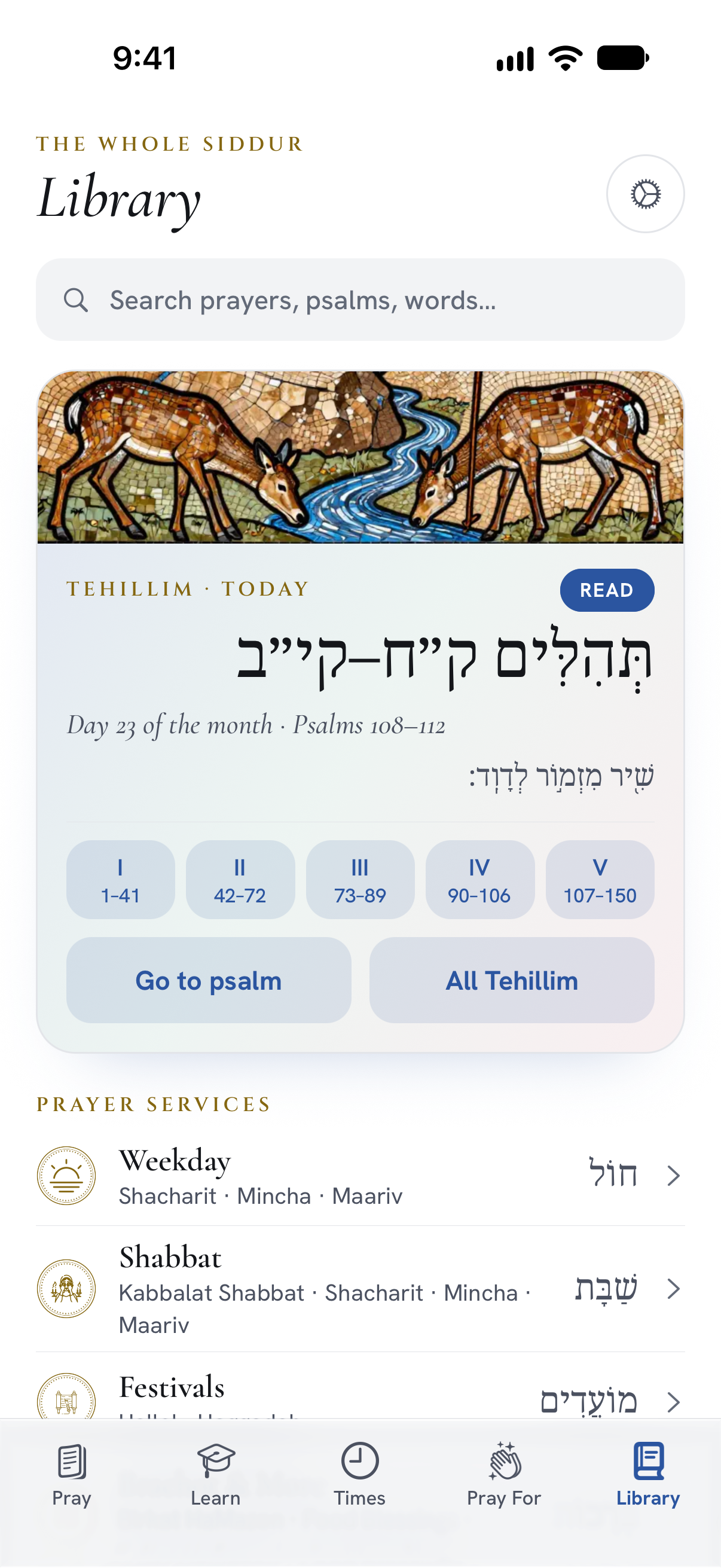
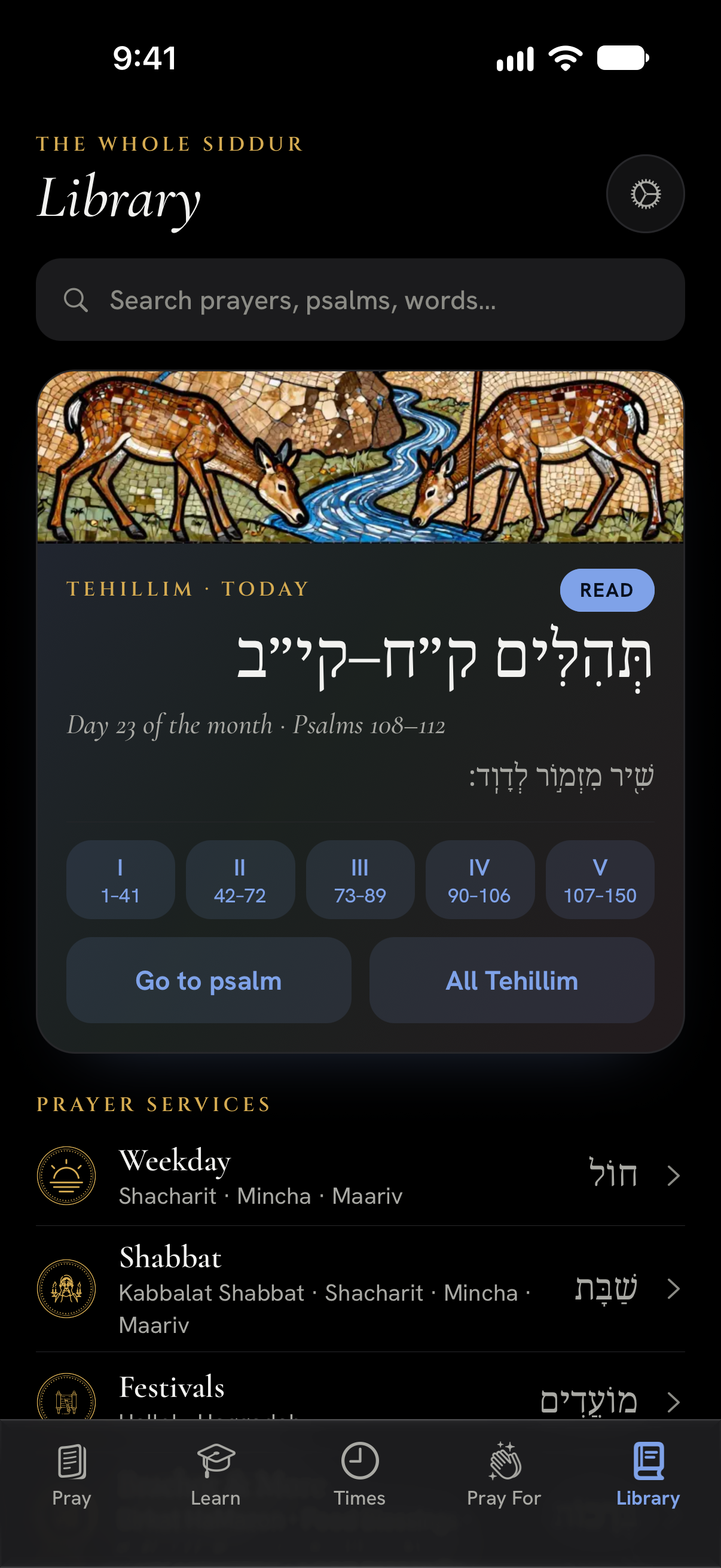
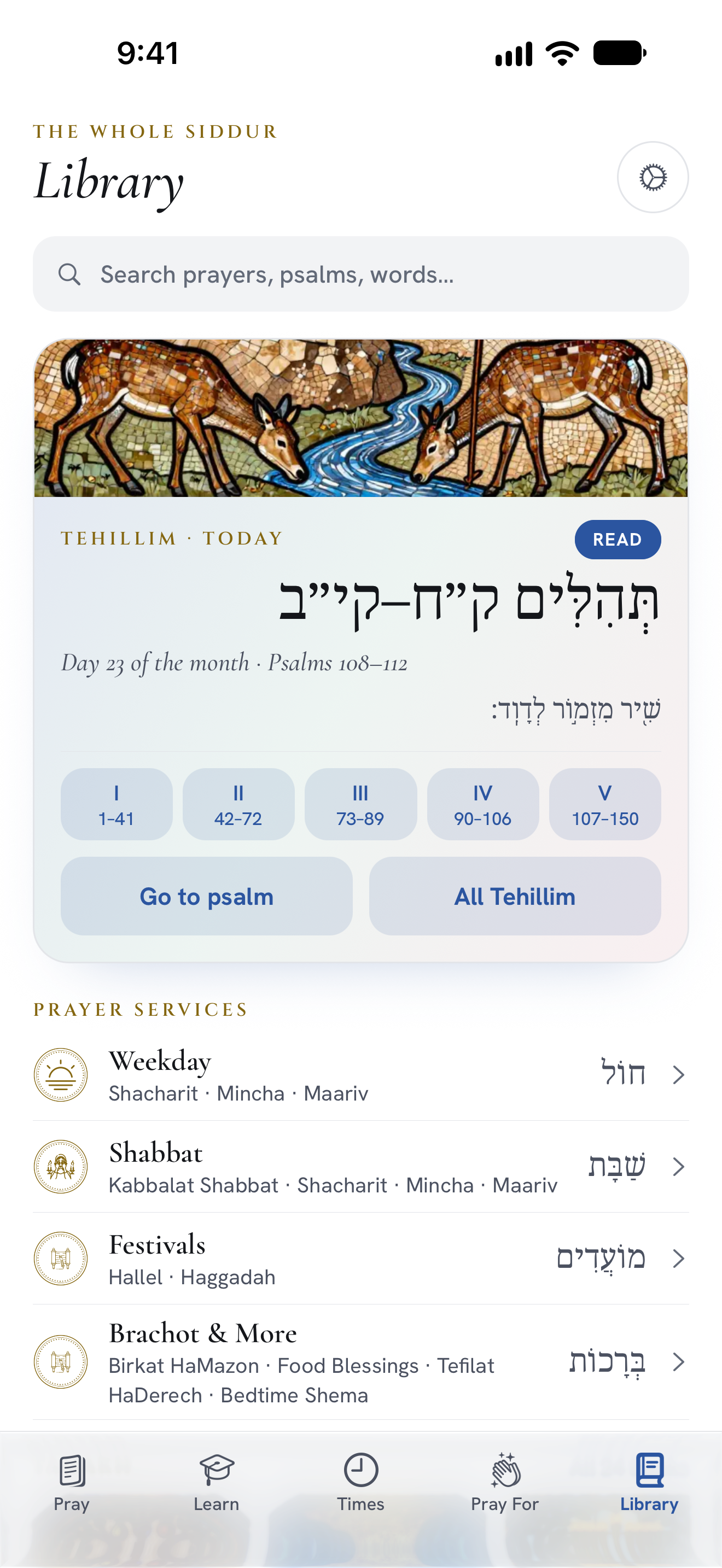
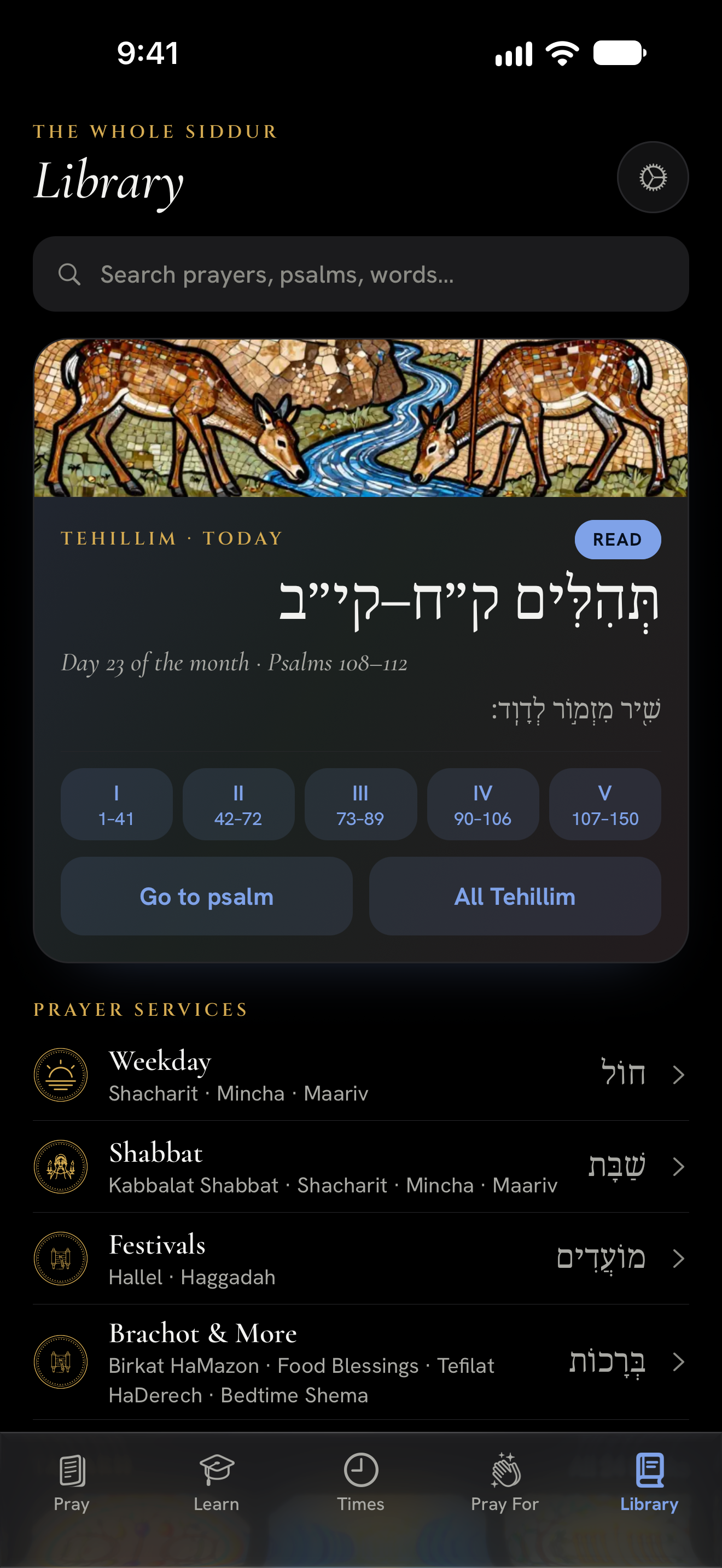
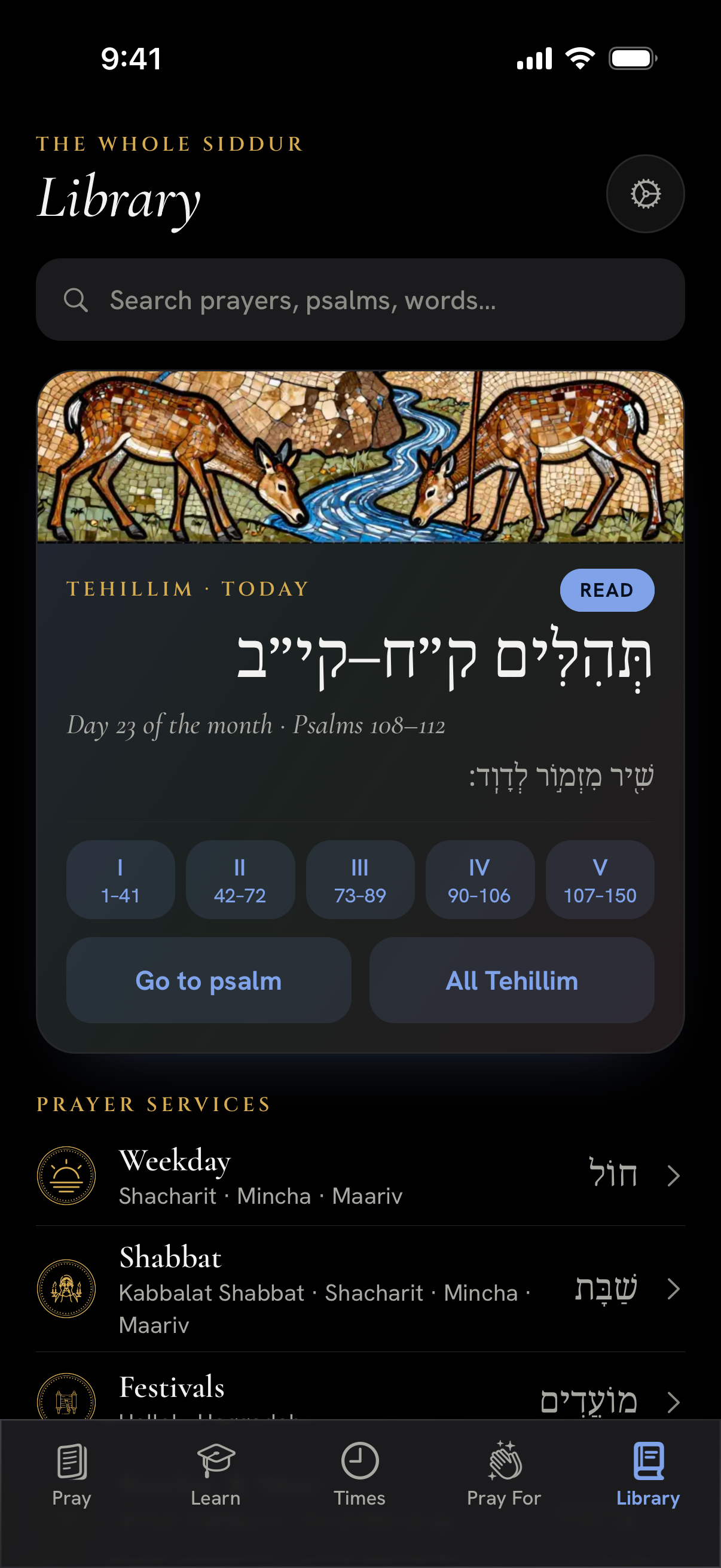
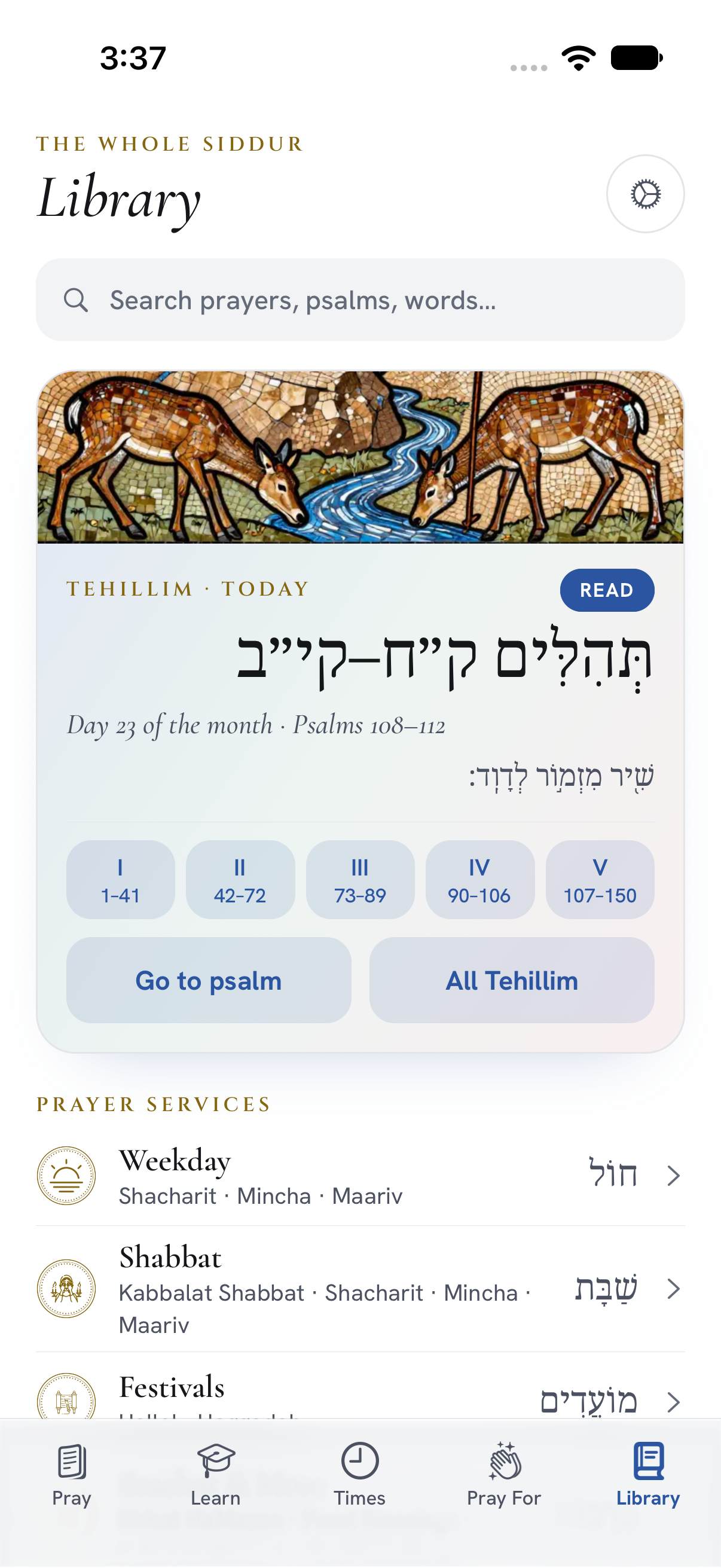
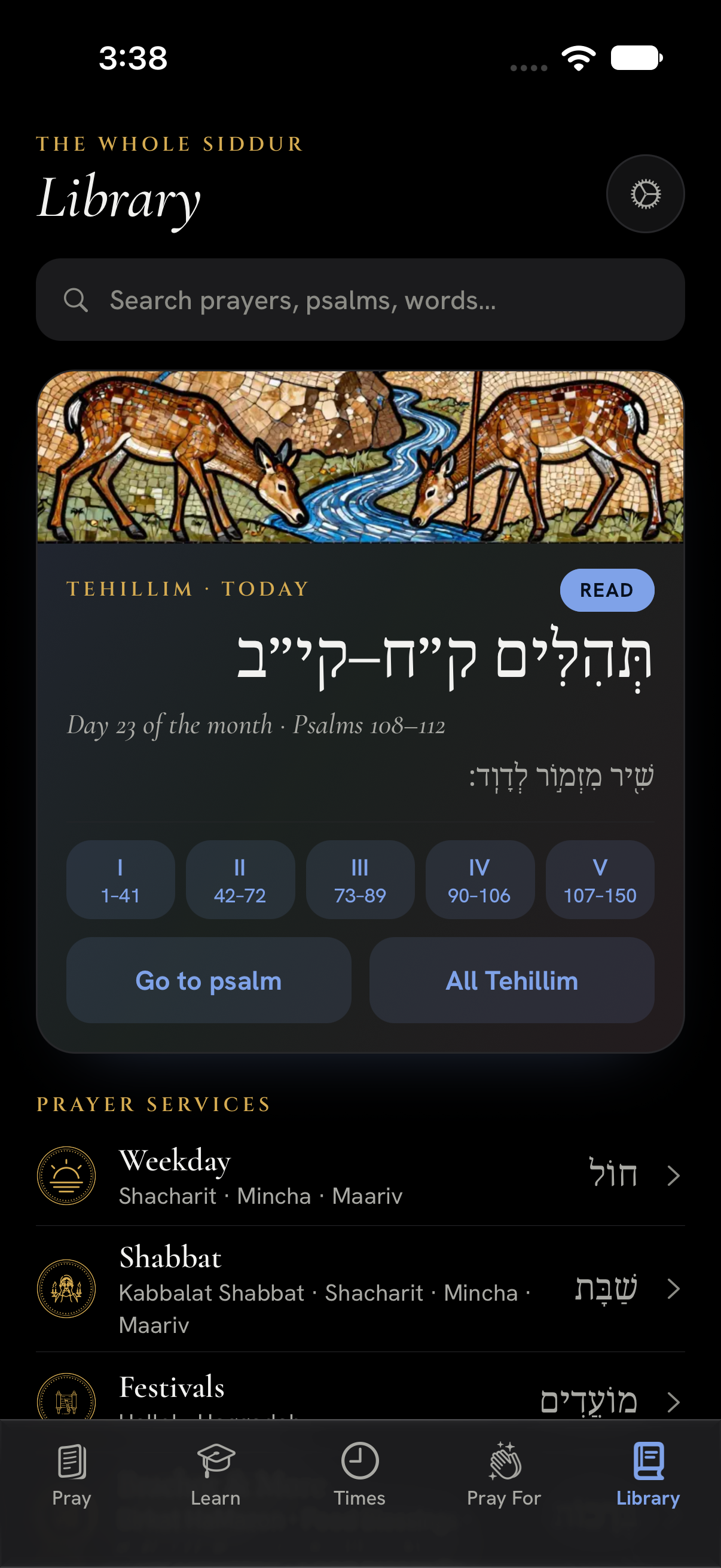
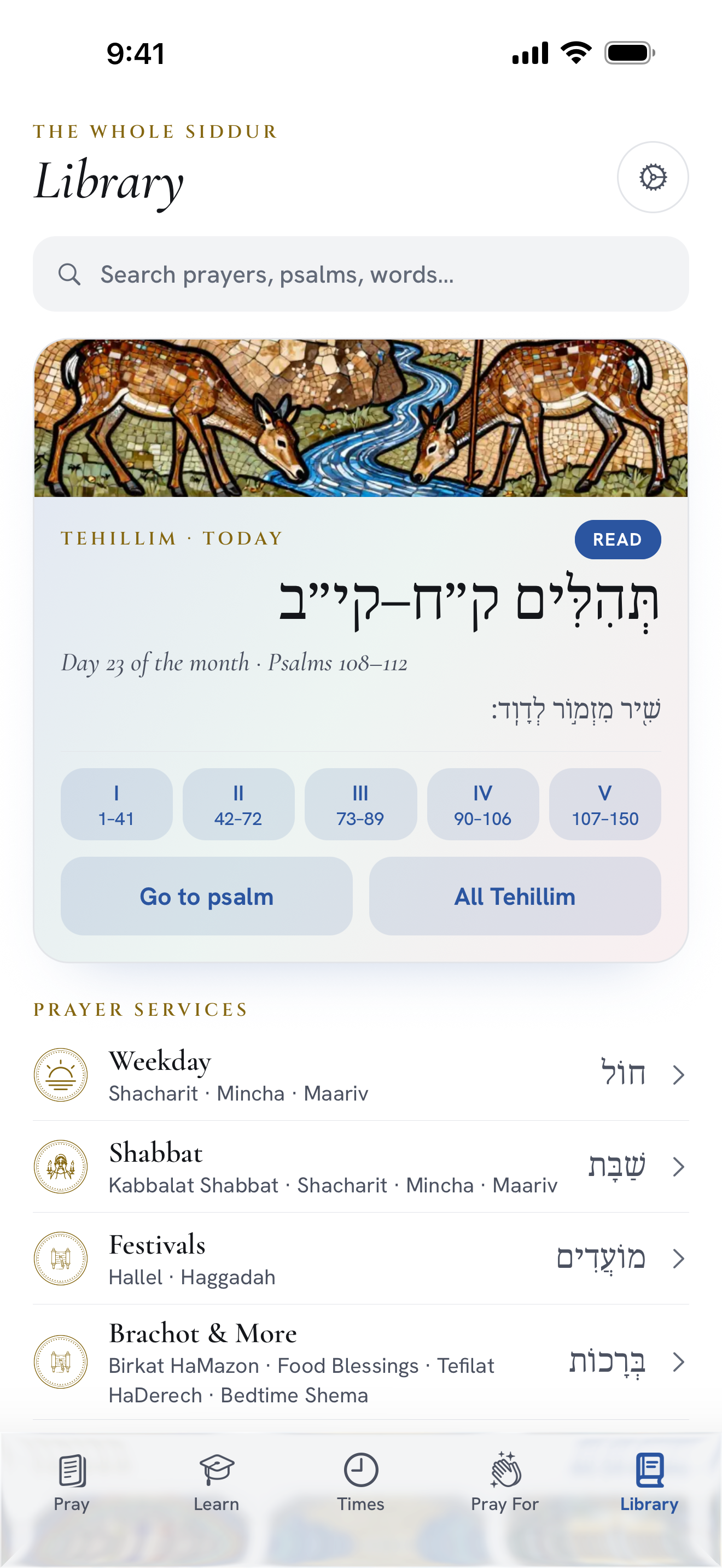
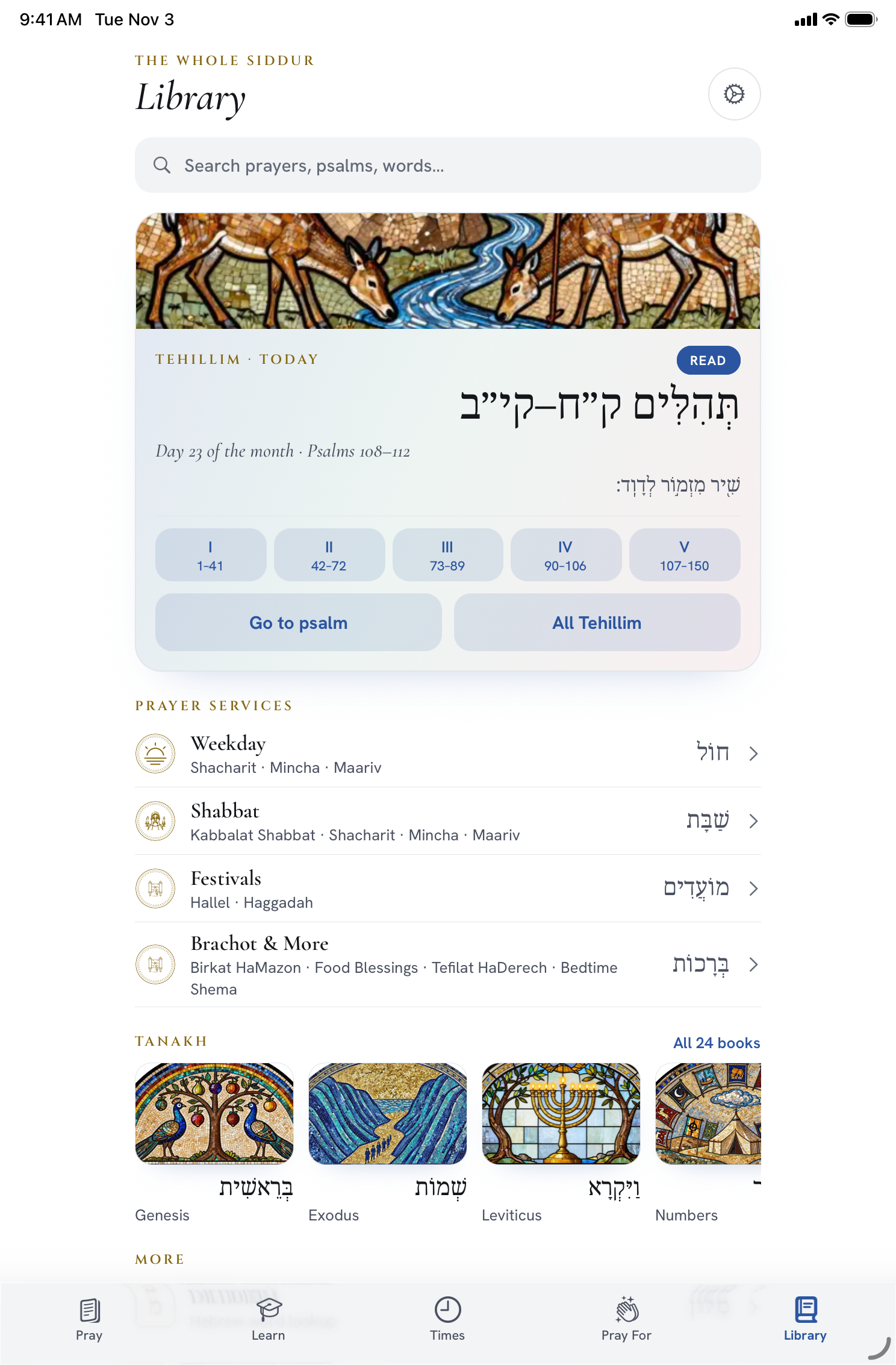
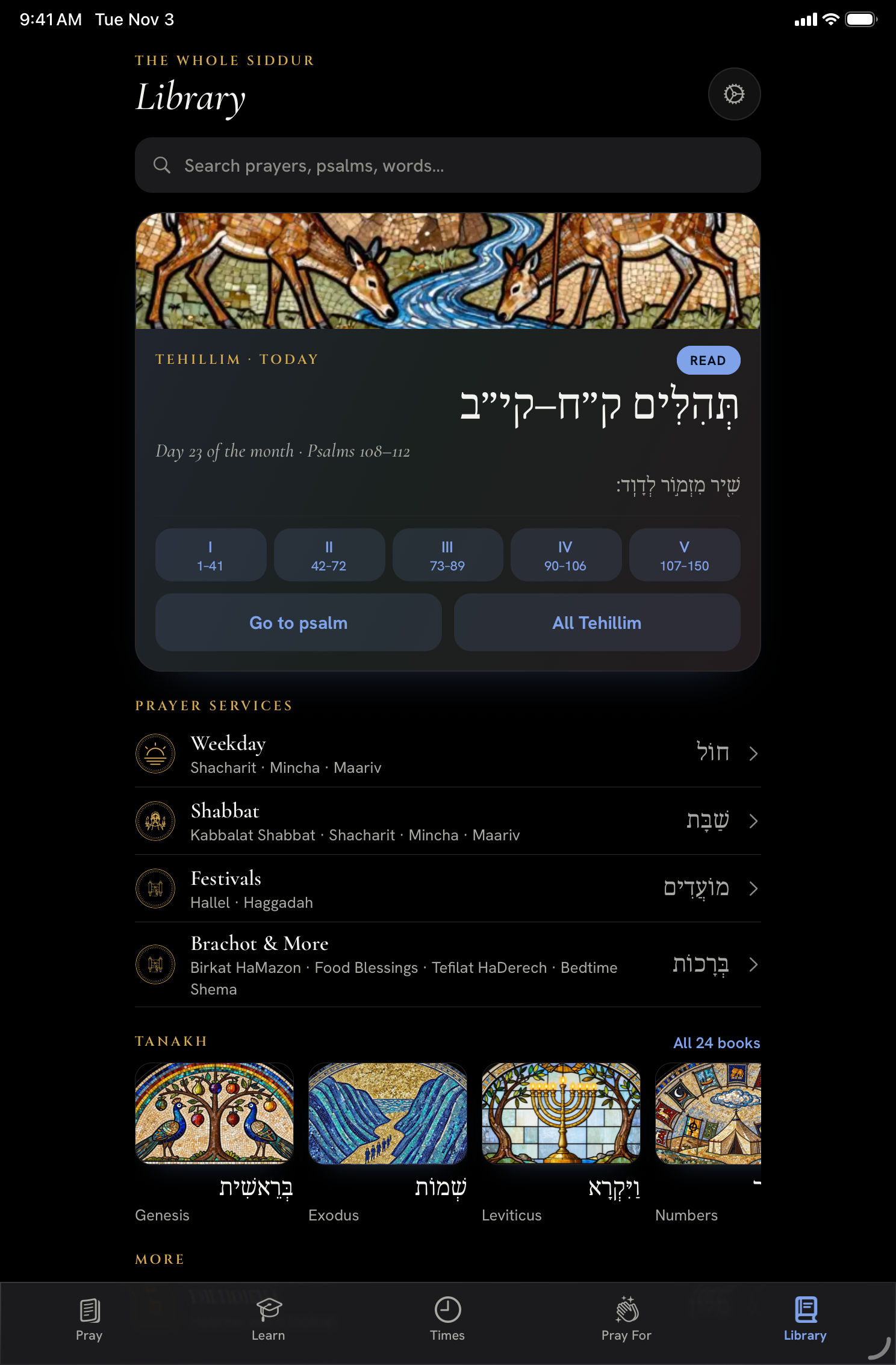
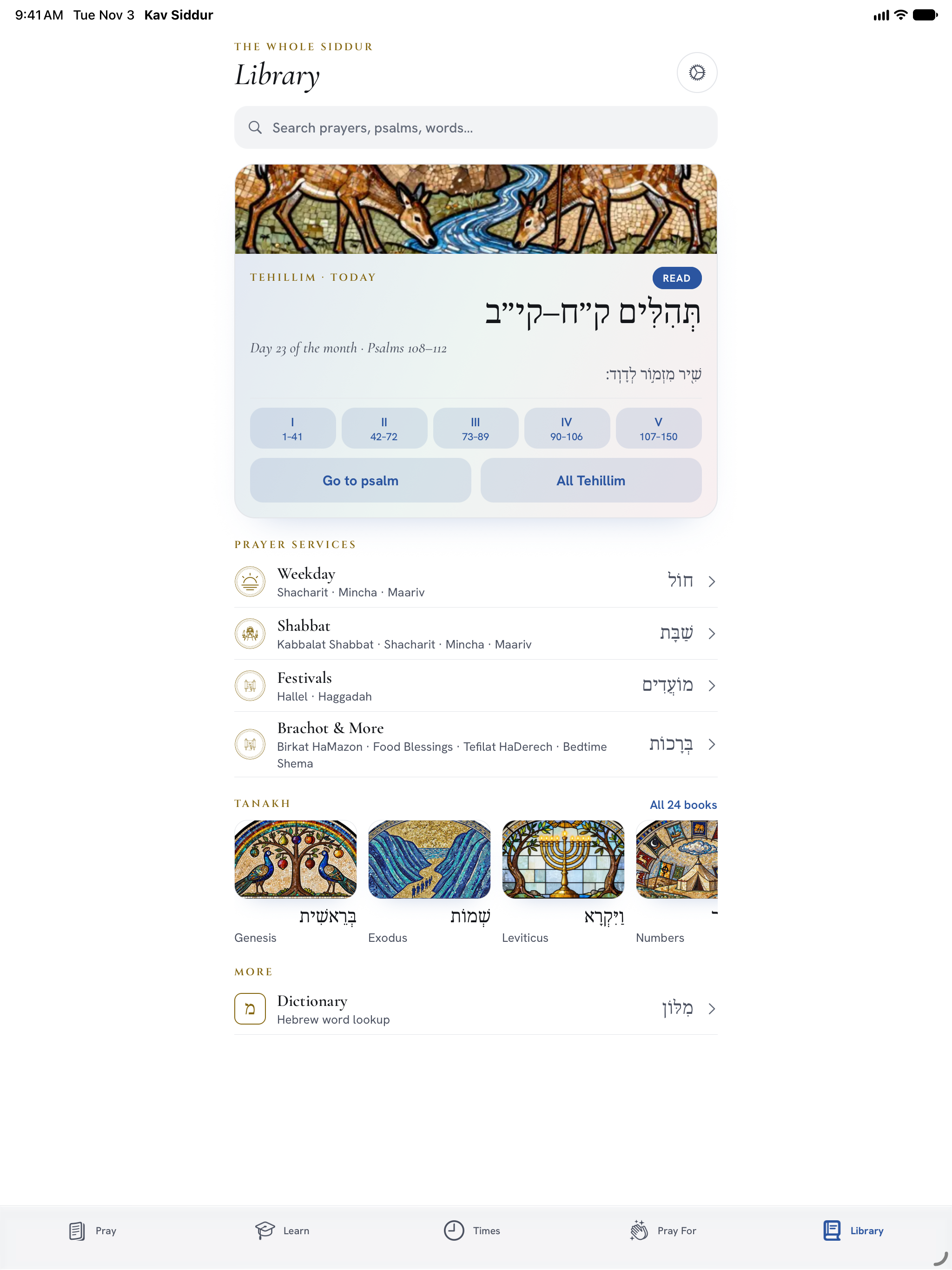
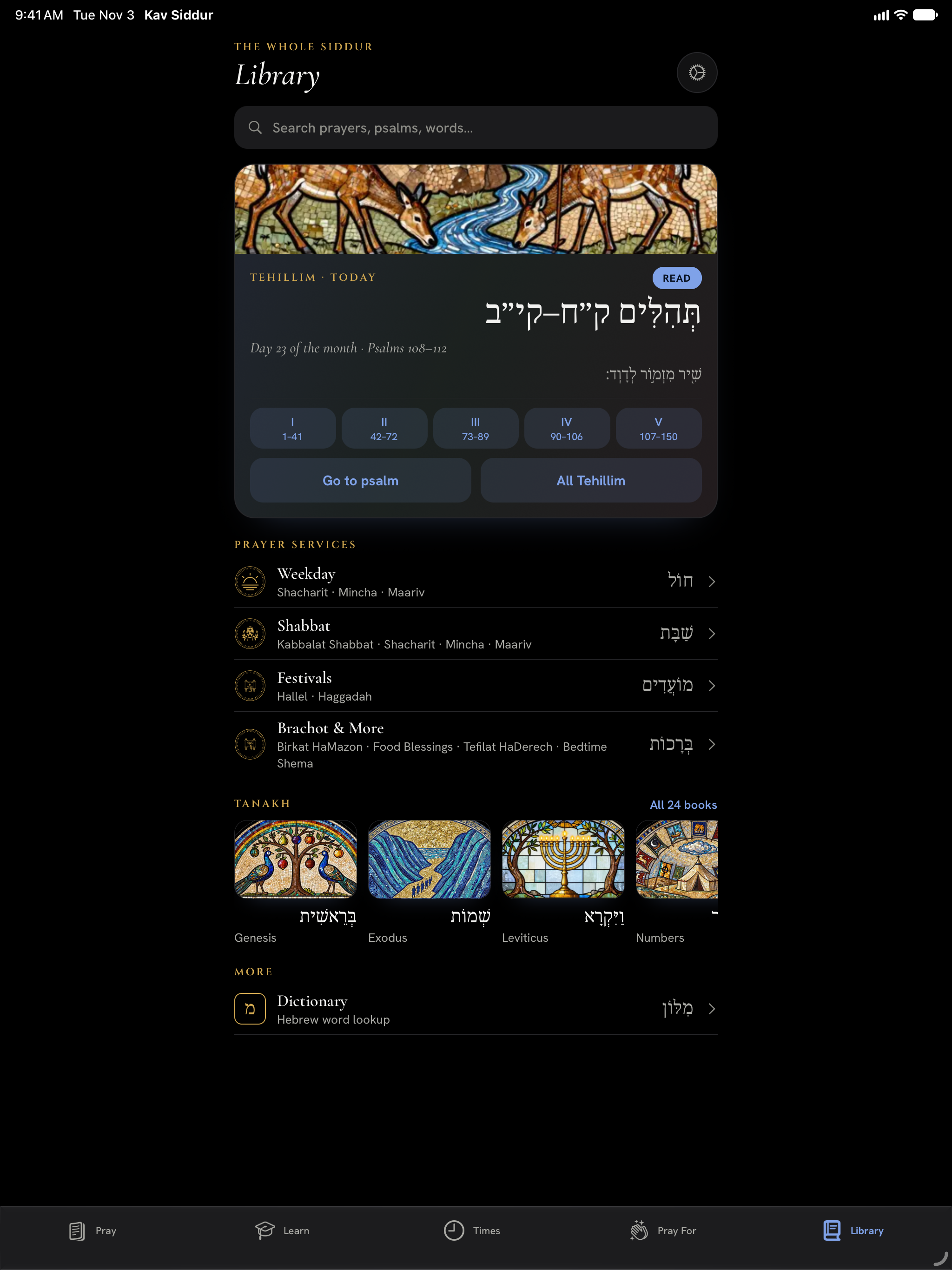
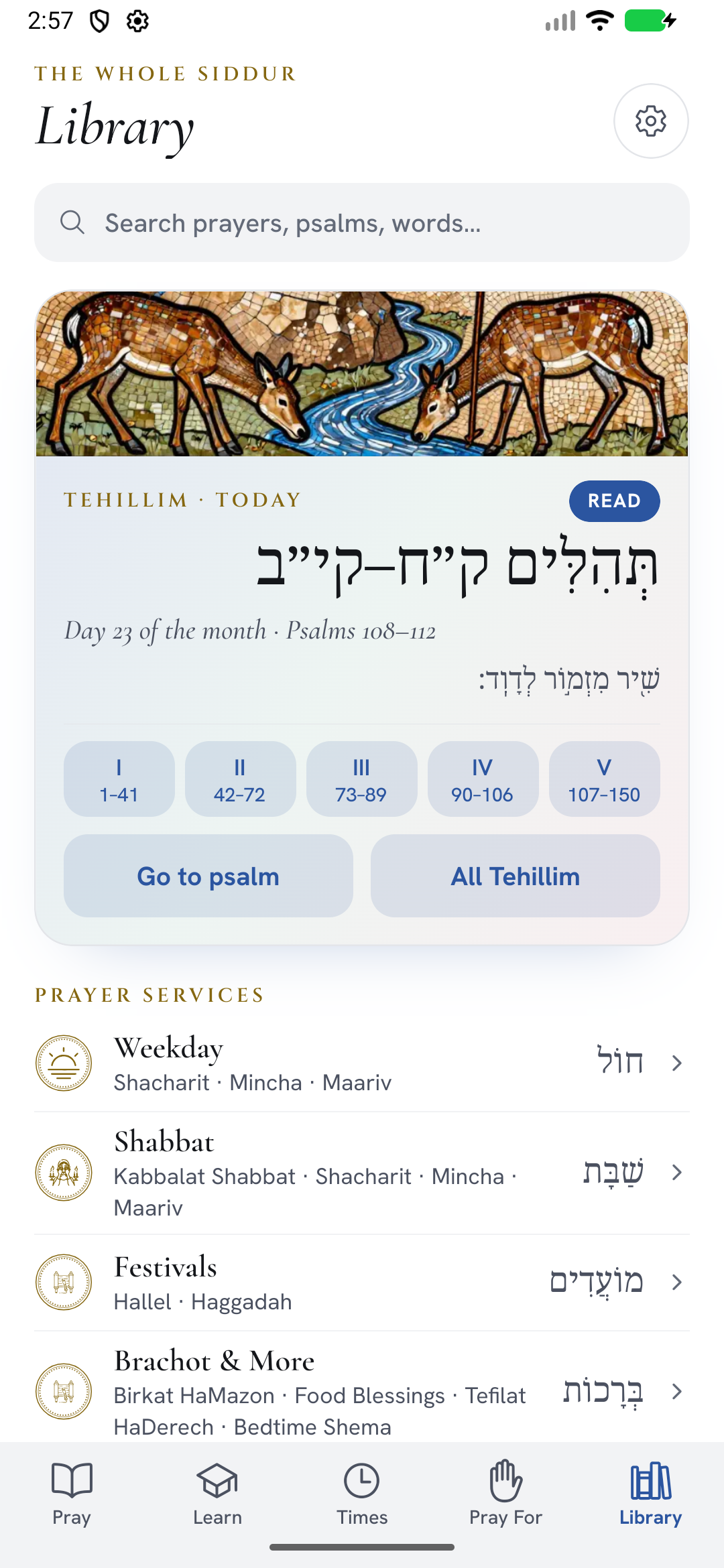
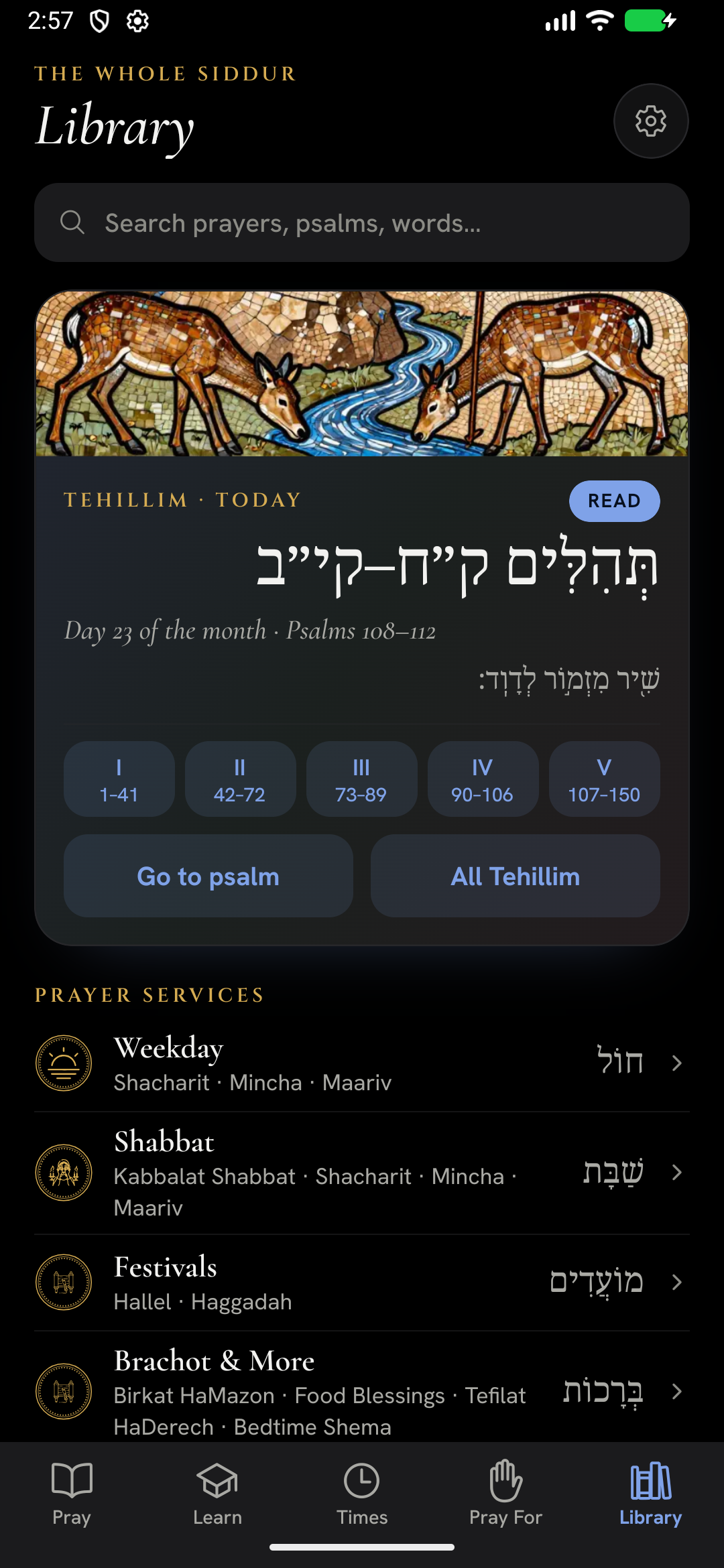
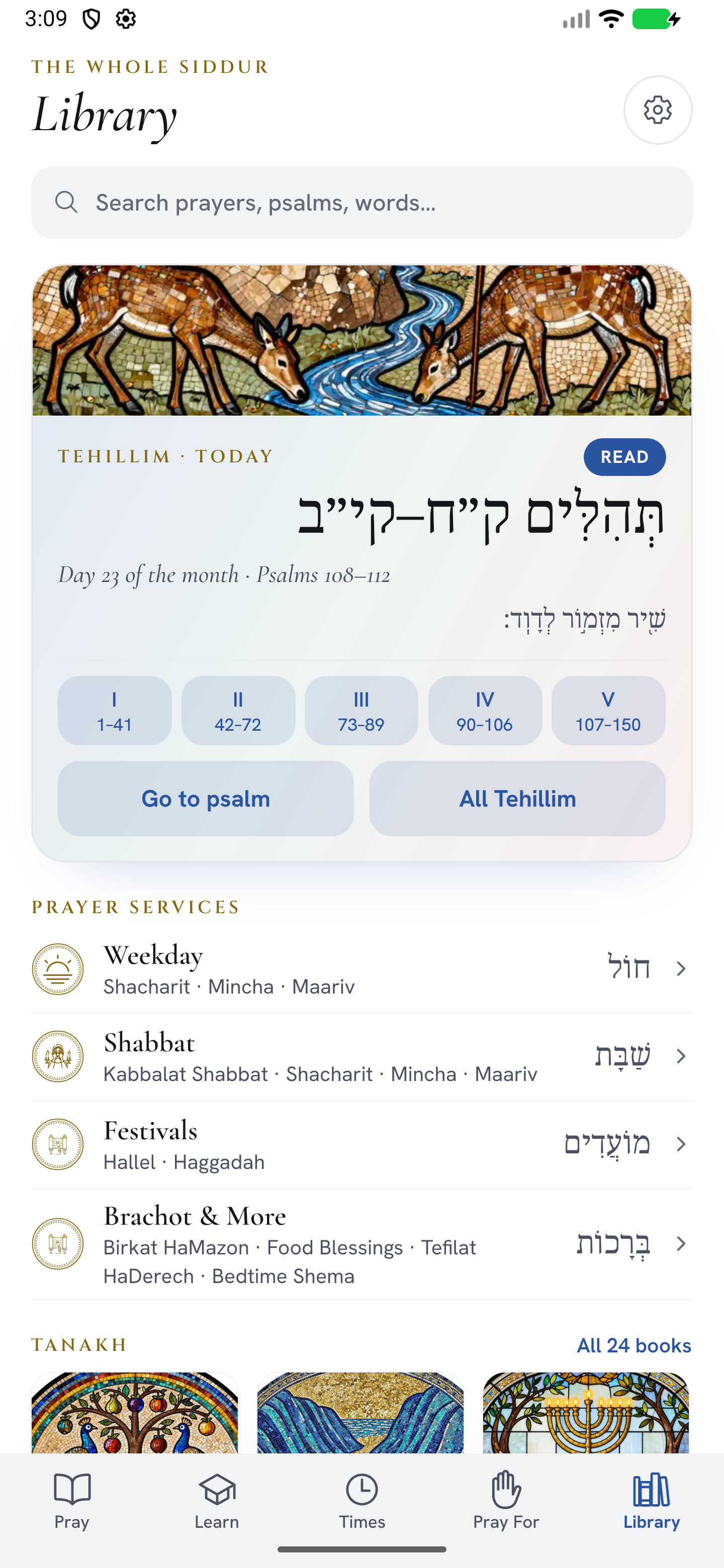
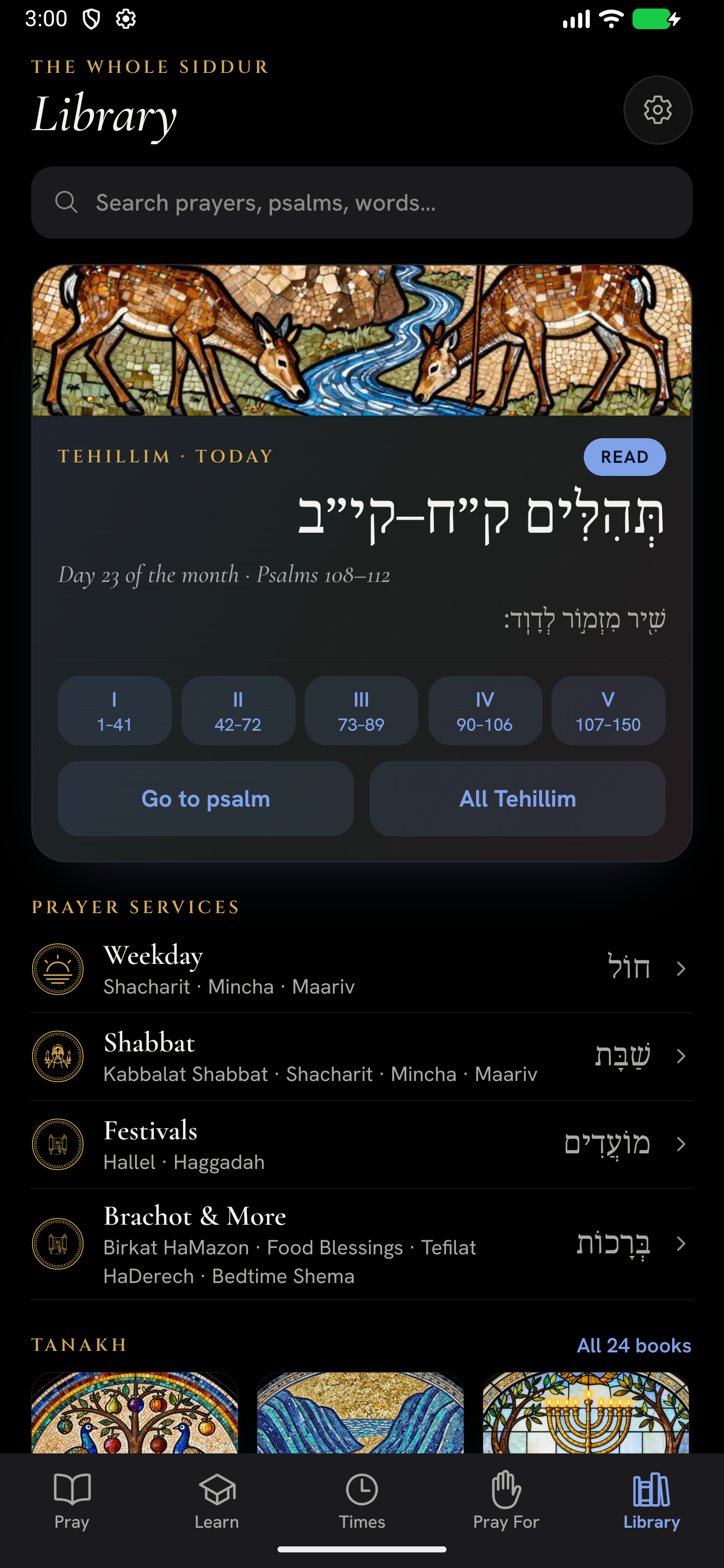
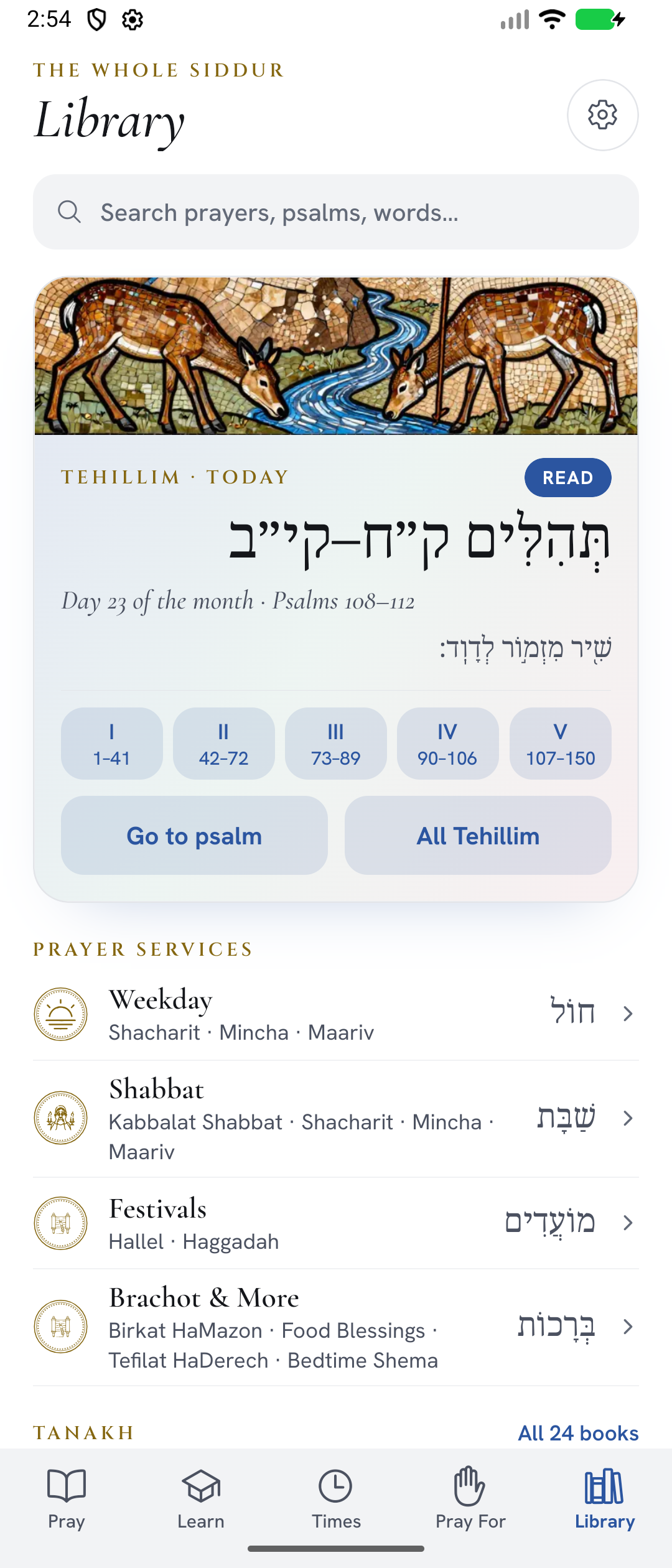
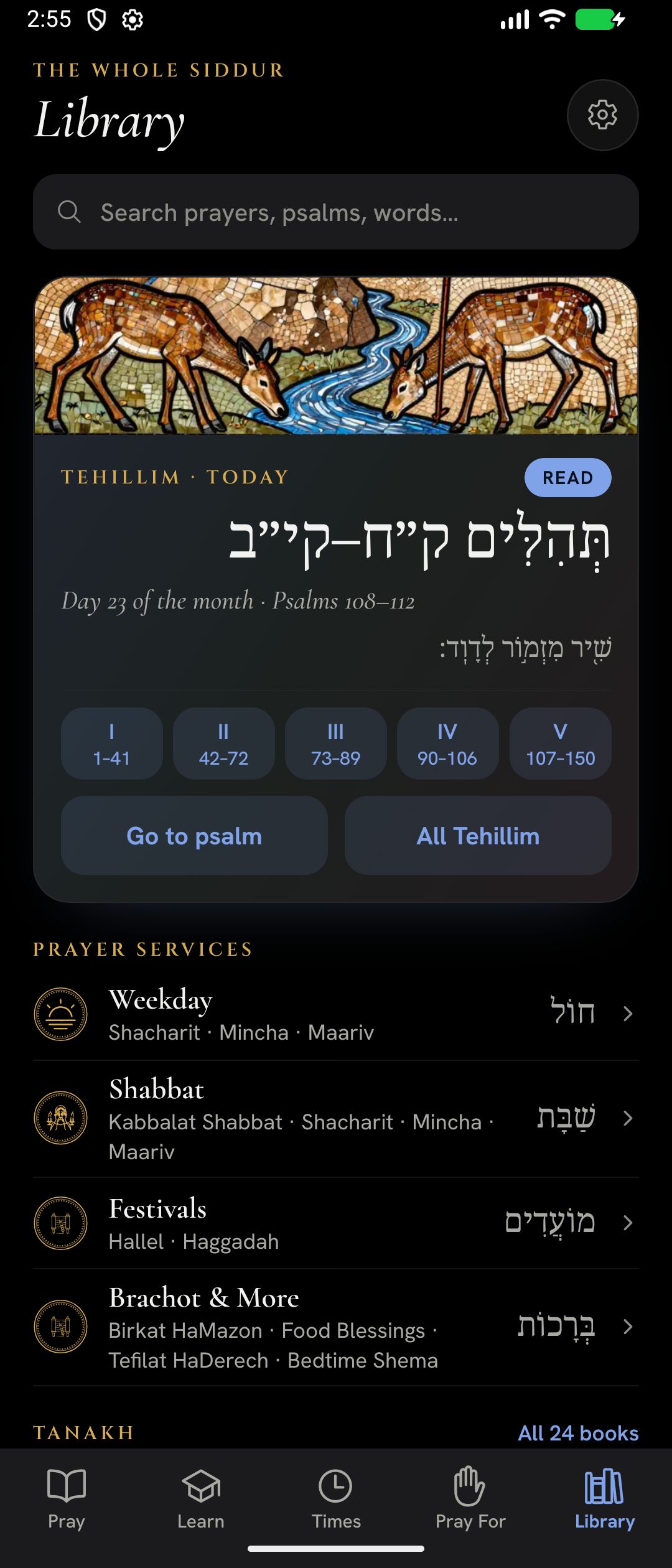
Daily services, Shabbat, blessings, Tanakh and the Hebrew dictionary, in one Library.
Make a personal prayer sequence and return to the next step when you’re ready.
The app preview includes iPhone widgets and an Apple Watch companion that you set up through your iPhone.
Kav includes weekday and Shabbat prayer for Ashkenaz and Edot HaMizrach.
You can follow Hebrew alongside English translation and pronunciation help. Tap words in supported prayers to explore their meaning as you read.
Core prayer texts and on-device prayer times work offline. Online features and purchases need a connection.
Explore daily services, Shabbat prayers, Tehillim, Tanakh, and the dictionary. Word-by-word help is available in core prayers; coverage varies by text.
You can try the interactive demos in this browser. The app screens are from iPhone simulator builds. See the availability section below for download status.
Names saved privately stay on your device. Sharing a prayer request is a separate, optional action; its availability depends on the release.
Try the reader, countdown, and Pray For demos in your iPad browser. The current iOS app is configured for iPhone.
You can try the Kav demos in your Android browser. Google Play download availability has yet to be verified.
Public download and subscription details are still unverified. You can try the interactive demos on this site today.


Try the reader, countdown, and Pray For demos in your browser.